{"title":"欧洲 Helorus 物种身份的新证据(膜翅目,Proctotrupoidea,Heloridae)。","authors":"Jonathan Vogel, Jerome Sauren, Ralph S Peters","doi":"10.3897/BDJ.12.e122523","DOIUrl":null,"url":null,"abstract":"<p><strong>Background: </strong>Species of <i>Helorus</i> Latreille 1802 are rarely collected endoparasitoids of Chrysopidae larvae (Neuroptera). Previous work on the limits between the European species of this species-poor genus, based on morphology only, has left some uncertainties. Here, we approach these cases and revisit previous taxonomic decisions using freshly collected and museum material.</p><p><strong>New information: </strong>We generated the first large-scale Heloridae DNA barcode dataset, combined these with morphological data in an integrative taxonomic approach, and added information from studying all relevant type material. We found five species, <i>Helorusanomalipes</i> (Panzer, 1798), <i>H.coruscus</i> Haliday, 1857 stat. rev., <i>H.nigripes</i> Förster, 1856, <i>H.ruficornis</i> Förster, 1856, and <i>H.striolatus</i> Cameron, 1906, for which we provide an updated identification key. DNA barcode data are added to publicly available DNA barcode reference databases, for all species, except <i>H.nigripes</i>.</p>","PeriodicalId":55994,"journal":{"name":"Biodiversity Data Journal","volume":"12 ","pages":"e122523"},"PeriodicalIF":1.3000,"publicationDate":"2024-06-17","publicationTypes":"Journal Article","fieldsOfStudy":null,"isOpenAccess":false,"openAccessPdf":"https://www.ncbi.nlm.nih.gov/pmc/articles/PMC11196891/pdf/","citationCount":"0","resultStr":"{\"title\":\"New evidence on the identity of the European <i>Helorus</i> species (Hymenoptera, Proctotrupoidea, Heloridae).\",\"authors\":\"Jonathan Vogel, Jerome Sauren, Ralph S Peters\",\"doi\":\"10.3897/BDJ.12.e122523\",\"DOIUrl\":null,\"url\":null,\"abstract\":\"<p><strong>Background: </strong>Species of <i>Helorus</i> Latreille 1802 are rarely collected endoparasitoids of Chrysopidae larvae (Neuroptera). Previous work on the limits between the European species of this species-poor genus, based on morphology only, has left some uncertainties. Here, we approach these cases and revisit previous taxonomic decisions using freshly collected and museum material.</p><p><strong>New information: </strong>We generated the first large-scale Heloridae DNA barcode dataset, combined these with morphological data in an integrative taxonomic approach, and added information from studying all relevant type material. We found five species, <i>Helorusanomalipes</i> (Panzer, 1798), <i>H.coruscus</i> Haliday, 1857 stat. rev., <i>H.nigripes</i> Förster, 1856, <i>H.ruficornis</i> Förster, 1856, and <i>H.striolatus</i> Cameron, 1906, for which we provide an updated identification key. DNA barcode data are added to publicly available DNA barcode reference databases, for all species, except <i>H.nigripes</i>.</p>\",\"PeriodicalId\":55994,\"journal\":{\"name\":\"Biodiversity Data Journal\",\"volume\":\"12 \",\"pages\":\"e122523\"},\"PeriodicalIF\":1.3000,\"publicationDate\":\"2024-06-17\",\"publicationTypes\":\"Journal Article\",\"fieldsOfStudy\":null,\"isOpenAccess\":false,\"openAccessPdf\":\"https://www.ncbi.nlm.nih.gov/pmc/articles/PMC11196891/pdf/\",\"citationCount\":\"0\",\"resultStr\":null,\"platform\":\"Semanticscholar\",\"paperid\":null,\"PeriodicalName\":\"Biodiversity Data Journal\",\"FirstCategoryId\":\"93\",\"ListUrlMain\":\"https://doi.org/10.3897/BDJ.12.e122523\",\"RegionNum\":4,\"RegionCategory\":\"环境科学与生态学\",\"ArticlePicture\":[],\"TitleCN\":null,\"AbstractTextCN\":null,\"PMCID\":null,\"EPubDate\":\"2024/1/1 0:00:00\",\"PubModel\":\"eCollection\",\"JCR\":\"Q3\",\"JCRName\":\"BIODIVERSITY CONSERVATION\",\"Score\":null,\"Total\":0}","platform":"Semanticscholar","paperid":null,"PeriodicalName":"Biodiversity Data Journal","FirstCategoryId":"93","ListUrlMain":"https://doi.org/10.3897/BDJ.12.e122523","RegionNum":4,"RegionCategory":"环境科学与生态学","ArticlePicture":[],"TitleCN":null,"AbstractTextCN":null,"PMCID":null,"EPubDate":"2024/1/1 0:00:00","PubModel":"eCollection","JCR":"Q3","JCRName":"BIODIVERSITY CONSERVATION","Score":null,"Total":0}
引用次数: 0
摘要
背景:Helorus Latreille 1802 的物种是很少被收集到的蝶形目幼虫(神经寄生虫)的内寄生虫。以前仅根据形态学对这一物种稀少的属的欧洲种之间的界限进行的研究留下了一些不确定性。在此,我们利用新收集的材料和博物馆材料来探讨这些情况,并重新审视以前的分类决定:新信息:我们生成了首个大规模的 Heloridae DNA 条形码数据集,将这些数据与形态学数据结合起来,采用综合分类方法,并通过对所有相关模式材料的研究补充了相关信息。我们发现了五个物种:Helorusanomalipes (Panzer, 1798)、H.coruscus Haliday, 1857 stat. rev.、H.nigripes Förster, 1856、H.ruficornis Förster, 1856 和 H.striolatus Cameron, 1906。除 H.nigripes 外,所有物种的 DNA 条形码数据都已添加到公开的 DNA 条形码参考数据库中。
New evidence on the identity of the European Helorus species (Hymenoptera, Proctotrupoidea, Heloridae).
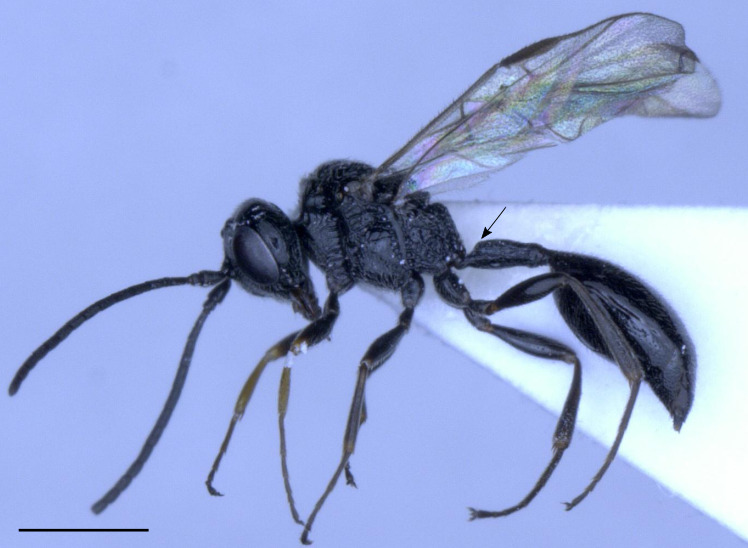
Background: Species of Helorus Latreille 1802 are rarely collected endoparasitoids of Chrysopidae larvae (Neuroptera). Previous work on the limits between the European species of this species-poor genus, based on morphology only, has left some uncertainties. Here, we approach these cases and revisit previous taxonomic decisions using freshly collected and museum material.
New information: We generated the first large-scale Heloridae DNA barcode dataset, combined these with morphological data in an integrative taxonomic approach, and added information from studying all relevant type material. We found five species, Helorusanomalipes (Panzer, 1798), H.coruscus Haliday, 1857 stat. rev., H.nigripes Förster, 1856, H.ruficornis Förster, 1856, and H.striolatus Cameron, 1906, for which we provide an updated identification key. DNA barcode data are added to publicly available DNA barcode reference databases, for all species, except H.nigripes.
Biodiversity Data JournalAgricultural and Biological Sciences-Ecology, Evolution, Behavior and Systematics
CiteScore
2.20
自引率
7.70%
发文量
283
审稿时长
6 weeks
期刊介绍:
Biodiversity Data Journal (BDJ) is a community peer-reviewed, open-access, comprehensive online platform, designed to accelerate publishing, dissemination and sharing of biodiversity-related data of any kind. All structural elements of the articles – text, morphological descriptions, occurrences, data tables, etc. – will be treated and stored as DATA, in accordance with the Data Publishing Policies and Guidelines of Pensoft Publishers.
The journal will publish papers in biodiversity science containing taxonomic, floristic/faunistic, morphological, genomic, phylogenetic, ecological or environmental data on any taxon of any geological age from any part of the world with no lower or upper limit to manuscript size.






 京公网安备 11010802042870号
京ICP备2023020795号-1
京公网安备 11010802042870号
京ICP备2023020795号-1

 分享
分享
 求助内容:
求助内容: 应助结果提醒方式:
 扫码关注我们
