Abraham H Hulst, Connie P C Ow, Clive N May, Sally H Hood, Mark P Plummer, Jeroen Hermanides, Daniël H van Raalte, Adam M Deane, Rinaldo Bellomo, Yugeesh R Lankadeva
{"title":"钠-葡萄糖转运体-2抑制剂对脓毒症相关急性肾损伤患者全身血流动力学、肾功能和肾内氧合的影响","authors":"Abraham H Hulst, Connie P C Ow, Clive N May, Sally H Hood, Mark P Plummer, Jeroen Hermanides, Daniël H van Raalte, Adam M Deane, Rinaldo Bellomo, Yugeesh R Lankadeva","doi":"10.1186/s40635-024-00647-2","DOIUrl":null,"url":null,"abstract":"<p><strong>Background: </strong>People with type 2 diabetes mellitus treated with sodium-glucose transporter-2 inhibitors (SGLT2i) have lower rates of acute kidney injury (AKI). Sepsis is responsible for the majority of AKI in critically ill patients. This study investigated whether SGLT2i is renoprotective in an ovine model of Gram-negative septic AKI.</p><p><strong>Methods: </strong>Sixteen healthy merino ewes were surgically instrumented to enable measurement of mean arterial pressure, cardiac output, renal blood flow, renal cortical and medullary perfusion, and oxygenation. After a 5-day recovery period, sepsis was induced via slow and continuous intravenous infusion of live Escherichia coli. Twenty-three hours later, sheep were randomized to receive an intravenous bolus of 0.2 mg/kg empagliflozin (n = 8) or a fluid-matched vehicle (n = 8).</p><p><strong>Results: </strong>Empagliflozin treatment did not significantly reduce renal medullary hypoperfusion or hypoxia, improve kidney function, or induce histological changes. Renal cortical oxygenation during the intervention period was 47.6 ± 5.9 mmHg in the empagliflozin group compared with 40.6 ± 8.2 mmHg in the placebo group (P = 0.16). Renal medullary oxygenation was 28.0 ± 18.5 mmHg in the empagliflozin compared with 25.7 ± 16.3 mmHg (P = 0.82). Empagliflozin treatment did not result in significant between-group differences in renal blood flow, kidney function, or renal histopathological changes.</p><p><strong>Conclusion: </strong>In a large mammalian model of septic AKI, a single dose of empagliflozin did not improve renal microcirculatory perfusion, oxygenation, kidney function, or histopathology.</p>","PeriodicalId":13750,"journal":{"name":"Intensive Care Medicine Experimental","volume":"12 1","pages":"64"},"PeriodicalIF":2.9000,"publicationDate":"2024-07-08","publicationTypes":"Journal Article","fieldsOfStudy":null,"isOpenAccess":false,"openAccessPdf":"https://www.ncbi.nlm.nih.gov/pmc/articles/PMC11231125/pdf/","citationCount":"0","resultStr":"{\"title\":\"Effects of sodium-glucose transporter-2 inhibition on systemic hemodynamics, renal function, and intra-renal oxygenation in sepsis-associated acute kidney injury.\",\"authors\":\"Abraham H Hulst, Connie P C Ow, Clive N May, Sally H Hood, Mark P Plummer, Jeroen Hermanides, Daniël H van Raalte, Adam M Deane, Rinaldo Bellomo, Yugeesh R Lankadeva\",\"doi\":\"10.1186/s40635-024-00647-2\",\"DOIUrl\":null,\"url\":null,\"abstract\":\"<p><strong>Background: </strong>People with type 2 diabetes mellitus treated with sodium-glucose transporter-2 inhibitors (SGLT2i) have lower rates of acute kidney injury (AKI). Sepsis is responsible for the majority of AKI in critically ill patients. This study investigated whether SGLT2i is renoprotective in an ovine model of Gram-negative septic AKI.</p><p><strong>Methods: </strong>Sixteen healthy merino ewes were surgically instrumented to enable measurement of mean arterial pressure, cardiac output, renal blood flow, renal cortical and medullary perfusion, and oxygenation. After a 5-day recovery period, sepsis was induced via slow and continuous intravenous infusion of live Escherichia coli. Twenty-three hours later, sheep were randomized to receive an intravenous bolus of 0.2 mg/kg empagliflozin (n = 8) or a fluid-matched vehicle (n = 8).</p><p><strong>Results: </strong>Empagliflozin treatment did not significantly reduce renal medullary hypoperfusion or hypoxia, improve kidney function, or induce histological changes. Renal cortical oxygenation during the intervention period was 47.6 ± 5.9 mmHg in the empagliflozin group compared with 40.6 ± 8.2 mmHg in the placebo group (P = 0.16). Renal medullary oxygenation was 28.0 ± 18.5 mmHg in the empagliflozin compared with 25.7 ± 16.3 mmHg (P = 0.82). Empagliflozin treatment did not result in significant between-group differences in renal blood flow, kidney function, or renal histopathological changes.</p><p><strong>Conclusion: </strong>In a large mammalian model of septic AKI, a single dose of empagliflozin did not improve renal microcirculatory perfusion, oxygenation, kidney function, or histopathology.</p>\",\"PeriodicalId\":13750,\"journal\":{\"name\":\"Intensive Care Medicine Experimental\",\"volume\":\"12 1\",\"pages\":\"64\"},\"PeriodicalIF\":2.9000,\"publicationDate\":\"2024-07-08\",\"publicationTypes\":\"Journal Article\",\"fieldsOfStudy\":null,\"isOpenAccess\":false,\"openAccessPdf\":\"https://www.ncbi.nlm.nih.gov/pmc/articles/PMC11231125/pdf/\",\"citationCount\":\"0\",\"resultStr\":null,\"platform\":\"Semanticscholar\",\"paperid\":null,\"PeriodicalName\":\"Intensive Care Medicine Experimental\",\"FirstCategoryId\":\"1085\",\"ListUrlMain\":\"https://doi.org/10.1186/s40635-024-00647-2\",\"RegionNum\":0,\"RegionCategory\":null,\"ArticlePicture\":[],\"TitleCN\":null,\"AbstractTextCN\":null,\"PMCID\":null,\"EPubDate\":\"\",\"PubModel\":\"\",\"JCR\":\"Q2\",\"JCRName\":\"CRITICAL CARE MEDICINE\",\"Score\":null,\"Total\":0}","platform":"Semanticscholar","paperid":null,"PeriodicalName":"Intensive Care Medicine Experimental","FirstCategoryId":"1085","ListUrlMain":"https://doi.org/10.1186/s40635-024-00647-2","RegionNum":0,"RegionCategory":null,"ArticlePicture":[],"TitleCN":null,"AbstractTextCN":null,"PMCID":null,"EPubDate":"","PubModel":"","JCR":"Q2","JCRName":"CRITICAL CARE MEDICINE","Score":null,"Total":0}
Effects of sodium-glucose transporter-2 inhibition on systemic hemodynamics, renal function, and intra-renal oxygenation in sepsis-associated acute kidney injury.
Background: People with type 2 diabetes mellitus treated with sodium-glucose transporter-2 inhibitors (SGLT2i) have lower rates of acute kidney injury (AKI). Sepsis is responsible for the majority of AKI in critically ill patients. This study investigated whether SGLT2i is renoprotective in an ovine model of Gram-negative septic AKI.
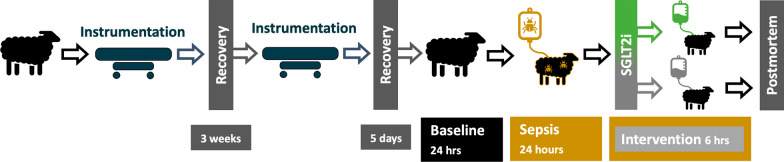
Methods: Sixteen healthy merino ewes were surgically instrumented to enable measurement of mean arterial pressure, cardiac output, renal blood flow, renal cortical and medullary perfusion, and oxygenation. After a 5-day recovery period, sepsis was induced via slow and continuous intravenous infusion of live Escherichia coli. Twenty-three hours later, sheep were randomized to receive an intravenous bolus of 0.2 mg/kg empagliflozin (n = 8) or a fluid-matched vehicle (n = 8).
Results: Empagliflozin treatment did not significantly reduce renal medullary hypoperfusion or hypoxia, improve kidney function, or induce histological changes. Renal cortical oxygenation during the intervention period was 47.6 ± 5.9 mmHg in the empagliflozin group compared with 40.6 ± 8.2 mmHg in the placebo group (P = 0.16). Renal medullary oxygenation was 28.0 ± 18.5 mmHg in the empagliflozin compared with 25.7 ± 16.3 mmHg (P = 0.82). Empagliflozin treatment did not result in significant between-group differences in renal blood flow, kidney function, or renal histopathological changes.
Conclusion: In a large mammalian model of septic AKI, a single dose of empagliflozin did not improve renal microcirculatory perfusion, oxygenation, kidney function, or histopathology.






 京公网安备 11010802042870号
京ICP备2023020795号-1
京公网安备 11010802042870号
京ICP备2023020795号-1

 分享
分享
 求助内容:
求助内容: 应助结果提醒方式:
 扫码关注我们
