Androniki Spanou, Nektaria C. Liakouli, Christina Fiotaki, Ioannis V. Pavlidis
{"title":"利用酸性油生产第二代生物柴油的固定化生物笠-R 比较研究","authors":"Androniki Spanou, Nektaria C. Liakouli, Christina Fiotaki, Ioannis V. Pavlidis","doi":"10.1002/cbic.202400514","DOIUrl":null,"url":null,"abstract":"<p>The primary objective of this work is to develop a sustainable biocatalytic transesterification process for low-grade oils, aligning with EU green technology requirements for the shift to second generation biodiesel. Thus, we investigated the immobilization and subsequent application of the lipase Biolipasa-R on transesterification processes to produce fatty acid methyl esters (FAMEs) from both a sunflower oil and an acid oil which is a bioproduct of the biodiesel industry. The lipase was immobilized on biomaterials, such as diatomaceous earth, with a yield of 60 %, and commercial carriers such as methacrylic resins with a yield of 100 %. The enzyme demonstrated superior activity when immobilized on diatomaceous earth, particularly in reactions involving the acid oil, outperforming the benchmark enzyme Novozym® 435 (95.1 % and 35 % conversion respectively). This work highlights the potential of Biolipasa-R as a cost-effective and efficient biocatalyst for biodiesel production and emphasizes the environmental benefits of utilizing industrial byproducts and eco-friendly immobilization techniques. The findings suggest that Biolipasa-R is a promising candidate for industrial applications in biodiesel production, offering a sustainable solution for waste management and energy generation.</p>","PeriodicalId":140,"journal":{"name":"ChemBioChem","volume":"25 21","pages":""},"PeriodicalIF":2.8000,"publicationDate":"2024-07-14","publicationTypes":"Journal Article","fieldsOfStudy":null,"isOpenAccess":false,"openAccessPdf":"https://onlinelibrary.wiley.com/doi/epdf/10.1002/cbic.202400514","citationCount":"0","resultStr":"{\"title\":\"Comparative Study of Immobilized Biolipasa-R for Second Generation Biodiesel Production from an Acid Oil\",\"authors\":\"Androniki Spanou, Nektaria C. Liakouli, Christina Fiotaki, Ioannis V. Pavlidis\",\"doi\":\"10.1002/cbic.202400514\",\"DOIUrl\":null,\"url\":null,\"abstract\":\"<p>The primary objective of this work is to develop a sustainable biocatalytic transesterification process for low-grade oils, aligning with EU green technology requirements for the shift to second generation biodiesel. Thus, we investigated the immobilization and subsequent application of the lipase Biolipasa-R on transesterification processes to produce fatty acid methyl esters (FAMEs) from both a sunflower oil and an acid oil which is a bioproduct of the biodiesel industry. The lipase was immobilized on biomaterials, such as diatomaceous earth, with a yield of 60 %, and commercial carriers such as methacrylic resins with a yield of 100 %. The enzyme demonstrated superior activity when immobilized on diatomaceous earth, particularly in reactions involving the acid oil, outperforming the benchmark enzyme Novozym® 435 (95.1 % and 35 % conversion respectively). This work highlights the potential of Biolipasa-R as a cost-effective and efficient biocatalyst for biodiesel production and emphasizes the environmental benefits of utilizing industrial byproducts and eco-friendly immobilization techniques. The findings suggest that Biolipasa-R is a promising candidate for industrial applications in biodiesel production, offering a sustainable solution for waste management and energy generation.</p>\",\"PeriodicalId\":140,\"journal\":{\"name\":\"ChemBioChem\",\"volume\":\"25 21\",\"pages\":\"\"},\"PeriodicalIF\":2.8000,\"publicationDate\":\"2024-07-14\",\"publicationTypes\":\"Journal Article\",\"fieldsOfStudy\":null,\"isOpenAccess\":false,\"openAccessPdf\":\"https://onlinelibrary.wiley.com/doi/epdf/10.1002/cbic.202400514\",\"citationCount\":\"0\",\"resultStr\":null,\"platform\":\"Semanticscholar\",\"paperid\":null,\"PeriodicalName\":\"ChemBioChem\",\"FirstCategoryId\":\"99\",\"ListUrlMain\":\"https://chemistry-europe.onlinelibrary.wiley.com/doi/10.1002/cbic.202400514\",\"RegionNum\":4,\"RegionCategory\":\"生物学\",\"ArticlePicture\":[],\"TitleCN\":null,\"AbstractTextCN\":null,\"PMCID\":null,\"EPubDate\":\"\",\"PubModel\":\"\",\"JCR\":\"Q3\",\"JCRName\":\"BIOCHEMISTRY & MOLECULAR BIOLOGY\",\"Score\":null,\"Total\":0}","platform":"Semanticscholar","paperid":null,"PeriodicalName":"ChemBioChem","FirstCategoryId":"99","ListUrlMain":"https://chemistry-europe.onlinelibrary.wiley.com/doi/10.1002/cbic.202400514","RegionNum":4,"RegionCategory":"生物学","ArticlePicture":[],"TitleCN":null,"AbstractTextCN":null,"PMCID":null,"EPubDate":"","PubModel":"","JCR":"Q3","JCRName":"BIOCHEMISTRY & MOLECULAR BIOLOGY","Score":null,"Total":0}
Comparative Study of Immobilized Biolipasa-R for Second Generation Biodiesel Production from an Acid Oil
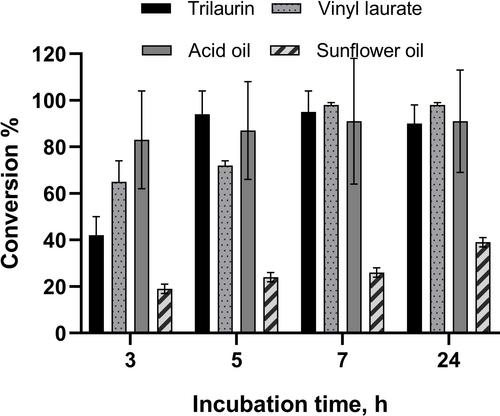
The primary objective of this work is to develop a sustainable biocatalytic transesterification process for low-grade oils, aligning with EU green technology requirements for the shift to second generation biodiesel. Thus, we investigated the immobilization and subsequent application of the lipase Biolipasa-R on transesterification processes to produce fatty acid methyl esters (FAMEs) from both a sunflower oil and an acid oil which is a bioproduct of the biodiesel industry. The lipase was immobilized on biomaterials, such as diatomaceous earth, with a yield of 60 %, and commercial carriers such as methacrylic resins with a yield of 100 %. The enzyme demonstrated superior activity when immobilized on diatomaceous earth, particularly in reactions involving the acid oil, outperforming the benchmark enzyme Novozym® 435 (95.1 % and 35 % conversion respectively). This work highlights the potential of Biolipasa-R as a cost-effective and efficient biocatalyst for biodiesel production and emphasizes the environmental benefits of utilizing industrial byproducts and eco-friendly immobilization techniques. The findings suggest that Biolipasa-R is a promising candidate for industrial applications in biodiesel production, offering a sustainable solution for waste management and energy generation.
期刊介绍:
ChemBioChem (Impact Factor 2018: 2.641) publishes important breakthroughs across all areas at the interface of chemistry and biology, including the fields of chemical biology, bioorganic chemistry, bioinorganic chemistry, synthetic biology, biocatalysis, bionanotechnology, and biomaterials. It is published on behalf of Chemistry Europe, an association of 16 European chemical societies, and supported by the Asian Chemical Editorial Society (ACES).





 京公网安备 11010802042870号
京ICP备2023020795号-1
京公网安备 11010802042870号
京ICP备2023020795号-1

 分享
分享
 求助内容:
求助内容: 应助结果提醒方式:
 扫码关注我们
