{"title":"以四羟基二硼作为唯一的氢供体,Pd 催化烯烃的转移加氢反应","authors":"Mahshid Yaghoubi, Isabella Reyes, Ben Stokes","doi":"10.1055/a-2367-6943","DOIUrl":null,"url":null,"abstract":"Tetrahydroxydiboron-mediated catalytic transfer hydrogenations have typically involved co-additives that, like tetrahydroxydiboron itself, are H atom donors. Herein we report an alkene transfer hydrogenation method with tetrahydroxydiboron as the sole source of H atoms. The reaction uses Pd(OAc)2 as a convenient putative colloid pre-catalyst, and cyclic monoethers are competent solvents. Highly efficient alkene deuteration is demonstrated using tetradeuteroxydiboron.","PeriodicalId":2,"journal":{"name":"ACS Applied Bio Materials","volume":"1 1","pages":""},"PeriodicalIF":5.6000,"publicationDate":"2024-07-16","publicationTypes":"Journal Article","fieldsOfStudy":null,"isOpenAccess":false,"openAccessPdf":"","citationCount":"0","resultStr":"{\"title\":\"Pd-Catalyzed Transfer Hydrogenation of Alkenes Using Tetrahydroxydiboron as the Sole Hydrogen Donor\",\"authors\":\"Mahshid Yaghoubi, Isabella Reyes, Ben Stokes\",\"doi\":\"10.1055/a-2367-6943\",\"DOIUrl\":null,\"url\":null,\"abstract\":\"Tetrahydroxydiboron-mediated catalytic transfer hydrogenations have typically involved co-additives that, like tetrahydroxydiboron itself, are H atom donors. Herein we report an alkene transfer hydrogenation method with tetrahydroxydiboron as the sole source of H atoms. The reaction uses Pd(OAc)2 as a convenient putative colloid pre-catalyst, and cyclic monoethers are competent solvents. Highly efficient alkene deuteration is demonstrated using tetradeuteroxydiboron.\",\"PeriodicalId\":2,\"journal\":{\"name\":\"ACS Applied Bio Materials\",\"volume\":\"1 1\",\"pages\":\"\"},\"PeriodicalIF\":5.6000,\"publicationDate\":\"2024-07-16\",\"publicationTypes\":\"Journal Article\",\"fieldsOfStudy\":null,\"isOpenAccess\":false,\"openAccessPdf\":\"\",\"citationCount\":\"0\",\"resultStr\":null,\"platform\":\"Semanticscholar\",\"paperid\":null,\"PeriodicalName\":\"ACS Applied Bio Materials\",\"FirstCategoryId\":\"1085\",\"ListUrlMain\":\"https://doi.org/10.1055/a-2367-6943\",\"RegionNum\":0,\"RegionCategory\":null,\"ArticlePicture\":[],\"TitleCN\":null,\"AbstractTextCN\":null,\"PMCID\":null,\"EPubDate\":\"\",\"PubModel\":\"\",\"JCR\":\"Q2\",\"JCRName\":\"MATERIALS SCIENCE, BIOMATERIALS\",\"Score\":null,\"Total\":0}","platform":"Semanticscholar","paperid":null,"PeriodicalName":"ACS Applied Bio Materials","FirstCategoryId":"1085","ListUrlMain":"https://doi.org/10.1055/a-2367-6943","RegionNum":0,"RegionCategory":null,"ArticlePicture":[],"TitleCN":null,"AbstractTextCN":null,"PMCID":null,"EPubDate":"","PubModel":"","JCR":"Q2","JCRName":"MATERIALS SCIENCE, BIOMATERIALS","Score":null,"Total":0}
引用次数: 0
摘要
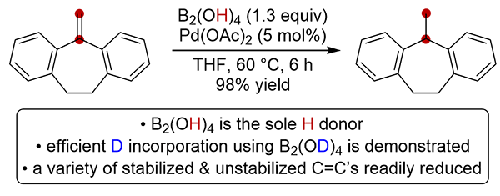
以四羟基二硼为介质的催化转移加氢反应通常涉及助加剂,这些助加剂与四羟基二硼本身一样,都是 H 原子供体。在此,我们报告了一种以四羟基二硼为唯一 H 原子供体的烯转移加氢方法。该反应使用 Pd(OAc)2 作为方便的假定胶体前催化剂,环状单醚是合适的溶剂。使用四氘代二硼酸可实现高效的烯烃脱氘反应。
Pd-Catalyzed Transfer Hydrogenation of Alkenes Using Tetrahydroxydiboron as the Sole Hydrogen Donor
Tetrahydroxydiboron-mediated catalytic transfer hydrogenations have typically involved co-additives that, like tetrahydroxydiboron itself, are H atom donors. Herein we report an alkene transfer hydrogenation method with tetrahydroxydiboron as the sole source of H atoms. The reaction uses Pd(OAc)2 as a convenient putative colloid pre-catalyst, and cyclic monoethers are competent solvents. Highly efficient alkene deuteration is demonstrated using tetradeuteroxydiboron.
期刊介绍:
ACS Applied Bio Materials is an interdisciplinary journal publishing original research covering all aspects of biomaterials and biointerfaces including and beyond the traditional biosensing, biomedical and therapeutic applications.
The journal is devoted to reports of new and original experimental and theoretical research of an applied nature that integrates knowledge in the areas of materials, engineering, physics, bioscience, and chemistry into important bio applications. The journal is specifically interested in work that addresses the relationship between structure and function and assesses the stability and degradation of materials under relevant environmental and biological conditions.





 京公网安备 11010802042870号
京ICP备2023020795号-1
京公网安备 11010802042870号
京ICP备2023020795号-1

 分享
分享
 求助内容:
求助内容: 应助结果提醒方式:
 扫码关注我们
