C. Sabău-Popa, Luminița Rus, Adrian-Gheorghe Florea, O. Ban, Simona Dzitac, O. Marcu
{"title":"面对科维德-19,制造公司是顽强抵抗,还是占了便宜?","authors":"C. Sabău-Popa, Luminița Rus, Adrian-Gheorghe Florea, O. Ban, Simona Dzitac, O. Marcu","doi":"10.3846/tede.2024.20806","DOIUrl":null,"url":null,"abstract":"The research paper aims to build a composite index of the financial performance of companies, to find if the impact of the COVID-19 crisis was significantly positive for most manufacturing companies listed on Bucharest Stock Exchange, and to look if the manufacturing companies were resilient being prepared with savings that could have mitigate the effects of this pandemic crisis. The results of the FE model selected show that 31.67% of the company’s equity variation is justified by the two independent variables, the stronger correlation of equity being with reserves. Based on the composite index of financial performance built, the manufacturing companies were grouped in three clusters: a cluster with low financial performance companies (z < 4), a cluster with good financial performance companies (4 ≤ z ≤ 8) and a cluster with high financial performance companies (z > 8). The third cluster groups the most analysed companies, on which the pandemic crisis had a positive impact, which achieved the highest financial performance; they are those companies that “take advantage” from the COVID-19 crisis, adapting their business strategy to the market conditions imposed. The article adds value to the specialty literature by building the financial performance’s composite indicator, clustering the manufacturing companies by financial performance’ Z-score.","PeriodicalId":4,"journal":{"name":"ACS Applied Energy Materials","volume":"84 24","pages":""},"PeriodicalIF":5.5000,"publicationDate":"2024-07-09","publicationTypes":"Journal Article","fieldsOfStudy":null,"isOpenAccess":false,"openAccessPdf":"","citationCount":"0","resultStr":"{\"title\":\"WERE THE MANUFACTURING COMPANIES RESILIENT IN THE FACE OF COVID-19 OR DID THEY TAKE ADVANTAGE?\",\"authors\":\"C. Sabău-Popa, Luminița Rus, Adrian-Gheorghe Florea, O. Ban, Simona Dzitac, O. Marcu\",\"doi\":\"10.3846/tede.2024.20806\",\"DOIUrl\":null,\"url\":null,\"abstract\":\"The research paper aims to build a composite index of the financial performance of companies, to find if the impact of the COVID-19 crisis was significantly positive for most manufacturing companies listed on Bucharest Stock Exchange, and to look if the manufacturing companies were resilient being prepared with savings that could have mitigate the effects of this pandemic crisis. The results of the FE model selected show that 31.67% of the company’s equity variation is justified by the two independent variables, the stronger correlation of equity being with reserves. Based on the composite index of financial performance built, the manufacturing companies were grouped in three clusters: a cluster with low financial performance companies (z < 4), a cluster with good financial performance companies (4 ≤ z ≤ 8) and a cluster with high financial performance companies (z > 8). The third cluster groups the most analysed companies, on which the pandemic crisis had a positive impact, which achieved the highest financial performance; they are those companies that “take advantage” from the COVID-19 crisis, adapting their business strategy to the market conditions imposed. The article adds value to the specialty literature by building the financial performance’s composite indicator, clustering the manufacturing companies by financial performance’ Z-score.\",\"PeriodicalId\":4,\"journal\":{\"name\":\"ACS Applied Energy Materials\",\"volume\":\"84 24\",\"pages\":\"\"},\"PeriodicalIF\":5.5000,\"publicationDate\":\"2024-07-09\",\"publicationTypes\":\"Journal Article\",\"fieldsOfStudy\":null,\"isOpenAccess\":false,\"openAccessPdf\":\"\",\"citationCount\":\"0\",\"resultStr\":null,\"platform\":\"Semanticscholar\",\"paperid\":null,\"PeriodicalName\":\"ACS Applied Energy Materials\",\"FirstCategoryId\":\"96\",\"ListUrlMain\":\"https://doi.org/10.3846/tede.2024.20806\",\"RegionNum\":3,\"RegionCategory\":\"材料科学\",\"ArticlePicture\":[],\"TitleCN\":null,\"AbstractTextCN\":null,\"PMCID\":null,\"EPubDate\":\"\",\"PubModel\":\"\",\"JCR\":\"Q2\",\"JCRName\":\"CHEMISTRY, PHYSICAL\",\"Score\":null,\"Total\":0}","platform":"Semanticscholar","paperid":null,"PeriodicalName":"ACS Applied Energy Materials","FirstCategoryId":"96","ListUrlMain":"https://doi.org/10.3846/tede.2024.20806","RegionNum":3,"RegionCategory":"材料科学","ArticlePicture":[],"TitleCN":null,"AbstractTextCN":null,"PMCID":null,"EPubDate":"","PubModel":"","JCR":"Q2","JCRName":"CHEMISTRY, PHYSICAL","Score":null,"Total":0}
引用次数: 0
摘要
本研究论文旨在建立公司财务业绩的综合指数,以了解 COVID-19 危机对布加勒斯特证券交易所上市的大多数制造业公司的影响是否显著积极,并研究制造业公司是否已做好准备,节约开支,以减轻此次大流行病危机的影响。所选 FE 模型的结果显示,公司权益变化的 31.67% 是由两个自变量引起的,权益与储备金的相关性更大。根据所建立的财务绩效综合指数,将制造业公司分为三个群组:财务绩效低的公司群组(z < 4)、财务绩效好的公司群组(4 ≤ z ≤ 8)和财务绩效高的公司群组(z > 8)。第三个群组是分析最多的公司群组,这些公司受到大流行病危机的积极影响,取得了最高的财务业绩;它们是那些从 COVID-19 危机中 "获益 "的公司,根据市场条件调整了自己的经营战略。文章通过建立财务业绩综合指标,按财务业绩 Z 值对制造业公司进行分组,为专业文献增添了价值。
WERE THE MANUFACTURING COMPANIES RESILIENT IN THE FACE OF COVID-19 OR DID THEY TAKE ADVANTAGE?
The research paper aims to build a composite index of the financial performance of companies, to find if the impact of the COVID-19 crisis was significantly positive for most manufacturing companies listed on Bucharest Stock Exchange, and to look if the manufacturing companies were resilient being prepared with savings that could have mitigate the effects of this pandemic crisis. The results of the FE model selected show that 31.67% of the company’s equity variation is justified by the two independent variables, the stronger correlation of equity being with reserves. Based on the composite index of financial performance built, the manufacturing companies were grouped in three clusters: a cluster with low financial performance companies (z < 4), a cluster with good financial performance companies (4 ≤ z ≤ 8) and a cluster with high financial performance companies (z > 8). The third cluster groups the most analysed companies, on which the pandemic crisis had a positive impact, which achieved the highest financial performance; they are those companies that “take advantage” from the COVID-19 crisis, adapting their business strategy to the market conditions imposed. The article adds value to the specialty literature by building the financial performance’s composite indicator, clustering the manufacturing companies by financial performance’ Z-score.
期刊介绍:
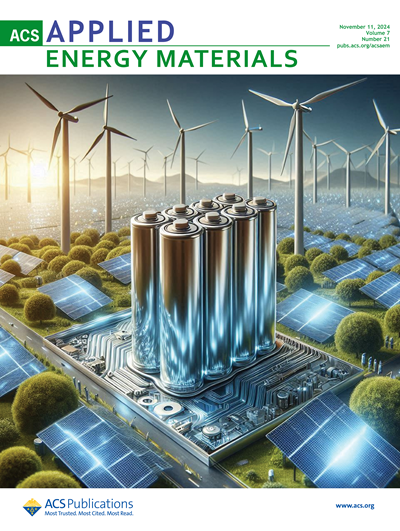
ACS Applied Energy Materials is an interdisciplinary journal publishing original research covering all aspects of materials, engineering, chemistry, physics and biology relevant to energy conversion and storage. The journal is devoted to reports of new and original experimental and theoretical research of an applied nature that integrate knowledge in the areas of materials, engineering, physics, bioscience, and chemistry into important energy applications.



 京公网安备 11010802042870号
京ICP备2023020795号-1
京公网安备 11010802042870号
京ICP备2023020795号-1

 分享
分享
 求助内容:
求助内容: 应助结果提醒方式:
 扫码关注我们
