Beatriz I Fernandez-Gil, Paula Schiapparelli, Juan P Navarro-Garcia de Llano, Andrea Otamendi-Lopez, Maria Jose Ulloa-Navas, Loizos Michaelides, Carla A Vazquez-Ramos, Steven M Herchko, Melissa E Murray, Yesesri Cherukuri, Yan W Asmann, Daniel M Trifiletti, Alfredo Quiñones-Hinojosa
{"title":"术前放疗在临床前胶质母细胞瘤模型中的效果:一种范式转换方法。","authors":"Beatriz I Fernandez-Gil, Paula Schiapparelli, Juan P Navarro-Garcia de Llano, Andrea Otamendi-Lopez, Maria Jose Ulloa-Navas, Loizos Michaelides, Carla A Vazquez-Ramos, Steven M Herchko, Melissa E Murray, Yesesri Cherukuri, Yan W Asmann, Daniel M Trifiletti, Alfredo Quiñones-Hinojosa","doi":"10.1007/s11060-024-04765-5","DOIUrl":null,"url":null,"abstract":"<p><strong>Purpose: </strong>PreOperative radiotherapy (RT) is commonly used in the treatment of brain metastasis and different cancer types but has never been used in primary glioblastoma (GBM). Here, we aim to establish, describe, and validate the use of PreOperative RT for the treatment of GBM in a preclinical model.</p><p><strong>Methods: </strong>Rat brains were locally irradiated with 30-Gy, hypofractionated in five doses 2 weeks before or after the resection of intracranial GBM. Kaplan-Meier analysis determined survival. Hematoxylin-eosin staining was performed, and nuclei size and p21 senescence marker were measured in both resected and recurrent rodent tumors. Immunohistochemistry assessed microglia/macrophage markers, and RNAseq analyzed gene expression changes in recurrent tumors. Akoya Multiplex Staining on two human patients from our ongoing Phase I/IIa trial served as proof of principle.</p><p><strong>Results: </strong>PreOperative RT group median survival was significantly higher than PostOperative RT (p < 0.05). Radiation enlarged cytoplasm and nuclei in PreOperative RT resected tumors (p < 0.001) and induced senescence in PostOperative RT recurrent tumors (p < 0.05). Gene Set Enrichment Analysis (GSEA) suggested a more proliferative profile in PreOperative RT group. PreOperative RT showed lower macrophage/microglia recruitment in recurrent tumors (p < 0.01) compared to PostOperative RT. Akoya Multiplex results indicated TGF-ß accumulation in the cytoplasm of TAMs and CD4 + lymphocyte predominance in PostOperative group.</p><p><strong>Conclusions: </strong>This is the first preclinical study showing feasibility and longer overall survival using neoadjuvant radiotherapy before GBM resection in a mammalian model. This suggests strong superiority for new clinical radiation strategies. Further studies and trials are required to confirm our results.</p>","PeriodicalId":16425,"journal":{"name":"Journal of Neuro-Oncology","volume":" ","pages":"633-646"},"PeriodicalIF":3.4000,"publicationDate":"2024-09-01","publicationTypes":"Journal Article","fieldsOfStudy":null,"isOpenAccess":false,"openAccessPdf":"","citationCount":"0","resultStr":"{\"title\":\"Effects of PreOperative radiotherapy in a preclinical glioblastoma model: a paradigm-shift approach.\",\"authors\":\"Beatriz I Fernandez-Gil, Paula Schiapparelli, Juan P Navarro-Garcia de Llano, Andrea Otamendi-Lopez, Maria Jose Ulloa-Navas, Loizos Michaelides, Carla A Vazquez-Ramos, Steven M Herchko, Melissa E Murray, Yesesri Cherukuri, Yan W Asmann, Daniel M Trifiletti, Alfredo Quiñones-Hinojosa\",\"doi\":\"10.1007/s11060-024-04765-5\",\"DOIUrl\":null,\"url\":null,\"abstract\":\"<p><strong>Purpose: </strong>PreOperative radiotherapy (RT) is commonly used in the treatment of brain metastasis and different cancer types but has never been used in primary glioblastoma (GBM). Here, we aim to establish, describe, and validate the use of PreOperative RT for the treatment of GBM in a preclinical model.</p><p><strong>Methods: </strong>Rat brains were locally irradiated with 30-Gy, hypofractionated in five doses 2 weeks before or after the resection of intracranial GBM. Kaplan-Meier analysis determined survival. Hematoxylin-eosin staining was performed, and nuclei size and p21 senescence marker were measured in both resected and recurrent rodent tumors. Immunohistochemistry assessed microglia/macrophage markers, and RNAseq analyzed gene expression changes in recurrent tumors. Akoya Multiplex Staining on two human patients from our ongoing Phase I/IIa trial served as proof of principle.</p><p><strong>Results: </strong>PreOperative RT group median survival was significantly higher than PostOperative RT (p < 0.05). Radiation enlarged cytoplasm and nuclei in PreOperative RT resected tumors (p < 0.001) and induced senescence in PostOperative RT recurrent tumors (p < 0.05). Gene Set Enrichment Analysis (GSEA) suggested a more proliferative profile in PreOperative RT group. PreOperative RT showed lower macrophage/microglia recruitment in recurrent tumors (p < 0.01) compared to PostOperative RT. Akoya Multiplex results indicated TGF-ß accumulation in the cytoplasm of TAMs and CD4 + lymphocyte predominance in PostOperative group.</p><p><strong>Conclusions: </strong>This is the first preclinical study showing feasibility and longer overall survival using neoadjuvant radiotherapy before GBM resection in a mammalian model. This suggests strong superiority for new clinical radiation strategies. Further studies and trials are required to confirm our results.</p>\",\"PeriodicalId\":16425,\"journal\":{\"name\":\"Journal of Neuro-Oncology\",\"volume\":\" \",\"pages\":\"633-646\"},\"PeriodicalIF\":3.4000,\"publicationDate\":\"2024-09-01\",\"publicationTypes\":\"Journal Article\",\"fieldsOfStudy\":null,\"isOpenAccess\":false,\"openAccessPdf\":\"\",\"citationCount\":\"0\",\"resultStr\":null,\"platform\":\"Semanticscholar\",\"paperid\":null,\"PeriodicalName\":\"Journal of Neuro-Oncology\",\"FirstCategoryId\":\"3\",\"ListUrlMain\":\"https://doi.org/10.1007/s11060-024-04765-5\",\"RegionNum\":2,\"RegionCategory\":\"医学\",\"ArticlePicture\":[],\"TitleCN\":null,\"AbstractTextCN\":null,\"PMCID\":null,\"EPubDate\":\"2024/7/22 0:00:00\",\"PubModel\":\"Epub\",\"JCR\":\"Q2\",\"JCRName\":\"CLINICAL NEUROLOGY\",\"Score\":null,\"Total\":0}","platform":"Semanticscholar","paperid":null,"PeriodicalName":"Journal of Neuro-Oncology","FirstCategoryId":"3","ListUrlMain":"https://doi.org/10.1007/s11060-024-04765-5","RegionNum":2,"RegionCategory":"医学","ArticlePicture":[],"TitleCN":null,"AbstractTextCN":null,"PMCID":null,"EPubDate":"2024/7/22 0:00:00","PubModel":"Epub","JCR":"Q2","JCRName":"CLINICAL NEUROLOGY","Score":null,"Total":0}
Effects of PreOperative radiotherapy in a preclinical glioblastoma model: a paradigm-shift approach.
Purpose: PreOperative radiotherapy (RT) is commonly used in the treatment of brain metastasis and different cancer types but has never been used in primary glioblastoma (GBM). Here, we aim to establish, describe, and validate the use of PreOperative RT for the treatment of GBM in a preclinical model.
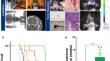
Methods: Rat brains were locally irradiated with 30-Gy, hypofractionated in five doses 2 weeks before or after the resection of intracranial GBM. Kaplan-Meier analysis determined survival. Hematoxylin-eosin staining was performed, and nuclei size and p21 senescence marker were measured in both resected and recurrent rodent tumors. Immunohistochemistry assessed microglia/macrophage markers, and RNAseq analyzed gene expression changes in recurrent tumors. Akoya Multiplex Staining on two human patients from our ongoing Phase I/IIa trial served as proof of principle.
Results: PreOperative RT group median survival was significantly higher than PostOperative RT (p < 0.05). Radiation enlarged cytoplasm and nuclei in PreOperative RT resected tumors (p < 0.001) and induced senescence in PostOperative RT recurrent tumors (p < 0.05). Gene Set Enrichment Analysis (GSEA) suggested a more proliferative profile in PreOperative RT group. PreOperative RT showed lower macrophage/microglia recruitment in recurrent tumors (p < 0.01) compared to PostOperative RT. Akoya Multiplex results indicated TGF-ß accumulation in the cytoplasm of TAMs and CD4 + lymphocyte predominance in PostOperative group.
Conclusions: This is the first preclinical study showing feasibility and longer overall survival using neoadjuvant radiotherapy before GBM resection in a mammalian model. This suggests strong superiority for new clinical radiation strategies. Further studies and trials are required to confirm our results.
期刊介绍:
The Journal of Neuro-Oncology is a multi-disciplinary journal encompassing basic, applied, and clinical investigations in all research areas as they relate to cancer and the central nervous system. It provides a single forum for communication among neurologists, neurosurgeons, radiotherapists, medical oncologists, neuropathologists, neurodiagnosticians, and laboratory-based oncologists conducting relevant research. The Journal of Neuro-Oncology does not seek to isolate the field, but rather to focus the efforts of many disciplines in one publication through a format which pulls together these diverse interests. More than any other field of oncology, cancer of the central nervous system requires multi-disciplinary approaches. To alleviate having to scan dozens of journals of cell biology, pathology, laboratory and clinical endeavours, JNO is a periodical in which current, high-quality, relevant research in all aspects of neuro-oncology may be found.




 京公网安备 11010802042870号
京ICP备2023020795号-1
京公网安备 11010802042870号
京ICP备2023020795号-1

 分享
分享
 求助内容:
求助内容: 应助结果提醒方式:
 扫码关注我们
