Wenhui Chen, Huijuan Cui, F. Zwiers, Chao Li, Jingyun Zheng
{"title":"中国及其不同气候带极端降水变化的探测与归因","authors":"Wenhui Chen, Huijuan Cui, F. Zwiers, Chao Li, Jingyun Zheng","doi":"10.1175/jcli-d-23-0770.1","DOIUrl":null,"url":null,"abstract":"\nBased on the observations and the Coupled Model Intercomparison Project phase 6 (CMIP6) multi-model simulations, we conducted a detection and attribution analysis for the observed changes in intensity and frequency indices of extreme precipitation during 1961-2014 over the whole of China and within distinct climate regions across the country. A space-time analysis is simultaneously applied in detection so that spatial structure on the signals is considered. Results show that the CMIP6 models can simulate the observed general increases of extreme precipitation indices during the historical period except for the drying trends from southwestern to northeastern China. The anthropogenic signal (ANT) is detectable and attributable to the observed increase of extreme precipitation over China, with human-induced greenhouse gas (GHG) increases being the dominant contributor. Additionally, we also detected the ANT and GHG signals in China’s Temperate continental, Subtropical-tropical monsoon, and Plateau mountain climate zones, demonstrating the role of human activity in historical extreme precipitation changes on much smaller spatial scales.","PeriodicalId":4,"journal":{"name":"ACS Applied Energy Materials","volume":" 549","pages":""},"PeriodicalIF":5.5000,"publicationDate":"2024-07-19","publicationTypes":"Journal Article","fieldsOfStudy":null,"isOpenAccess":false,"openAccessPdf":"","citationCount":"0","resultStr":"{\"title\":\"Detection and attribution of changes in precipitation extremes in China and its different climate zones\",\"authors\":\"Wenhui Chen, Huijuan Cui, F. Zwiers, Chao Li, Jingyun Zheng\",\"doi\":\"10.1175/jcli-d-23-0770.1\",\"DOIUrl\":null,\"url\":null,\"abstract\":\"\\nBased on the observations and the Coupled Model Intercomparison Project phase 6 (CMIP6) multi-model simulations, we conducted a detection and attribution analysis for the observed changes in intensity and frequency indices of extreme precipitation during 1961-2014 over the whole of China and within distinct climate regions across the country. A space-time analysis is simultaneously applied in detection so that spatial structure on the signals is considered. Results show that the CMIP6 models can simulate the observed general increases of extreme precipitation indices during the historical period except for the drying trends from southwestern to northeastern China. The anthropogenic signal (ANT) is detectable and attributable to the observed increase of extreme precipitation over China, with human-induced greenhouse gas (GHG) increases being the dominant contributor. Additionally, we also detected the ANT and GHG signals in China’s Temperate continental, Subtropical-tropical monsoon, and Plateau mountain climate zones, demonstrating the role of human activity in historical extreme precipitation changes on much smaller spatial scales.\",\"PeriodicalId\":4,\"journal\":{\"name\":\"ACS Applied Energy Materials\",\"volume\":\" 549\",\"pages\":\"\"},\"PeriodicalIF\":5.5000,\"publicationDate\":\"2024-07-19\",\"publicationTypes\":\"Journal Article\",\"fieldsOfStudy\":null,\"isOpenAccess\":false,\"openAccessPdf\":\"\",\"citationCount\":\"0\",\"resultStr\":null,\"platform\":\"Semanticscholar\",\"paperid\":null,\"PeriodicalName\":\"ACS Applied Energy Materials\",\"FirstCategoryId\":\"89\",\"ListUrlMain\":\"https://doi.org/10.1175/jcli-d-23-0770.1\",\"RegionNum\":3,\"RegionCategory\":\"材料科学\",\"ArticlePicture\":[],\"TitleCN\":null,\"AbstractTextCN\":null,\"PMCID\":null,\"EPubDate\":\"\",\"PubModel\":\"\",\"JCR\":\"Q2\",\"JCRName\":\"CHEMISTRY, PHYSICAL\",\"Score\":null,\"Total\":0}","platform":"Semanticscholar","paperid":null,"PeriodicalName":"ACS Applied Energy Materials","FirstCategoryId":"89","ListUrlMain":"https://doi.org/10.1175/jcli-d-23-0770.1","RegionNum":3,"RegionCategory":"材料科学","ArticlePicture":[],"TitleCN":null,"AbstractTextCN":null,"PMCID":null,"EPubDate":"","PubModel":"","JCR":"Q2","JCRName":"CHEMISTRY, PHYSICAL","Score":null,"Total":0}
Detection and attribution of changes in precipitation extremes in China and its different climate zones
Based on the observations and the Coupled Model Intercomparison Project phase 6 (CMIP6) multi-model simulations, we conducted a detection and attribution analysis for the observed changes in intensity and frequency indices of extreme precipitation during 1961-2014 over the whole of China and within distinct climate regions across the country. A space-time analysis is simultaneously applied in detection so that spatial structure on the signals is considered. Results show that the CMIP6 models can simulate the observed general increases of extreme precipitation indices during the historical period except for the drying trends from southwestern to northeastern China. The anthropogenic signal (ANT) is detectable and attributable to the observed increase of extreme precipitation over China, with human-induced greenhouse gas (GHG) increases being the dominant contributor. Additionally, we also detected the ANT and GHG signals in China’s Temperate continental, Subtropical-tropical monsoon, and Plateau mountain climate zones, demonstrating the role of human activity in historical extreme precipitation changes on much smaller spatial scales.
期刊介绍:
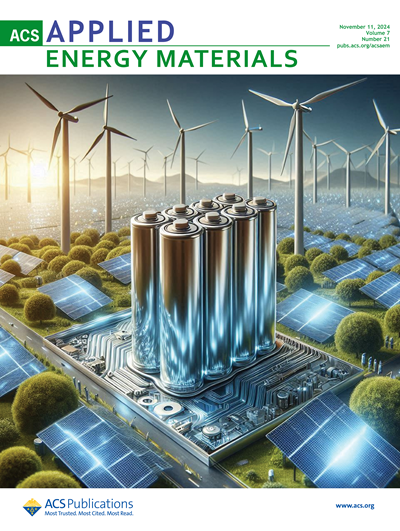
ACS Applied Energy Materials is an interdisciplinary journal publishing original research covering all aspects of materials, engineering, chemistry, physics and biology relevant to energy conversion and storage. The journal is devoted to reports of new and original experimental and theoretical research of an applied nature that integrate knowledge in the areas of materials, engineering, physics, bioscience, and chemistry into important energy applications.




 京公网安备 11010802042870号
京ICP备2023020795号-1
京公网安备 11010802042870号
京ICP备2023020795号-1

 分享
分享
 求助内容:
求助内容: 应助结果提醒方式:
 扫码关注我们
