Kimberly M Ramonell, Rachel Liou, Xinyan Zheng, Zhixing Song, James A Lee, Art Sedrakyan, Herbert Chen
{"title":"延迟甲状旁腺切除术对原发性甲状旁腺功能亢进症成人未来心血管和肾结石干预风险的影响 [原创研究].","authors":"Kimberly M Ramonell, Rachel Liou, Xinyan Zheng, Zhixing Song, James A Lee, Art Sedrakyan, Herbert Chen","doi":"10.1097/SLA.0000000000006508","DOIUrl":null,"url":null,"abstract":"<p><strong>Objective: </strong>To determine whether the timing of parathyroid surgery impacts the risk of renal stone retreatment and cardiovascular interventions.</p><p><strong>Background: </strong>Long-term, untreated primary hyperparathyroidism (pHPT) is associated with significant morbidity, including nephrolithiasis and cardiovascular disease.</p><p><strong>Methods: </strong>We conducted a population-based cohort study of New York and California state-wide data from 2000 to 2020. Adult patients who underwent renal stone treatment and were subsequently diagnosed with pHPT and underwent parathyroidectomy (PTX) were included. Patients were excluded if PTX was before the index stone procedure, they underwent second stone treatment within 6 months, with stage V chronic kidney disease, with secondary or tertiary hyperparathyroidism, with prior kidney transplant or hemodialysis, or with prior cancer diagnosis. The rate of renal stone retreatment and cardiovascular interventions after PTX in patients with pHPT with nephrolithiasis who underwent parathyroid surgery at ≤2 years and >2 years after the index stone procedure was measured.</p><p><strong>Results: </strong>We identified 2093 patients who underwent first-time stone treatment and subsequent PTX. The median time to PTX was 560 days (interquartile range: 187-1477), and follow-up was 7.4 years (interquartile range: 4.5-13.1). Delaying PTX for more than 2 years increased the risk of renal stone retreatment by 59% (HR=1.59; P <0.001), increased the risk of experiencing coronary disease or associated interventions by 118% (HR=2.18; P =0.01), and increased the risk of experiencing an overall cardiovascular event by 52% (HR=1.52; P <0.01).</p><p><strong>Conclusions: </strong>In symptomatic pHPT, delaying PTX significantly increases the risk of requiring future stone retreatment and cardiac/vascular surgical interventions. This highlights the importance of early surgical referral and multidisciplinary approaches to optimize outcomes and resource utilization in pHPT.</p>","PeriodicalId":8017,"journal":{"name":"Annals of surgery","volume":" ","pages":"345-352"},"PeriodicalIF":6.4000,"publicationDate":"2026-02-01","publicationTypes":"Journal Article","fieldsOfStudy":null,"isOpenAccess":false,"openAccessPdf":"","citationCount":"0","resultStr":"{\"title\":\"Effect of Delayed Parathyroidectomy on Risk of Future Cardiovascular and Nephrolithiasis Interventions in Adults With Primary Hyperparathyroidism.\",\"authors\":\"Kimberly M Ramonell, Rachel Liou, Xinyan Zheng, Zhixing Song, James A Lee, Art Sedrakyan, Herbert Chen\",\"doi\":\"10.1097/SLA.0000000000006508\",\"DOIUrl\":null,\"url\":null,\"abstract\":\"<p><strong>Objective: </strong>To determine whether the timing of parathyroid surgery impacts the risk of renal stone retreatment and cardiovascular interventions.</p><p><strong>Background: </strong>Long-term, untreated primary hyperparathyroidism (pHPT) is associated with significant morbidity, including nephrolithiasis and cardiovascular disease.</p><p><strong>Methods: </strong>We conducted a population-based cohort study of New York and California state-wide data from 2000 to 2020. Adult patients who underwent renal stone treatment and were subsequently diagnosed with pHPT and underwent parathyroidectomy (PTX) were included. Patients were excluded if PTX was before the index stone procedure, they underwent second stone treatment within 6 months, with stage V chronic kidney disease, with secondary or tertiary hyperparathyroidism, with prior kidney transplant or hemodialysis, or with prior cancer diagnosis. The rate of renal stone retreatment and cardiovascular interventions after PTX in patients with pHPT with nephrolithiasis who underwent parathyroid surgery at ≤2 years and >2 years after the index stone procedure was measured.</p><p><strong>Results: </strong>We identified 2093 patients who underwent first-time stone treatment and subsequent PTX. The median time to PTX was 560 days (interquartile range: 187-1477), and follow-up was 7.4 years (interquartile range: 4.5-13.1). Delaying PTX for more than 2 years increased the risk of renal stone retreatment by 59% (HR=1.59; P <0.001), increased the risk of experiencing coronary disease or associated interventions by 118% (HR=2.18; P =0.01), and increased the risk of experiencing an overall cardiovascular event by 52% (HR=1.52; P <0.01).</p><p><strong>Conclusions: </strong>In symptomatic pHPT, delaying PTX significantly increases the risk of requiring future stone retreatment and cardiac/vascular surgical interventions. This highlights the importance of early surgical referral and multidisciplinary approaches to optimize outcomes and resource utilization in pHPT.</p>\",\"PeriodicalId\":8017,\"journal\":{\"name\":\"Annals of surgery\",\"volume\":\" \",\"pages\":\"345-352\"},\"PeriodicalIF\":6.4000,\"publicationDate\":\"2026-02-01\",\"publicationTypes\":\"Journal Article\",\"fieldsOfStudy\":null,\"isOpenAccess\":false,\"openAccessPdf\":\"\",\"citationCount\":\"0\",\"resultStr\":null,\"platform\":\"Semanticscholar\",\"paperid\":null,\"PeriodicalName\":\"Annals of surgery\",\"FirstCategoryId\":\"3\",\"ListUrlMain\":\"https://doi.org/10.1097/SLA.0000000000006508\",\"RegionNum\":1,\"RegionCategory\":\"医学\",\"ArticlePicture\":[],\"TitleCN\":null,\"AbstractTextCN\":null,\"PMCID\":null,\"EPubDate\":\"2024/8/23 0:00:00\",\"PubModel\":\"Epub\",\"JCR\":\"Q1\",\"JCRName\":\"SURGERY\",\"Score\":null,\"Total\":0}","platform":"Semanticscholar","paperid":null,"PeriodicalName":"Annals of surgery","FirstCategoryId":"3","ListUrlMain":"https://doi.org/10.1097/SLA.0000000000006508","RegionNum":1,"RegionCategory":"医学","ArticlePicture":[],"TitleCN":null,"AbstractTextCN":null,"PMCID":null,"EPubDate":"2024/8/23 0:00:00","PubModel":"Epub","JCR":"Q1","JCRName":"SURGERY","Score":null,"Total":0}
Effect of Delayed Parathyroidectomy on Risk of Future Cardiovascular and Nephrolithiasis Interventions in Adults With Primary Hyperparathyroidism.
Objective: To determine whether the timing of parathyroid surgery impacts the risk of renal stone retreatment and cardiovascular interventions.
Background: Long-term, untreated primary hyperparathyroidism (pHPT) is associated with significant morbidity, including nephrolithiasis and cardiovascular disease.
Methods: We conducted a population-based cohort study of New York and California state-wide data from 2000 to 2020. Adult patients who underwent renal stone treatment and were subsequently diagnosed with pHPT and underwent parathyroidectomy (PTX) were included. Patients were excluded if PTX was before the index stone procedure, they underwent second stone treatment within 6 months, with stage V chronic kidney disease, with secondary or tertiary hyperparathyroidism, with prior kidney transplant or hemodialysis, or with prior cancer diagnosis. The rate of renal stone retreatment and cardiovascular interventions after PTX in patients with pHPT with nephrolithiasis who underwent parathyroid surgery at ≤2 years and >2 years after the index stone procedure was measured.
Results: We identified 2093 patients who underwent first-time stone treatment and subsequent PTX. The median time to PTX was 560 days (interquartile range: 187-1477), and follow-up was 7.4 years (interquartile range: 4.5-13.1). Delaying PTX for more than 2 years increased the risk of renal stone retreatment by 59% (HR=1.59; P <0.001), increased the risk of experiencing coronary disease or associated interventions by 118% (HR=2.18; P =0.01), and increased the risk of experiencing an overall cardiovascular event by 52% (HR=1.52; P <0.01).
Conclusions: In symptomatic pHPT, delaying PTX significantly increases the risk of requiring future stone retreatment and cardiac/vascular surgical interventions. This highlights the importance of early surgical referral and multidisciplinary approaches to optimize outcomes and resource utilization in pHPT.
期刊介绍:
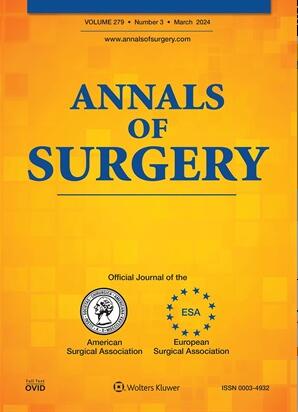
The Annals of Surgery is a renowned surgery journal, recognized globally for its extensive scholarly references. It serves as a valuable resource for the international medical community by disseminating knowledge regarding important developments in surgical science and practice. Surgeons regularly turn to the Annals of Surgery to stay updated on innovative practices and techniques. The journal also offers special editorial features such as "Advances in Surgical Technique," offering timely coverage of ongoing clinical issues. Additionally, the journal publishes monthly review articles that address the latest concerns in surgical practice.




 京公网安备 11010802042870号
京ICP备2023020795号-1
京公网安备 11010802042870号
京ICP备2023020795号-1

 分享
分享
 求助内容:
求助内容: 应助结果提醒方式:
 扫码关注我们
