Filip K. Knop MD, Shweta Urva PhD, Mallikarjuna Rettiganti PhD, Charles T. Benson MD, William C. Roell PhD, Kieren J. Mather MD, Axel Haupt MD, Edward John Pratt MD
{"title":"长效葡萄糖依赖性促胰岛素多肽受体激动剂改善了胰高血糖素样肽-1受体激动剂治疗的胃肠耐受性。","authors":"Filip K. Knop MD, Shweta Urva PhD, Mallikarjuna Rettiganti PhD, Charles T. Benson MD, William C. Roell PhD, Kieren J. Mather MD, Axel Haupt MD, Edward John Pratt MD","doi":"10.1111/dom.15875","DOIUrl":null,"url":null,"abstract":"<p>Tirzepatide, a novel long-acting glucose-dependent insulinotropic polypeptide/glucagon-like peptide 1 (GIP/GLP-1) receptor agonist (GIP/GLP-1 RA), has shown greater clinical efficacy in reducing HbA1c and body weight compared with placebo or selective GLP-1 RAs.<span><sup>1, 2</sup></span> Mechanisms by which GLP-1R agonism contributes to chronic weight management and glycaemia are well understood. The contributions of GIPR agonism to the clinical efficacy of tirzepatide are less well known.</p><p>GLP-1 RA use is associated with gastrointestinal (GI) tolerability challenges, including nausea and emesis, that potentially limit efficacy and compliance.<span><sup>3</sup></span> The beneficial and adverse effects of GLP-1R agonism are ascribed to signalling in regions of the hind brain, which also express GIP receptors. This may suggest potential overlapping central regulation of emetic responses. In animal experiments, GIPR agonism reduced GI adverse effects (AEs) induced by chemotherapeutic agents or GLP-1R agonism.<span><sup>4, 5</sup></span></p><p>Here, we explore the potential benefit of GIPR agonism to offset GI AEs associated with GLP-1R agonism in a clinical setting. We investigate the effect of a single dose of the long-acting, selective GIPRA, LY3537021 (LY), on GI AEs in healthy volunteers in the context of daily dosing and rapid dose escalation with liraglutide, a selective GLP-1 RA. We hypothesize that concurrent exposure to liraglutide and a GIPRA would produce fewer GI AEs than exposure to liraglutide alone.</p><p>Here, we show that co-exposure to a GIPRA can reduce the incidence of GI AEs that are commonly seen with GLP-1 RA treatment. With the main exception of diarrhoea, GIPR agonism provided numerical reductions in each of the main recognized GI AEs associated with the use of GLP-1 RAs.</p><p>These observations are concordant with animal experiments that show pretreatment with GIPR agonists reduces chemotherapy-induced and GLP-1 RA-induced GI AEs, including vomiting.<span><sup>4, 5</sup></span> Treatment with GIPR agonism attenuated GLP-1 RA-induced nausea and emesis in shrews, and peptide YY-induced nausea in mice.<span><sup>4, 5, 7</sup></span> A recently presented study of a long-acting GIPRA added to semaglutide also showed a numerical reduction of GI events in the combination versus semaglutide alone, mainly driven by nausea and vomiting events, in alignment with the current findings.<span><sup>8</sup></span></p><p>The beneficial effects of GLP-1 RAs to reduce food intake are mediated by their action on an integrated neuronal network originating in the hypothalamus and hind brain, namely, the arcuate nucleus of the hypothalamus and the area postrema in the brainstem.<span><sup>9, 10</sup></span> GI AEs such as GLP-1 RA-induced nausea are thought to be mediated by GLP-1 RA action, primarily in the area postrema.<span><sup>10</sup></span> Notably, the GIPR is also expressed in these brain regions, suggesting that there may be overlapping regulation of central nervous system-mediated anorexigenic and emetic behaviours by GIPRAs.<span><sup>10, 11</sup></span> The integrated response to GLP-1 RAs and GIPRAs in these areas of the brain may provide the neuronal substrate mediating the prior observations in animals and the current observations in humans.</p><p>The limitations of this study include the small number of female participants and the limited ethnic diversity, which may limit the generalizability of the observations. Women may be more prone to GLP-1–related AEs, so the efficacy of GIPRAs to reduce these AEs in women may differ.<span><sup>12</sup></span> This study was not powered to detect efficacy signals for individual GI event types, nor was it powered to evaluate efficacy by differing weight status.</p><p>The current study findings suggest a means by which the GIPR-activating aspect of tirzepatide action may contribute to its overall efficacy, namely by improving the tolerability of its GLP-1R–activating aspect.<span><sup>13</sup></span> This potentially enables greater GLP-1R engagement and function by tirzepatide with less GI distress, contributing to efficacy and adherence.</p><p>AH, KJM, EJP, and WCR wrote the first draft of the manuscript. All authors contributed to the content. CTB, AH, FKK, KJM, EJP, WCR, and SU contributed to the study design. EJP contributed to the data collection. All authors contributed to the analyses.</p><p>This study was funded by Eli Lilly and Company. The funder of the study, Eli Lilly and Company, was involved in study design, data collection, data analysis, data interpretation, and writing of the report.</p><p>FKK is employed at and shareholder of Novo Nordisk A/S, Bagsværd, Denmark. SU, MR, CTB, WCR, KJM, AH and EJP are employees and shareholders of Eli Lilly and Company, Inc., Indianapolis, IN.</p>","PeriodicalId":158,"journal":{"name":"Diabetes, Obesity & Metabolism","volume":"26 11","pages":"5474-5478"},"PeriodicalIF":6.1000,"publicationDate":"2024-08-27","publicationTypes":"Journal Article","fieldsOfStudy":null,"isOpenAccess":false,"openAccessPdf":"https://onlinelibrary.wiley.com/doi/epdf/10.1111/dom.15875","citationCount":"0","resultStr":"{\"title\":\"A long-acting glucose-dependent insulinotropic polypeptide receptor agonist improves the gastrointestinal tolerability of glucagon-like peptide-1 receptor agonist therapy\",\"authors\":\"Filip K. Knop MD, Shweta Urva PhD, Mallikarjuna Rettiganti PhD, Charles T. Benson MD, William C. Roell PhD, Kieren J. Mather MD, Axel Haupt MD, Edward John Pratt MD\",\"doi\":\"10.1111/dom.15875\",\"DOIUrl\":null,\"url\":null,\"abstract\":\"<p>Tirzepatide, a novel long-acting glucose-dependent insulinotropic polypeptide/glucagon-like peptide 1 (GIP/GLP-1) receptor agonist (GIP/GLP-1 RA), has shown greater clinical efficacy in reducing HbA1c and body weight compared with placebo or selective GLP-1 RAs.<span><sup>1, 2</sup></span> Mechanisms by which GLP-1R agonism contributes to chronic weight management and glycaemia are well understood. The contributions of GIPR agonism to the clinical efficacy of tirzepatide are less well known.</p><p>GLP-1 RA use is associated with gastrointestinal (GI) tolerability challenges, including nausea and emesis, that potentially limit efficacy and compliance.<span><sup>3</sup></span> The beneficial and adverse effects of GLP-1R agonism are ascribed to signalling in regions of the hind brain, which also express GIP receptors. This may suggest potential overlapping central regulation of emetic responses. In animal experiments, GIPR agonism reduced GI adverse effects (AEs) induced by chemotherapeutic agents or GLP-1R agonism.<span><sup>4, 5</sup></span></p><p>Here, we explore the potential benefit of GIPR agonism to offset GI AEs associated with GLP-1R agonism in a clinical setting. We investigate the effect of a single dose of the long-acting, selective GIPRA, LY3537021 (LY), on GI AEs in healthy volunteers in the context of daily dosing and rapid dose escalation with liraglutide, a selective GLP-1 RA. We hypothesize that concurrent exposure to liraglutide and a GIPRA would produce fewer GI AEs than exposure to liraglutide alone.</p><p>Here, we show that co-exposure to a GIPRA can reduce the incidence of GI AEs that are commonly seen with GLP-1 RA treatment. With the main exception of diarrhoea, GIPR agonism provided numerical reductions in each of the main recognized GI AEs associated with the use of GLP-1 RAs.</p><p>These observations are concordant with animal experiments that show pretreatment with GIPR agonists reduces chemotherapy-induced and GLP-1 RA-induced GI AEs, including vomiting.<span><sup>4, 5</sup></span> Treatment with GIPR agonism attenuated GLP-1 RA-induced nausea and emesis in shrews, and peptide YY-induced nausea in mice.<span><sup>4, 5, 7</sup></span> A recently presented study of a long-acting GIPRA added to semaglutide also showed a numerical reduction of GI events in the combination versus semaglutide alone, mainly driven by nausea and vomiting events, in alignment with the current findings.<span><sup>8</sup></span></p><p>The beneficial effects of GLP-1 RAs to reduce food intake are mediated by their action on an integrated neuronal network originating in the hypothalamus and hind brain, namely, the arcuate nucleus of the hypothalamus and the area postrema in the brainstem.<span><sup>9, 10</sup></span> GI AEs such as GLP-1 RA-induced nausea are thought to be mediated by GLP-1 RA action, primarily in the area postrema.<span><sup>10</sup></span> Notably, the GIPR is also expressed in these brain regions, suggesting that there may be overlapping regulation of central nervous system-mediated anorexigenic and emetic behaviours by GIPRAs.<span><sup>10, 11</sup></span> The integrated response to GLP-1 RAs and GIPRAs in these areas of the brain may provide the neuronal substrate mediating the prior observations in animals and the current observations in humans.</p><p>The limitations of this study include the small number of female participants and the limited ethnic diversity, which may limit the generalizability of the observations. Women may be more prone to GLP-1–related AEs, so the efficacy of GIPRAs to reduce these AEs in women may differ.<span><sup>12</sup></span> This study was not powered to detect efficacy signals for individual GI event types, nor was it powered to evaluate efficacy by differing weight status.</p><p>The current study findings suggest a means by which the GIPR-activating aspect of tirzepatide action may contribute to its overall efficacy, namely by improving the tolerability of its GLP-1R–activating aspect.<span><sup>13</sup></span> This potentially enables greater GLP-1R engagement and function by tirzepatide with less GI distress, contributing to efficacy and adherence.</p><p>AH, KJM, EJP, and WCR wrote the first draft of the manuscript. All authors contributed to the content. CTB, AH, FKK, KJM, EJP, WCR, and SU contributed to the study design. EJP contributed to the data collection. All authors contributed to the analyses.</p><p>This study was funded by Eli Lilly and Company. The funder of the study, Eli Lilly and Company, was involved in study design, data collection, data analysis, data interpretation, and writing of the report.</p><p>FKK is employed at and shareholder of Novo Nordisk A/S, Bagsværd, Denmark. SU, MR, CTB, WCR, KJM, AH and EJP are employees and shareholders of Eli Lilly and Company, Inc., Indianapolis, IN.</p>\",\"PeriodicalId\":158,\"journal\":{\"name\":\"Diabetes, Obesity & Metabolism\",\"volume\":\"26 11\",\"pages\":\"5474-5478\"},\"PeriodicalIF\":6.1000,\"publicationDate\":\"2024-08-27\",\"publicationTypes\":\"Journal Article\",\"fieldsOfStudy\":null,\"isOpenAccess\":false,\"openAccessPdf\":\"https://onlinelibrary.wiley.com/doi/epdf/10.1111/dom.15875\",\"citationCount\":\"0\",\"resultStr\":null,\"platform\":\"Semanticscholar\",\"paperid\":null,\"PeriodicalName\":\"Diabetes, Obesity & Metabolism\",\"FirstCategoryId\":\"3\",\"ListUrlMain\":\"https://dom-pubs.onlinelibrary.wiley.com/doi/10.1111/dom.15875\",\"RegionNum\":2,\"RegionCategory\":\"医学\",\"ArticlePicture\":[],\"TitleCN\":null,\"AbstractTextCN\":null,\"PMCID\":null,\"EPubDate\":\"\",\"PubModel\":\"\",\"JCR\":\"Q1\",\"JCRName\":\"ENDOCRINOLOGY & METABOLISM\",\"Score\":null,\"Total\":0}","platform":"Semanticscholar","paperid":null,"PeriodicalName":"Diabetes, Obesity & Metabolism","FirstCategoryId":"3","ListUrlMain":"https://dom-pubs.onlinelibrary.wiley.com/doi/10.1111/dom.15875","RegionNum":2,"RegionCategory":"医学","ArticlePicture":[],"TitleCN":null,"AbstractTextCN":null,"PMCID":null,"EPubDate":"","PubModel":"","JCR":"Q1","JCRName":"ENDOCRINOLOGY & METABOLISM","Score":null,"Total":0}
引用次数: 0
摘要
替扎帕肽是一种新型长效葡萄糖依赖性促胰岛素多肽/胰高血糖素样肽 1(GIP/GLP-1)受体激动剂(GIP/GLP-1 RA),与安慰剂或选择性 GLP-1 RA 相比,它在降低 HbA1c 和体重方面显示出更大的临床疗效。GLP-1 RA 的使用与胃肠道(GI)耐受性挑战有关,包括恶心和呕吐,这可能会限制疗效和依从性。3 GLP-1R 激动的有利和不利影响可归因于后脑区域的信号传导,这些区域也表达 GIP 受体。这可能表明,催吐反应的中枢调节可能存在重叠。在动物实验中,GIPR 激动可减少化疗药物或 GLP-1R 激动引起的消化道不良反应(AEs)。我们研究了单剂量长效、选择性 GIPRA LY3537021(LY)对健康志愿者 GI AEs 的影响,以及每日给药和快速剂量升级利拉鲁肽(一种选择性 GLP-1 RA)的情况。我们假设,同时服用利拉鲁肽和一种 GIPRA 会比单独服用利拉鲁肽产生更少的消化道不良反应。在此,我们证明,同时服用一种 GIPRA 可以降低 GLP-1 RA 治疗中常见的消化道不良反应的发生率。这些观察结果与动物实验结果一致,动物实验显示 GIPR 激动剂的预处理可减少化疗和 GLP-1 RA 引起的消化道不良反应,包括呕吐、5 GIPR 激动剂治疗可减轻 GLP-1 RA 诱导的鼩鼱恶心和呕吐,以及肽 YY 诱导的小鼠恶心。4, 5, 7 最近发表的一项将长效 GIPRA 加入到赛马鲁肽中的研究也显示,与单独使用赛马鲁肽相比,联合用药可在一定程度上减少消化道事件,主要是恶心和呕吐事件,这与目前的研究结果一致。GLP-1 RA 对减少食物摄入量的有益作用是由其对源自下丘脑和后脑(即下丘脑弓状核和脑干后区)的综合神经元网络的作用介导的。9, 10 GLP-1 RA 引起的恶心等胃肠道反应被认为是由 GLP-1 RA 的作用介导的,主要是在后区。值得注意的是,GIPR 也在这些脑区表达,这表明 GIPRAs 对中枢神经系统介导的厌食和催吐行为可能存在重叠调控。10, 11 这些脑区对 GLP-1 RAs 和 GIPRAs 的综合反应可能提供了神经元基质,介导了之前在动物身上的观察结果和目前在人类身上的观察结果。女性可能更容易出现 GLP-1 相关的 AEs,因此 GIPRAs 对女性减少这些 AEs 的疗效可能有所不同。12 本研究没有检测单个 GI 事件类型疗效信号的能力,也没有根据不同体重状况评估疗效的能力。目前的研究结果表明,替扎帕肽的 GIPR 激活作用可能有助于提高其总体疗效,即通过改善其 GLP-1R 激活作用的耐受性。这有可能使替哌肽发挥更大的 GLP-1R 作用和功能,同时减少胃肠道不适,从而提高疗效和依从性。AH、KJM、EJP 和 WCR 撰写了手稿初稿。所有作者均对稿件内容有贡献。CTB、AH、FKK、KJM、EJP、WCR 和 SU 参与了研究设计。EJP参与了数据收集。本研究由礼来公司资助。本研究的资助方礼来公司参与了研究设计、数据收集、数据分析、数据解释和报告撰写。FKK受雇于丹麦巴格瓦德的诺和诺德公司(Novo Nordisk A/S, Bagsværd),同时也是该公司的股东。SU、MR、CTB、WCR、KJM、AH 和 EJP 是美国印第安纳州印第安纳波利斯礼来公司的员工和股东。
A long-acting glucose-dependent insulinotropic polypeptide receptor agonist improves the gastrointestinal tolerability of glucagon-like peptide-1 receptor agonist therapy
Tirzepatide, a novel long-acting glucose-dependent insulinotropic polypeptide/glucagon-like peptide 1 (GIP/GLP-1) receptor agonist (GIP/GLP-1 RA), has shown greater clinical efficacy in reducing HbA1c and body weight compared with placebo or selective GLP-1 RAs.1, 2 Mechanisms by which GLP-1R agonism contributes to chronic weight management and glycaemia are well understood. The contributions of GIPR agonism to the clinical efficacy of tirzepatide are less well known.
GLP-1 RA use is associated with gastrointestinal (GI) tolerability challenges, including nausea and emesis, that potentially limit efficacy and compliance.3 The beneficial and adverse effects of GLP-1R agonism are ascribed to signalling in regions of the hind brain, which also express GIP receptors. This may suggest potential overlapping central regulation of emetic responses. In animal experiments, GIPR agonism reduced GI adverse effects (AEs) induced by chemotherapeutic agents or GLP-1R agonism.4, 5
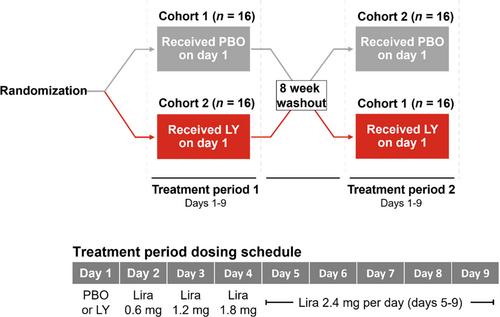
Here, we explore the potential benefit of GIPR agonism to offset GI AEs associated with GLP-1R agonism in a clinical setting. We investigate the effect of a single dose of the long-acting, selective GIPRA, LY3537021 (LY), on GI AEs in healthy volunteers in the context of daily dosing and rapid dose escalation with liraglutide, a selective GLP-1 RA. We hypothesize that concurrent exposure to liraglutide and a GIPRA would produce fewer GI AEs than exposure to liraglutide alone.
Here, we show that co-exposure to a GIPRA can reduce the incidence of GI AEs that are commonly seen with GLP-1 RA treatment. With the main exception of diarrhoea, GIPR agonism provided numerical reductions in each of the main recognized GI AEs associated with the use of GLP-1 RAs.
These observations are concordant with animal experiments that show pretreatment with GIPR agonists reduces chemotherapy-induced and GLP-1 RA-induced GI AEs, including vomiting.4, 5 Treatment with GIPR agonism attenuated GLP-1 RA-induced nausea and emesis in shrews, and peptide YY-induced nausea in mice.4, 5, 7 A recently presented study of a long-acting GIPRA added to semaglutide also showed a numerical reduction of GI events in the combination versus semaglutide alone, mainly driven by nausea and vomiting events, in alignment with the current findings.8
The beneficial effects of GLP-1 RAs to reduce food intake are mediated by their action on an integrated neuronal network originating in the hypothalamus and hind brain, namely, the arcuate nucleus of the hypothalamus and the area postrema in the brainstem.9, 10 GI AEs such as GLP-1 RA-induced nausea are thought to be mediated by GLP-1 RA action, primarily in the area postrema.10 Notably, the GIPR is also expressed in these brain regions, suggesting that there may be overlapping regulation of central nervous system-mediated anorexigenic and emetic behaviours by GIPRAs.10, 11 The integrated response to GLP-1 RAs and GIPRAs in these areas of the brain may provide the neuronal substrate mediating the prior observations in animals and the current observations in humans.
The limitations of this study include the small number of female participants and the limited ethnic diversity, which may limit the generalizability of the observations. Women may be more prone to GLP-1–related AEs, so the efficacy of GIPRAs to reduce these AEs in women may differ.12 This study was not powered to detect efficacy signals for individual GI event types, nor was it powered to evaluate efficacy by differing weight status.
The current study findings suggest a means by which the GIPR-activating aspect of tirzepatide action may contribute to its overall efficacy, namely by improving the tolerability of its GLP-1R–activating aspect.13 This potentially enables greater GLP-1R engagement and function by tirzepatide with less GI distress, contributing to efficacy and adherence.
AH, KJM, EJP, and WCR wrote the first draft of the manuscript. All authors contributed to the content. CTB, AH, FKK, KJM, EJP, WCR, and SU contributed to the study design. EJP contributed to the data collection. All authors contributed to the analyses.
This study was funded by Eli Lilly and Company. The funder of the study, Eli Lilly and Company, was involved in study design, data collection, data analysis, data interpretation, and writing of the report.
FKK is employed at and shareholder of Novo Nordisk A/S, Bagsværd, Denmark. SU, MR, CTB, WCR, KJM, AH and EJP are employees and shareholders of Eli Lilly and Company, Inc., Indianapolis, IN.
期刊介绍:
Diabetes, Obesity and Metabolism is primarily a journal of clinical and experimental pharmacology and therapeutics covering the interrelated areas of diabetes, obesity and metabolism. The journal prioritises high-quality original research that reports on the effects of new or existing therapies, including dietary, exercise and lifestyle (non-pharmacological) interventions, in any aspect of metabolic and endocrine disease, either in humans or animal and cellular systems. ‘Metabolism’ may relate to lipids, bone and drug metabolism, or broader aspects of endocrine dysfunction. Preclinical pharmacology, pharmacokinetic studies, meta-analyses and those addressing drug safety and tolerability are also highly suitable for publication in this journal. Original research may be published as a main paper or as a research letter.





 京公网安备 11010802042870号
京ICP备2023020795号-1
京公网安备 11010802042870号
京ICP备2023020795号-1

 分享
分享
 求助内容:
求助内容: 应助结果提醒方式:
 扫码关注我们
