Anukriti Sharma PhD, Arshiya Mariam PhD, Emily Zacherle MS MBA, Alex Milinovich BA, Janine Bauman BSN, David S. Sugano DrPH, Josh Noone PhD, Jigar R. Rajpura PhD, Robert S. Zimmerman MD, Bartolome Burguera MD PhD, Michael W. Kattan PhD, Anita D. Misra-Hebert MD MPH, Kevin M. Pantalone DO, Daniel M. Rotroff PhD MSPH
{"title":"阐明减轻体重和控制血糖在 2 型糖尿病患者中的作用。","authors":"Anukriti Sharma PhD, Arshiya Mariam PhD, Emily Zacherle MS MBA, Alex Milinovich BA, Janine Bauman BSN, David S. Sugano DrPH, Josh Noone PhD, Jigar R. Rajpura PhD, Robert S. Zimmerman MD, Bartolome Burguera MD PhD, Michael W. Kattan PhD, Anita D. Misra-Hebert MD MPH, Kevin M. Pantalone DO, Daniel M. Rotroff PhD MSPH","doi":"10.1111/dom.15896","DOIUrl":null,"url":null,"abstract":"<div>\n \n \n <section>\n \n <h3> Aims</h3>\n \n <p>To investigate the independent contributions of glycated haemoglobin (HbA1c) reduction and weight loss to clinical outcomes in patients with type 2 diabetes (T2D) treated with antidiabetic drugs, including glucagon-like peptide-1 receptor agonists (GLP-1RAs).</p>\n </section>\n \n <section>\n \n <h3> Materials and Methods</h3>\n \n <p>This observational, retrospective cohort study used deidentified electronic health record-derived data from patients evaluated at the Cleveland Clinic (1 January 2000–31 December 2020). Cohort A included 8876 patients with newly diagnosed T2D treated with any of six antidiabetic drug classes. Cohort B included 4161 patients with T2D initiating GLP-1RA treatment. The effects of body mass index (BMI) and HbA1c reduction, variability, and durability on clinical outcomes were investigated.</p>\n </section>\n \n <section>\n \n <h3> Results</h3>\n \n <p>In Cohort A, each 1% BMI reduction was associated with 3%, 1%, and 4% reduced risk of heart failure (<i>p</i> = 0.017), hypertension (<i>p</i> = 0.006), and insulin initiation (<i>p</i> = 0.001), respectively. Each 1% (~11 mmol/mol) HbA1c reduction was associated with 4% and 29% reduced risk of hypertension (<i>p</i> = 0.041) and insulin initiation (<i>p</i> = 0.001), respectively. In Cohort B, each 1% BMI reduction was associated with 4% and 3% reduced risk of cardiovascular disease (<i>p</i> = 0.008) and insulin initiation (<i>p</i> = 0.002), respectively. Each 1% (~11 mmol/mol) HbA1c reduction was associated with 4% and 16% reduced risk of chronic kidney disease (<i>p</i> = 0.014) and insulin initiation (<i>p</i> = 1 × 10<sup>−4</sup>), respectively. Lower BMI variability and greater BMI durability were associated with decreased risk of clinical outcomes in both cohorts.</p>\n </section>\n \n <section>\n \n <h3> Conclusions</h3>\n \n <p>Antidiabetic medication-associated, and specifically GLP-1RA-associated, weight loss and HbA1c reductions independently reduce real-world clinical outcome risk.</p>\n </section>\n </div>","PeriodicalId":158,"journal":{"name":"Diabetes, Obesity & Metabolism","volume":"26 11","pages":"5347-5357"},"PeriodicalIF":5.7000,"publicationDate":"2024-08-27","publicationTypes":"Journal Article","fieldsOfStudy":null,"isOpenAccess":false,"openAccessPdf":"https://onlinelibrary.wiley.com/doi/epdf/10.1111/dom.15896","citationCount":"0","resultStr":"{\"title\":\"Elucidating the role of weight loss and glycaemic control in patients with type 2 diabetes\",\"authors\":\"Anukriti Sharma PhD, Arshiya Mariam PhD, Emily Zacherle MS MBA, Alex Milinovich BA, Janine Bauman BSN, David S. Sugano DrPH, Josh Noone PhD, Jigar R. Rajpura PhD, Robert S. Zimmerman MD, Bartolome Burguera MD PhD, Michael W. Kattan PhD, Anita D. Misra-Hebert MD MPH, Kevin M. Pantalone DO, Daniel M. Rotroff PhD MSPH\",\"doi\":\"10.1111/dom.15896\",\"DOIUrl\":null,\"url\":null,\"abstract\":\"<div>\\n \\n \\n <section>\\n \\n <h3> Aims</h3>\\n \\n <p>To investigate the independent contributions of glycated haemoglobin (HbA1c) reduction and weight loss to clinical outcomes in patients with type 2 diabetes (T2D) treated with antidiabetic drugs, including glucagon-like peptide-1 receptor agonists (GLP-1RAs).</p>\\n </section>\\n \\n <section>\\n \\n <h3> Materials and Methods</h3>\\n \\n <p>This observational, retrospective cohort study used deidentified electronic health record-derived data from patients evaluated at the Cleveland Clinic (1 January 2000–31 December 2020). Cohort A included 8876 patients with newly diagnosed T2D treated with any of six antidiabetic drug classes. Cohort B included 4161 patients with T2D initiating GLP-1RA treatment. The effects of body mass index (BMI) and HbA1c reduction, variability, and durability on clinical outcomes were investigated.</p>\\n </section>\\n \\n <section>\\n \\n <h3> Results</h3>\\n \\n <p>In Cohort A, each 1% BMI reduction was associated with 3%, 1%, and 4% reduced risk of heart failure (<i>p</i> = 0.017), hypertension (<i>p</i> = 0.006), and insulin initiation (<i>p</i> = 0.001), respectively. Each 1% (~11 mmol/mol) HbA1c reduction was associated with 4% and 29% reduced risk of hypertension (<i>p</i> = 0.041) and insulin initiation (<i>p</i> = 0.001), respectively. In Cohort B, each 1% BMI reduction was associated with 4% and 3% reduced risk of cardiovascular disease (<i>p</i> = 0.008) and insulin initiation (<i>p</i> = 0.002), respectively. Each 1% (~11 mmol/mol) HbA1c reduction was associated with 4% and 16% reduced risk of chronic kidney disease (<i>p</i> = 0.014) and insulin initiation (<i>p</i> = 1 × 10<sup>−4</sup>), respectively. Lower BMI variability and greater BMI durability were associated with decreased risk of clinical outcomes in both cohorts.</p>\\n </section>\\n \\n <section>\\n \\n <h3> Conclusions</h3>\\n \\n <p>Antidiabetic medication-associated, and specifically GLP-1RA-associated, weight loss and HbA1c reductions independently reduce real-world clinical outcome risk.</p>\\n </section>\\n </div>\",\"PeriodicalId\":158,\"journal\":{\"name\":\"Diabetes, Obesity & Metabolism\",\"volume\":\"26 11\",\"pages\":\"5347-5357\"},\"PeriodicalIF\":5.7000,\"publicationDate\":\"2024-08-27\",\"publicationTypes\":\"Journal Article\",\"fieldsOfStudy\":null,\"isOpenAccess\":false,\"openAccessPdf\":\"https://onlinelibrary.wiley.com/doi/epdf/10.1111/dom.15896\",\"citationCount\":\"0\",\"resultStr\":null,\"platform\":\"Semanticscholar\",\"paperid\":null,\"PeriodicalName\":\"Diabetes, Obesity & Metabolism\",\"FirstCategoryId\":\"3\",\"ListUrlMain\":\"https://dom-pubs.onlinelibrary.wiley.com/doi/10.1111/dom.15896\",\"RegionNum\":2,\"RegionCategory\":\"医学\",\"ArticlePicture\":[],\"TitleCN\":null,\"AbstractTextCN\":null,\"PMCID\":null,\"EPubDate\":\"\",\"PubModel\":\"\",\"JCR\":\"Q1\",\"JCRName\":\"ENDOCRINOLOGY & METABOLISM\",\"Score\":null,\"Total\":0}","platform":"Semanticscholar","paperid":null,"PeriodicalName":"Diabetes, Obesity & Metabolism","FirstCategoryId":"3","ListUrlMain":"https://dom-pubs.onlinelibrary.wiley.com/doi/10.1111/dom.15896","RegionNum":2,"RegionCategory":"医学","ArticlePicture":[],"TitleCN":null,"AbstractTextCN":null,"PMCID":null,"EPubDate":"","PubModel":"","JCR":"Q1","JCRName":"ENDOCRINOLOGY & METABOLISM","Score":null,"Total":0}
Elucidating the role of weight loss and glycaemic control in patients with type 2 diabetes
Aims
To investigate the independent contributions of glycated haemoglobin (HbA1c) reduction and weight loss to clinical outcomes in patients with type 2 diabetes (T2D) treated with antidiabetic drugs, including glucagon-like peptide-1 receptor agonists (GLP-1RAs).
Materials and Methods
This observational, retrospective cohort study used deidentified electronic health record-derived data from patients evaluated at the Cleveland Clinic (1 January 2000–31 December 2020). Cohort A included 8876 patients with newly diagnosed T2D treated with any of six antidiabetic drug classes. Cohort B included 4161 patients with T2D initiating GLP-1RA treatment. The effects of body mass index (BMI) and HbA1c reduction, variability, and durability on clinical outcomes were investigated.
Results
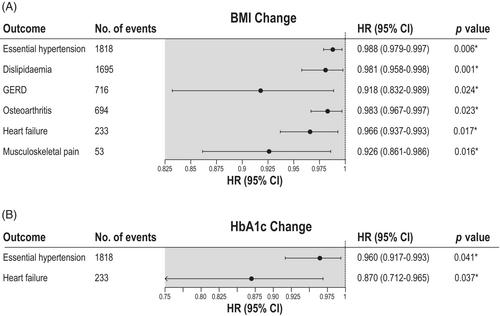
In Cohort A, each 1% BMI reduction was associated with 3%, 1%, and 4% reduced risk of heart failure (p = 0.017), hypertension (p = 0.006), and insulin initiation (p = 0.001), respectively. Each 1% (~11 mmol/mol) HbA1c reduction was associated with 4% and 29% reduced risk of hypertension (p = 0.041) and insulin initiation (p = 0.001), respectively. In Cohort B, each 1% BMI reduction was associated with 4% and 3% reduced risk of cardiovascular disease (p = 0.008) and insulin initiation (p = 0.002), respectively. Each 1% (~11 mmol/mol) HbA1c reduction was associated with 4% and 16% reduced risk of chronic kidney disease (p = 0.014) and insulin initiation (p = 1 × 10⁻⁴), respectively. Lower BMI variability and greater BMI durability were associated with decreased risk of clinical outcomes in both cohorts.
Conclusions
Antidiabetic medication-associated, and specifically GLP-1RA-associated, weight loss and HbA1c reductions independently reduce real-world clinical outcome risk.
期刊介绍:
Diabetes, Obesity and Metabolism is primarily a journal of clinical and experimental pharmacology and therapeutics covering the interrelated areas of diabetes, obesity and metabolism. The journal prioritises high-quality original research that reports on the effects of new or existing therapies, including dietary, exercise and lifestyle (non-pharmacological) interventions, in any aspect of metabolic and endocrine disease, either in humans or animal and cellular systems. ‘Metabolism’ may relate to lipids, bone and drug metabolism, or broader aspects of endocrine dysfunction. Preclinical pharmacology, pharmacokinetic studies, meta-analyses and those addressing drug safety and tolerability are also highly suitable for publication in this journal. Original research may be published as a main paper or as a research letter.





 京公网安备 11010802042870号
京ICP备2023020795号-1
京公网安备 11010802042870号
京ICP备2023020795号-1

 分享
分享
 求助内容:
求助内容: 应助结果提醒方式:
 扫码关注我们
