{"title":"SYNE1相关疾病的同卵双生表型变异。","authors":"Heather Pekeles, Kenneth A. Myers","doi":"10.1002/ajmg.a.63858","DOIUrl":null,"url":null,"abstract":"<p>\n <i>SYNE1</i> (OMIM 608441) encodes the spectrin repeat-containing nuclear envelope protein 1 (or synaptic nuclear envelope protein 1, nesprin 1), belonging to a family of proteins involved in connecting the nuclear plasma membrane to the actin cytoskeleton (Rajgor et al. <span>2012</span>). SYNE1-related disorders (or SYNE1 deficiency) comprise a group of autosomal recessive or autosomal dominant inherited disorders with a broad range of phenotypes. The first reported phenotype was adult-onset spinocerebellar ataxia (also known as SCAR8 and ARCA1), with features including cerebellar ataxia, upper or lower motor neuron involvement, including spasticity and hyperreflexia, or conversely muscle atrophy and diminished reflexes, scoliosis, pes cavus, and varying degrees of cognitive impairment (Gros-Louis et al. <span>2007</span>; Wiethoff et al. <span>2016</span>). This entity has been referred to as recessive ataxia of Beauce, given it was originally identified in French-Canadian families originating from the Beauce and Bas-St-Laurent regions of Quebec (Gros-Louis et al. <span>2007</span>), though it has since been identified in other diverse populations (Synofzik et al. <span>2016</span>; Wiethoff et al. <span>2016</span>). Biallelic <i>SYNE1</i> pathogenic variants have now also been identified in patients with myogenic congenital arthrogryposis (Attali et al. <span>2009</span>) and heterozygous pathogenic <i>SYNE1</i> variants in Emery–Dreifuss muscular dystrophy (Zhang et al. <span>2007</span>).</p><p>In the few familial cases published, affected individuals in the same family have had similar phenotypes, leading to a presumption of at least some genotype–phenotype correlation (Baumann et al. <span>2017</span>; Synofzik et al. <span>2016</span>; Wiethoff et al. <span>2016</span>; Yucesan et al. <span>2017</span>). Here, we present a family in which three affected individuals all had markedly different clinical presentations, highlighting the potential for intrafamilial phenotypic variability in SYNE1-related disorders.</p><p>Three siblings, aged 11, 13, and 15 years, were all found to carry the same biallelic frameshift pathogenic variants in <i>SYNE1</i> (pedigree in Figure 1). The family is of Moroccan-Jewish ancestry, and parents were not known to be consanguineous. There was no other known family history of neurologic disease beyond the patients discussed here. Written consent for publication was obtained from the patients' parents. The study was approved by the McGill University Health Centre Research Ethics Board (2018-3937).</p><p>The proband is a now 13-year-old boy who was the product of a normal pregnancy except for right hydronephrosis on prenatal ultrasound that resolved by birth. He was delivered via Caesarean section at term, without any need for resuscitation. He had oral aversion and failure to thrive at 12 months, requiring nasogastric support for feeds for 2 years leading to eventual temporary gastrostomy tube placement despite no clinical concern for choking or formal swallowing assessment. The gastrostomy tube was eventually removed once taking adequate nutrition orally; he later developed obesity. He has pes cavus but tibialis anterior electromyography and nerve conduction studies (median, ulnar, and tibial nerves) did not demonstrate evidence of peripheral nerve or muscle involvement. Serum creatine kinase at age 14 months was only borderline elevated (287 U/L, laboratory reference range 41–277 U/L). He had delayed gross motor milestones, only walking after 3 years of age. He also has language impairment, only capable of saying a few words despite speech therapy, though with full understanding in two languages. He has a diagnosis of intellectual disability and attends a specialized school. Initial investigations, including Fragile X testing, chromosomal microarray and metabolic screen were negative, and brain and spine MRI were normal. He developed focal seizures at age 12 years, which were controlled on clobazam. In addition to pes cavus, his examination was notable for bilateral dysmetria, brisk deep tendon reflexes, difficulty with fine finger movements, and difficulty walking on heels and toes, though segmental strength was normal. A GeneDx Autism/ID Xpanded gene panel identified novel biallelic frameshift variants in <i>SYNE1</i> (NM_033071.3): c.18309del, p.(Ser6104Alafs*30) (paternally-inherited) and c.18434del, p.(Leu6145Argfs*22) (maternally-inherited). Both variants are absent in the Genome Aggregation Database and classified “pathogenic” or “likely pathogenic” by American College of Medical Genetics and Genomics criteria (PVS1 and PM2 for both; PM3 for the c.18309del variant) (Chen et al. <span>2024</span>; Richards et al. <span>2015</span>).</p><p>His 15-year-old sister had normal early gross and fine motor developmental milestones, with mild language delay for which she was followed by speech/language pathology for a year. At age 10 years, she presented with multiple cranial neuropathies (including left cranial nerve IV and VI) and increased intracranial pressure of unclear etiology. A brain MRI showed enhancement along multiple bilateral cranial nerves and minimal leptomeningeal enhancement. Though not confirmed, there was suspicion for neurosarcoidosis. She was treated with prednisone and symptoms resolved. She was seen again at age 15 years for tension-type headache. Her exam at that time was notable for left dysmetria and difficulty with tandem gait. A repeat MRI brain was done which was normal. Considering her brother's diagnosis, genetic testing was conducted which identified the same two <i>SYNE1</i> pathogenic variants.</p><p>The younger sister, an 11-year-old girl, is the product of an unremarkable pregnancy, born via Caesarean section without need for resuscitation. She had talipes equinovarus at birth for which she had surgery. Her early gross and fine motor development was within normal limits. Though she babbled at the expected age, she required speech therapy in infancy/early childhood, with difficulties in written language. At her elementary school, she has supports in place, such as using a computer to write. She is otherwise healthy. In clinic, her exam was notable for hyperreflexia in her lower extremities, upper extremity postural tremor bilaterally, but no ataxia, dysdiadochokinesia, or dysmetria. She had normal strength and sensation. Her brain MRI was normal. Genetic testing identified the same <i>SYNE1</i> pathogenic variants found in her siblings.</p><p>There are two other siblings, a 16-year-old sister and a 10-year-old brother, who are asymptomatic and therefore genetic testing has not been carried out. The family was referred for genetic counseling.</p><p>This family includes multiple individuals with SYNE1-related disorders overall fitting best with SCAR8; however, the disparate clinical presentations demonstrate the potential for interindividual phenotypic variability, even with the same genotype. One patient has global developmental impairment, infantile failure to thrive, focal epilepsy, pes cavus, and mild cerebellar signs, a second has normal intelligence and mild cerebellar signs, and a third has congenital talipes equinovarus and mild language delay. This is a departure from most previously reported families in which intrafamilial phenotypes have been more homogeneous (Baumann et al. <span>2017</span>; Synofzik et al. <span>2016</span>; Wiethoff et al. <span>2016</span>; Yucesan et al. <span>2017</span>).</p><p>The finding of focal epilepsy in the proband is also significant, as seizures have only been reported in one previous patient with a SYNE1-related disorder, a female with cerebellar ataxia who had seizures at age 2 years (no further details were given) (Synofzik et al. <span>2016</span>). The finding of epilepsy in our patient suggests that the previous association was not coincidental, though seizures still appear to be a rare entity in this genetic condition.</p><p>The 15-year-old sibling was treated for a diagnosis of possible neurosarcoidosis. While it is unusual that she be diagnosed with two rare entities, they are likely unrelated as her initial inflammatory symptoms resolved completely which would be unexpected with a neurogenetic condition.</p><p>Interestingly, despite clinical symptoms, all three individuals had normal brain MRI, while most previously reported patients have had cerebellar atrophy (Synofzik et al. <span>2016</span>; Wiethoff et al. <span>2016</span>). This may be explained by the young age and mild cerebellar symptoms in our patients, as cerebellar atrophy may still become apparent in the future.</p><p>With respect to genotype–phenotype correlation, Baumann et al. (<span>2017</span>) had noted that patients with congenital arthrogryposis had nonsense or splice site pathogenic variants that terminated in the C-terminal Klarsicht-ANC-Syne homology (KASH) domain and are predicted to affect at least the major muscle-specific nesprin-1-alpha-2 isoform. Although one of our patients had congenital talipes equinovarus (a congenital joint deformity, but distinct from the congenital arthrogryposis multiplex cases previously published), neither of the <i>SYNE1</i> pathogenic variants identified in our family terminate in the KASH domain; both terminate in the chromosome segregation protein SMC, common bacterial type (SMC_prok_B) domain which has thus far been mainly associated with cerebellar ataxia phenotypes (Beaudin et al. <span>1993</span>).</p><p>In summary, the findings in this family demonstrate that there can be marked intrafamilial phenotypic variability with SYNE1-related disorders, with phenotypes including non-ataxia features such as focal epilepsy and talipes equinovarus.</p><p>This study was approved by the McGill University Health Centre Research Ethics Board (2018-3937).</p><p>Written consent for publication was obtained from the patients' parents.</p><p>H.P. has no relevant disclosures. K.A.M. is a member of an advisory board for Jazz Pharmaceuticals.</p>","PeriodicalId":7507,"journal":{"name":"American Journal of Medical Genetics Part A","volume":"197 1","pages":""},"PeriodicalIF":1.7000,"publicationDate":"2024-08-30","publicationTypes":"Journal Article","fieldsOfStudy":null,"isOpenAccess":false,"openAccessPdf":"https://onlinelibrary.wiley.com/doi/epdf/10.1002/ajmg.a.63858","citationCount":"0","resultStr":"{\"title\":\"Intrafamilial Phenotypic Variability in SYNE1-Related Disorder\",\"authors\":\"Heather Pekeles, Kenneth A. Myers\",\"doi\":\"10.1002/ajmg.a.63858\",\"DOIUrl\":null,\"url\":null,\"abstract\":\"<p>\\n <i>SYNE1</i> (OMIM 608441) encodes the spectrin repeat-containing nuclear envelope protein 1 (or synaptic nuclear envelope protein 1, nesprin 1), belonging to a family of proteins involved in connecting the nuclear plasma membrane to the actin cytoskeleton (Rajgor et al. <span>2012</span>). SYNE1-related disorders (or SYNE1 deficiency) comprise a group of autosomal recessive or autosomal dominant inherited disorders with a broad range of phenotypes. The first reported phenotype was adult-onset spinocerebellar ataxia (also known as SCAR8 and ARCA1), with features including cerebellar ataxia, upper or lower motor neuron involvement, including spasticity and hyperreflexia, or conversely muscle atrophy and diminished reflexes, scoliosis, pes cavus, and varying degrees of cognitive impairment (Gros-Louis et al. <span>2007</span>; Wiethoff et al. <span>2016</span>). This entity has been referred to as recessive ataxia of Beauce, given it was originally identified in French-Canadian families originating from the Beauce and Bas-St-Laurent regions of Quebec (Gros-Louis et al. <span>2007</span>), though it has since been identified in other diverse populations (Synofzik et al. <span>2016</span>; Wiethoff et al. <span>2016</span>). Biallelic <i>SYNE1</i> pathogenic variants have now also been identified in patients with myogenic congenital arthrogryposis (Attali et al. <span>2009</span>) and heterozygous pathogenic <i>SYNE1</i> variants in Emery–Dreifuss muscular dystrophy (Zhang et al. <span>2007</span>).</p><p>In the few familial cases published, affected individuals in the same family have had similar phenotypes, leading to a presumption of at least some genotype–phenotype correlation (Baumann et al. <span>2017</span>; Synofzik et al. <span>2016</span>; Wiethoff et al. <span>2016</span>; Yucesan et al. <span>2017</span>). Here, we present a family in which three affected individuals all had markedly different clinical presentations, highlighting the potential for intrafamilial phenotypic variability in SYNE1-related disorders.</p><p>Three siblings, aged 11, 13, and 15 years, were all found to carry the same biallelic frameshift pathogenic variants in <i>SYNE1</i> (pedigree in Figure 1). The family is of Moroccan-Jewish ancestry, and parents were not known to be consanguineous. There was no other known family history of neurologic disease beyond the patients discussed here. Written consent for publication was obtained from the patients' parents. The study was approved by the McGill University Health Centre Research Ethics Board (2018-3937).</p><p>The proband is a now 13-year-old boy who was the product of a normal pregnancy except for right hydronephrosis on prenatal ultrasound that resolved by birth. He was delivered via Caesarean section at term, without any need for resuscitation. He had oral aversion and failure to thrive at 12 months, requiring nasogastric support for feeds for 2 years leading to eventual temporary gastrostomy tube placement despite no clinical concern for choking or formal swallowing assessment. The gastrostomy tube was eventually removed once taking adequate nutrition orally; he later developed obesity. He has pes cavus but tibialis anterior electromyography and nerve conduction studies (median, ulnar, and tibial nerves) did not demonstrate evidence of peripheral nerve or muscle involvement. Serum creatine kinase at age 14 months was only borderline elevated (287 U/L, laboratory reference range 41–277 U/L). He had delayed gross motor milestones, only walking after 3 years of age. He also has language impairment, only capable of saying a few words despite speech therapy, though with full understanding in two languages. He has a diagnosis of intellectual disability and attends a specialized school. Initial investigations, including Fragile X testing, chromosomal microarray and metabolic screen were negative, and brain and spine MRI were normal. He developed focal seizures at age 12 years, which were controlled on clobazam. In addition to pes cavus, his examination was notable for bilateral dysmetria, brisk deep tendon reflexes, difficulty with fine finger movements, and difficulty walking on heels and toes, though segmental strength was normal. A GeneDx Autism/ID Xpanded gene panel identified novel biallelic frameshift variants in <i>SYNE1</i> (NM_033071.3): c.18309del, p.(Ser6104Alafs*30) (paternally-inherited) and c.18434del, p.(Leu6145Argfs*22) (maternally-inherited). Both variants are absent in the Genome Aggregation Database and classified “pathogenic” or “likely pathogenic” by American College of Medical Genetics and Genomics criteria (PVS1 and PM2 for both; PM3 for the c.18309del variant) (Chen et al. <span>2024</span>; Richards et al. <span>2015</span>).</p><p>His 15-year-old sister had normal early gross and fine motor developmental milestones, with mild language delay for which she was followed by speech/language pathology for a year. At age 10 years, she presented with multiple cranial neuropathies (including left cranial nerve IV and VI) and increased intracranial pressure of unclear etiology. A brain MRI showed enhancement along multiple bilateral cranial nerves and minimal leptomeningeal enhancement. Though not confirmed, there was suspicion for neurosarcoidosis. She was treated with prednisone and symptoms resolved. She was seen again at age 15 years for tension-type headache. Her exam at that time was notable for left dysmetria and difficulty with tandem gait. A repeat MRI brain was done which was normal. Considering her brother's diagnosis, genetic testing was conducted which identified the same two <i>SYNE1</i> pathogenic variants.</p><p>The younger sister, an 11-year-old girl, is the product of an unremarkable pregnancy, born via Caesarean section without need for resuscitation. She had talipes equinovarus at birth for which she had surgery. Her early gross and fine motor development was within normal limits. Though she babbled at the expected age, she required speech therapy in infancy/early childhood, with difficulties in written language. At her elementary school, she has supports in place, such as using a computer to write. She is otherwise healthy. In clinic, her exam was notable for hyperreflexia in her lower extremities, upper extremity postural tremor bilaterally, but no ataxia, dysdiadochokinesia, or dysmetria. She had normal strength and sensation. Her brain MRI was normal. Genetic testing identified the same <i>SYNE1</i> pathogenic variants found in her siblings.</p><p>There are two other siblings, a 16-year-old sister and a 10-year-old brother, who are asymptomatic and therefore genetic testing has not been carried out. The family was referred for genetic counseling.</p><p>This family includes multiple individuals with SYNE1-related disorders overall fitting best with SCAR8; however, the disparate clinical presentations demonstrate the potential for interindividual phenotypic variability, even with the same genotype. One patient has global developmental impairment, infantile failure to thrive, focal epilepsy, pes cavus, and mild cerebellar signs, a second has normal intelligence and mild cerebellar signs, and a third has congenital talipes equinovarus and mild language delay. This is a departure from most previously reported families in which intrafamilial phenotypes have been more homogeneous (Baumann et al. <span>2017</span>; Synofzik et al. <span>2016</span>; Wiethoff et al. <span>2016</span>; Yucesan et al. <span>2017</span>).</p><p>The finding of focal epilepsy in the proband is also significant, as seizures have only been reported in one previous patient with a SYNE1-related disorder, a female with cerebellar ataxia who had seizures at age 2 years (no further details were given) (Synofzik et al. <span>2016</span>). The finding of epilepsy in our patient suggests that the previous association was not coincidental, though seizures still appear to be a rare entity in this genetic condition.</p><p>The 15-year-old sibling was treated for a diagnosis of possible neurosarcoidosis. While it is unusual that she be diagnosed with two rare entities, they are likely unrelated as her initial inflammatory symptoms resolved completely which would be unexpected with a neurogenetic condition.</p><p>Interestingly, despite clinical symptoms, all three individuals had normal brain MRI, while most previously reported patients have had cerebellar atrophy (Synofzik et al. <span>2016</span>; Wiethoff et al. <span>2016</span>). This may be explained by the young age and mild cerebellar symptoms in our patients, as cerebellar atrophy may still become apparent in the future.</p><p>With respect to genotype–phenotype correlation, Baumann et al. (<span>2017</span>) had noted that patients with congenital arthrogryposis had nonsense or splice site pathogenic variants that terminated in the C-terminal Klarsicht-ANC-Syne homology (KASH) domain and are predicted to affect at least the major muscle-specific nesprin-1-alpha-2 isoform. Although one of our patients had congenital talipes equinovarus (a congenital joint deformity, but distinct from the congenital arthrogryposis multiplex cases previously published), neither of the <i>SYNE1</i> pathogenic variants identified in our family terminate in the KASH domain; both terminate in the chromosome segregation protein SMC, common bacterial type (SMC_prok_B) domain which has thus far been mainly associated with cerebellar ataxia phenotypes (Beaudin et al. <span>1993</span>).</p><p>In summary, the findings in this family demonstrate that there can be marked intrafamilial phenotypic variability with SYNE1-related disorders, with phenotypes including non-ataxia features such as focal epilepsy and talipes equinovarus.</p><p>This study was approved by the McGill University Health Centre Research Ethics Board (2018-3937).</p><p>Written consent for publication was obtained from the patients' parents.</p><p>H.P. has no relevant disclosures. K.A.M. is a member of an advisory board for Jazz Pharmaceuticals.</p>\",\"PeriodicalId\":7507,\"journal\":{\"name\":\"American Journal of Medical Genetics Part A\",\"volume\":\"197 1\",\"pages\":\"\"},\"PeriodicalIF\":1.7000,\"publicationDate\":\"2024-08-30\",\"publicationTypes\":\"Journal Article\",\"fieldsOfStudy\":null,\"isOpenAccess\":false,\"openAccessPdf\":\"https://onlinelibrary.wiley.com/doi/epdf/10.1002/ajmg.a.63858\",\"citationCount\":\"0\",\"resultStr\":null,\"platform\":\"Semanticscholar\",\"paperid\":null,\"PeriodicalName\":\"American Journal of Medical Genetics Part A\",\"FirstCategoryId\":\"99\",\"ListUrlMain\":\"https://onlinelibrary.wiley.com/doi/10.1002/ajmg.a.63858\",\"RegionNum\":4,\"RegionCategory\":\"生物学\",\"ArticlePicture\":[],\"TitleCN\":null,\"AbstractTextCN\":null,\"PMCID\":null,\"EPubDate\":\"\",\"PubModel\":\"\",\"JCR\":\"Q3\",\"JCRName\":\"GENETICS & HEREDITY\",\"Score\":null,\"Total\":0}","platform":"Semanticscholar","paperid":null,"PeriodicalName":"American Journal of Medical Genetics Part A","FirstCategoryId":"99","ListUrlMain":"https://onlinelibrary.wiley.com/doi/10.1002/ajmg.a.63858","RegionNum":4,"RegionCategory":"生物学","ArticlePicture":[],"TitleCN":null,"AbstractTextCN":null,"PMCID":null,"EPubDate":"","PubModel":"","JCR":"Q3","JCRName":"GENETICS & HEREDITY","Score":null,"Total":0}
引用次数: 0
摘要
虽未确诊,但怀疑为神经结节病。经强的松治疗,症状得到缓解。她在15岁时因紧张性头痛再次就诊。她在当时的检查中有明显的左侧节律障碍和串联步态困难。脑部重复MRI检查正常。考虑到她哥哥的诊断,进行了基因检测,确定了相同的两个SYNE1致病变异。妹妹,一个11岁的女孩,是一个平凡的怀孕产物,通过剖腹产出生,不需要复苏。她出生时患有马蹄足,为此她做了手术。她的早期粗大和精细运动发育在正常范围内。虽然她在预期的年龄就会咿呀学语,但她在婴儿期/幼儿期需要语言治疗,在书写语言方面有困难。在她的小学里,她得到了适当的支持,比如用电脑写字。她在其他方面很健康。在临床检查中,她的下肢反射性亢进,双侧上肢姿势性震颤,但无共济失调、运动障碍或节律障碍。她有正常的力量和感觉。她的脑部核磁共振显示正常。基因检测在她的兄弟姐妹中发现了相同的SYNE1致病变异。还有另外两个兄弟姐妹,一个16岁的妹妹和一个10岁的弟弟,他们没有症状,因此没有进行基因检测。这家人被转介去做基因咨询。该家族包括多个syne1相关疾病患者,总体上与SCAR8最吻合;然而,不同的临床表现表明了个体间表型变异的潜力,即使是相同的基因型。一名患者有全面发育障碍、婴儿发育不全、局灶性癫痫、足弓足和轻度小脑体征,另一名患者智力正常、轻度小脑体征,第三名患者有先天性马蹄足和轻度语言迟缓。这与大多数先前报道的家族不同,在这些家族中,家族内表型更为均匀(Baumann等人,2017;Synofzik et al. 2016;Wiethoff et al. 2016;Yucesan et al. 2017)。先证患者局灶性癫痫的发现也具有重要意义,因为此前只有一名患有syne1相关疾病的患者报告过癫痫发作,该患者为一名患有小脑性共济失调的女性,在2岁时发作(未提供进一步的细节)(Synofzik et al. 2016)。本例患者癫痫的发现表明先前的关联并非巧合,尽管癫痫在这种遗传条件下仍然是罕见的。这位15岁的兄弟姐妹因诊断可能患有神经结节病而接受治疗。虽然她被诊断出患有两种罕见的实体是不寻常的,但它们可能无关,因为她最初的炎症症状完全消失了,这对于神经遗传疾病来说是意想不到的。有趣的是,尽管有临床症状,但这三名患者的脑MRI显示正常,而大多数先前报道的患者都有小脑萎缩(Synofzik et al. 2016;Wiethoff et al. 2016)。这可能是由于我们的患者年龄小,小脑症状轻微,因为小脑萎缩在未来可能仍然很明显。关于基因型-表型相关性,Baumann等人(2017)指出,先天性关节挛缩症患者具有终止于c端klarsicht - ac - syne同源性(KASH)结构域的无意义或剪接位点致病性变异,预计至少会影响主要的肌肉特异性nesprin1 - α -2亚型。虽然我们的一名患者患有先天性马蹄内翻(一种先天性关节畸形,但与先前发表的先天性多发性关节挛缩病例不同),但在我们的家族中发现的SYNE1致病变异均未终止于KASH结构域;两者都终止于染色体分离蛋白SMC,共同细菌型(SMC_prok_B)结构域,该结构域迄今为止主要与小脑性失调表型相关(Beaudin et al. 1993)。总之,该家族的研究结果表明,与syne1相关的疾病可能存在显着的家族内表型变异,其表型包括局灶性癫痫和马蹄足等非共济失调特征。该研究已获得麦吉尔大学健康中心研究伦理委员会(2018-3937)的批准。发表前已获得患者父母的书面同意。无相关披露。kam是爵士制药公司的顾问委员会成员。
Intrafamilial Phenotypic Variability in SYNE1-Related Disorder
SYNE1 (OMIM 608441) encodes the spectrin repeat-containing nuclear envelope protein 1 (or synaptic nuclear envelope protein 1, nesprin 1), belonging to a family of proteins involved in connecting the nuclear plasma membrane to the actin cytoskeleton (Rajgor et al. 2012). SYNE1-related disorders (or SYNE1 deficiency) comprise a group of autosomal recessive or autosomal dominant inherited disorders with a broad range of phenotypes. The first reported phenotype was adult-onset spinocerebellar ataxia (also known as SCAR8 and ARCA1), with features including cerebellar ataxia, upper or lower motor neuron involvement, including spasticity and hyperreflexia, or conversely muscle atrophy and diminished reflexes, scoliosis, pes cavus, and varying degrees of cognitive impairment (Gros-Louis et al. 2007; Wiethoff et al. 2016). This entity has been referred to as recessive ataxia of Beauce, given it was originally identified in French-Canadian families originating from the Beauce and Bas-St-Laurent regions of Quebec (Gros-Louis et al. 2007), though it has since been identified in other diverse populations (Synofzik et al. 2016; Wiethoff et al. 2016). Biallelic SYNE1 pathogenic variants have now also been identified in patients with myogenic congenital arthrogryposis (Attali et al. 2009) and heterozygous pathogenic SYNE1 variants in Emery–Dreifuss muscular dystrophy (Zhang et al. 2007).
In the few familial cases published, affected individuals in the same family have had similar phenotypes, leading to a presumption of at least some genotype–phenotype correlation (Baumann et al. 2017; Synofzik et al. 2016; Wiethoff et al. 2016; Yucesan et al. 2017). Here, we present a family in which three affected individuals all had markedly different clinical presentations, highlighting the potential for intrafamilial phenotypic variability in SYNE1-related disorders.
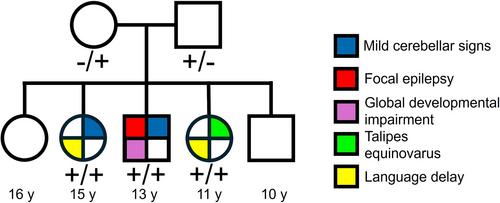
Three siblings, aged 11, 13, and 15 years, were all found to carry the same biallelic frameshift pathogenic variants in SYNE1 (pedigree in Figure 1). The family is of Moroccan-Jewish ancestry, and parents were not known to be consanguineous. There was no other known family history of neurologic disease beyond the patients discussed here. Written consent for publication was obtained from the patients' parents. The study was approved by the McGill University Health Centre Research Ethics Board (2018-3937).
The proband is a now 13-year-old boy who was the product of a normal pregnancy except for right hydronephrosis on prenatal ultrasound that resolved by birth. He was delivered via Caesarean section at term, without any need for resuscitation. He had oral aversion and failure to thrive at 12 months, requiring nasogastric support for feeds for 2 years leading to eventual temporary gastrostomy tube placement despite no clinical concern for choking or formal swallowing assessment. The gastrostomy tube was eventually removed once taking adequate nutrition orally; he later developed obesity. He has pes cavus but tibialis anterior electromyography and nerve conduction studies (median, ulnar, and tibial nerves) did not demonstrate evidence of peripheral nerve or muscle involvement. Serum creatine kinase at age 14 months was only borderline elevated (287 U/L, laboratory reference range 41–277 U/L). He had delayed gross motor milestones, only walking after 3 years of age. He also has language impairment, only capable of saying a few words despite speech therapy, though with full understanding in two languages. He has a diagnosis of intellectual disability and attends a specialized school. Initial investigations, including Fragile X testing, chromosomal microarray and metabolic screen were negative, and brain and spine MRI were normal. He developed focal seizures at age 12 years, which were controlled on clobazam. In addition to pes cavus, his examination was notable for bilateral dysmetria, brisk deep tendon reflexes, difficulty with fine finger movements, and difficulty walking on heels and toes, though segmental strength was normal. A GeneDx Autism/ID Xpanded gene panel identified novel biallelic frameshift variants in SYNE1 (NM_033071.3): c.18309del, p.(Ser6104Alafs*30) (paternally-inherited) and c.18434del, p.(Leu6145Argfs*22) (maternally-inherited). Both variants are absent in the Genome Aggregation Database and classified “pathogenic” or “likely pathogenic” by American College of Medical Genetics and Genomics criteria (PVS1 and PM2 for both; PM3 for the c.18309del variant) (Chen et al. 2024; Richards et al. 2015).
His 15-year-old sister had normal early gross and fine motor developmental milestones, with mild language delay for which she was followed by speech/language pathology for a year. At age 10 years, she presented with multiple cranial neuropathies (including left cranial nerve IV and VI) and increased intracranial pressure of unclear etiology. A brain MRI showed enhancement along multiple bilateral cranial nerves and minimal leptomeningeal enhancement. Though not confirmed, there was suspicion for neurosarcoidosis. She was treated with prednisone and symptoms resolved. She was seen again at age 15 years for tension-type headache. Her exam at that time was notable for left dysmetria and difficulty with tandem gait. A repeat MRI brain was done which was normal. Considering her brother's diagnosis, genetic testing was conducted which identified the same two SYNE1 pathogenic variants.
The younger sister, an 11-year-old girl, is the product of an unremarkable pregnancy, born via Caesarean section without need for resuscitation. She had talipes equinovarus at birth for which she had surgery. Her early gross and fine motor development was within normal limits. Though she babbled at the expected age, she required speech therapy in infancy/early childhood, with difficulties in written language. At her elementary school, she has supports in place, such as using a computer to write. She is otherwise healthy. In clinic, her exam was notable for hyperreflexia in her lower extremities, upper extremity postural tremor bilaterally, but no ataxia, dysdiadochokinesia, or dysmetria. She had normal strength and sensation. Her brain MRI was normal. Genetic testing identified the same SYNE1 pathogenic variants found in her siblings.
There are two other siblings, a 16-year-old sister and a 10-year-old brother, who are asymptomatic and therefore genetic testing has not been carried out. The family was referred for genetic counseling.
This family includes multiple individuals with SYNE1-related disorders overall fitting best with SCAR8; however, the disparate clinical presentations demonstrate the potential for interindividual phenotypic variability, even with the same genotype. One patient has global developmental impairment, infantile failure to thrive, focal epilepsy, pes cavus, and mild cerebellar signs, a second has normal intelligence and mild cerebellar signs, and a third has congenital talipes equinovarus and mild language delay. This is a departure from most previously reported families in which intrafamilial phenotypes have been more homogeneous (Baumann et al. 2017; Synofzik et al. 2016; Wiethoff et al. 2016; Yucesan et al. 2017).
The finding of focal epilepsy in the proband is also significant, as seizures have only been reported in one previous patient with a SYNE1-related disorder, a female with cerebellar ataxia who had seizures at age 2 years (no further details were given) (Synofzik et al. 2016). The finding of epilepsy in our patient suggests that the previous association was not coincidental, though seizures still appear to be a rare entity in this genetic condition.
The 15-year-old sibling was treated for a diagnosis of possible neurosarcoidosis. While it is unusual that she be diagnosed with two rare entities, they are likely unrelated as her initial inflammatory symptoms resolved completely which would be unexpected with a neurogenetic condition.
Interestingly, despite clinical symptoms, all three individuals had normal brain MRI, while most previously reported patients have had cerebellar atrophy (Synofzik et al. 2016; Wiethoff et al. 2016). This may be explained by the young age and mild cerebellar symptoms in our patients, as cerebellar atrophy may still become apparent in the future.
With respect to genotype–phenotype correlation, Baumann et al. (2017) had noted that patients with congenital arthrogryposis had nonsense or splice site pathogenic variants that terminated in the C-terminal Klarsicht-ANC-Syne homology (KASH) domain and are predicted to affect at least the major muscle-specific nesprin-1-alpha-2 isoform. Although one of our patients had congenital talipes equinovarus (a congenital joint deformity, but distinct from the congenital arthrogryposis multiplex cases previously published), neither of the SYNE1 pathogenic variants identified in our family terminate in the KASH domain; both terminate in the chromosome segregation protein SMC, common bacterial type (SMC_prok_B) domain which has thus far been mainly associated with cerebellar ataxia phenotypes (Beaudin et al. 1993).
In summary, the findings in this family demonstrate that there can be marked intrafamilial phenotypic variability with SYNE1-related disorders, with phenotypes including non-ataxia features such as focal epilepsy and talipes equinovarus.
This study was approved by the McGill University Health Centre Research Ethics Board (2018-3937).
Written consent for publication was obtained from the patients' parents.
H.P. has no relevant disclosures. K.A.M. is a member of an advisory board for Jazz Pharmaceuticals.
期刊介绍:
The American Journal of Medical Genetics - Part A (AJMG) gives you continuous coverage of all biological and medical aspects of genetic disorders and birth defects, as well as in-depth documentation of phenotype analysis within the current context of genotype/phenotype correlations. In addition to Part A , AJMG also publishes two other parts:
Part B: Neuropsychiatric Genetics , covering experimental and clinical investigations of the genetic mechanisms underlying neurologic and psychiatric disorders.
Part C: Seminars in Medical Genetics , guest-edited collections of thematic reviews of topical interest to the readership of AJMG .



 京公网安备 11010802042870号
京ICP备2023020795号-1
京公网安备 11010802042870号
京ICP备2023020795号-1

 分享
分享
 求助内容:
求助内容: 应助结果提醒方式:
 扫码关注我们
