{"title":"弧下动脉引起的前庭阵痛:示例病例。","authors":"Kensuke Sakaji, Shunsuke Omodaka, Masayuki Kanamori, Shunsuke Takai, Akari Sawada, Jun Suzuki, Yukio Katori, Hidenori Endo","doi":"10.3171/CASE24239","DOIUrl":null,"url":null,"abstract":"<p><strong>Background: </strong>Vestibular paroxysmia is defined by spontaneous, recurrent, short, paroxysmal episodes of vertigo. The authors present a case of vestibular paroxysmia caused by neurovascular compression of the vestibulocochlear nerve due to the subarcuate artery, which was successfully treated with microvascular decompression.</p><p><strong>Observations: </strong>A 46-year-old man first experienced vertigo attacks 5 years earlier. The attacks became more frequent, and left-sided tinnitus developed over the past 4 months, prompting a referral to our hospital. Carbamazepine treatment alleviated symptoms but had to be discontinued due to rash. Brain magnetic resonance imaging and angiography revealed that the left anterior inferior cerebellar artery was pressing on the cisternal segment of the left vestibulocochlear nerve. The authors diagnosed vestibular paroxysmia caused by neurovascular compression and performed microvascular decompression. During the operation, a subarcuate artery was identified as the offending vessel, with a prominent indentation on the vestibulocochlear nerve. The vertigo was completely relieved following surgery.</p><p><strong>Lessons: </strong>Neurovascular compression of the vestibulocochlear nerve by the subarcuate artery can result in vestibular paroxysmia. https://thejns.org/doi/abs/10.3171/CASE24239.</p>","PeriodicalId":94098,"journal":{"name":"Journal of neurosurgery. Case lessons","volume":"8 10","pages":""},"PeriodicalIF":0.7000,"publicationDate":"2024-09-02","publicationTypes":"Journal Article","fieldsOfStudy":null,"isOpenAccess":false,"openAccessPdf":"https://www.ncbi.nlm.nih.gov/pmc/articles/PMC11373690/pdf/","citationCount":"0","resultStr":"{\"title\":\"Vestibular paroxysmia caused by a subarcuate artery: illustrative case.\",\"authors\":\"Kensuke Sakaji, Shunsuke Omodaka, Masayuki Kanamori, Shunsuke Takai, Akari Sawada, Jun Suzuki, Yukio Katori, Hidenori Endo\",\"doi\":\"10.3171/CASE24239\",\"DOIUrl\":null,\"url\":null,\"abstract\":\"<p><strong>Background: </strong>Vestibular paroxysmia is defined by spontaneous, recurrent, short, paroxysmal episodes of vertigo. The authors present a case of vestibular paroxysmia caused by neurovascular compression of the vestibulocochlear nerve due to the subarcuate artery, which was successfully treated with microvascular decompression.</p><p><strong>Observations: </strong>A 46-year-old man first experienced vertigo attacks 5 years earlier. The attacks became more frequent, and left-sided tinnitus developed over the past 4 months, prompting a referral to our hospital. Carbamazepine treatment alleviated symptoms but had to be discontinued due to rash. Brain magnetic resonance imaging and angiography revealed that the left anterior inferior cerebellar artery was pressing on the cisternal segment of the left vestibulocochlear nerve. The authors diagnosed vestibular paroxysmia caused by neurovascular compression and performed microvascular decompression. During the operation, a subarcuate artery was identified as the offending vessel, with a prominent indentation on the vestibulocochlear nerve. The vertigo was completely relieved following surgery.</p><p><strong>Lessons: </strong>Neurovascular compression of the vestibulocochlear nerve by the subarcuate artery can result in vestibular paroxysmia. https://thejns.org/doi/abs/10.3171/CASE24239.</p>\",\"PeriodicalId\":94098,\"journal\":{\"name\":\"Journal of neurosurgery. Case lessons\",\"volume\":\"8 10\",\"pages\":\"\"},\"PeriodicalIF\":0.7000,\"publicationDate\":\"2024-09-02\",\"publicationTypes\":\"Journal Article\",\"fieldsOfStudy\":null,\"isOpenAccess\":false,\"openAccessPdf\":\"https://www.ncbi.nlm.nih.gov/pmc/articles/PMC11373690/pdf/\",\"citationCount\":\"0\",\"resultStr\":null,\"platform\":\"Semanticscholar\",\"paperid\":null,\"PeriodicalName\":\"Journal of neurosurgery. Case lessons\",\"FirstCategoryId\":\"1085\",\"ListUrlMain\":\"https://doi.org/10.3171/CASE24239\",\"RegionNum\":0,\"RegionCategory\":null,\"ArticlePicture\":[],\"TitleCN\":null,\"AbstractTextCN\":null,\"PMCID\":null,\"EPubDate\":\"\",\"PubModel\":\"\",\"JCR\":\"\",\"JCRName\":\"\",\"Score\":null,\"Total\":0}","platform":"Semanticscholar","paperid":null,"PeriodicalName":"Journal of neurosurgery. Case lessons","FirstCategoryId":"1085","ListUrlMain":"https://doi.org/10.3171/CASE24239","RegionNum":0,"RegionCategory":null,"ArticlePicture":[],"TitleCN":null,"AbstractTextCN":null,"PMCID":null,"EPubDate":"","PubModel":"","JCR":"","JCRName":"","Score":null,"Total":0}
Vestibular paroxysmia caused by a subarcuate artery: illustrative case.
Background: Vestibular paroxysmia is defined by spontaneous, recurrent, short, paroxysmal episodes of vertigo. The authors present a case of vestibular paroxysmia caused by neurovascular compression of the vestibulocochlear nerve due to the subarcuate artery, which was successfully treated with microvascular decompression.
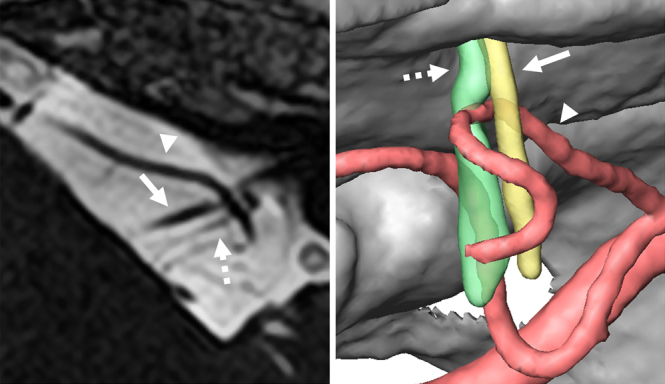
Observations: A 46-year-old man first experienced vertigo attacks 5 years earlier. The attacks became more frequent, and left-sided tinnitus developed over the past 4 months, prompting a referral to our hospital. Carbamazepine treatment alleviated symptoms but had to be discontinued due to rash. Brain magnetic resonance imaging and angiography revealed that the left anterior inferior cerebellar artery was pressing on the cisternal segment of the left vestibulocochlear nerve. The authors diagnosed vestibular paroxysmia caused by neurovascular compression and performed microvascular decompression. During the operation, a subarcuate artery was identified as the offending vessel, with a prominent indentation on the vestibulocochlear nerve. The vertigo was completely relieved following surgery.
Lessons: Neurovascular compression of the vestibulocochlear nerve by the subarcuate artery can result in vestibular paroxysmia. https://thejns.org/doi/abs/10.3171/CASE24239.





 京公网安备 11010802042870号
京ICP备2023020795号-1
京公网安备 11010802042870号
京ICP备2023020795号-1

 分享
分享

 求助内容:
求助内容: 应助结果提醒方式:
 扫码关注我们
