Design, synthesis and structure–activity relationship of novel pyrazole-4-carboxamide derivatives
BACKGROUND
Plant diseases seriously decrease the yield and quality of agricultural crops. Fungicide treatments remain the main means of field fungi control. However, the residual activity of fungicides is rapidly reduced due to various factors in the natural environment, therefore the development of agents with novel modes of action is desirable. It is highly required to design and develop new fungicides to address the resistance issue. Designing low impact chemicals to safely and sustainably address needs of agriculture.
RESULTS
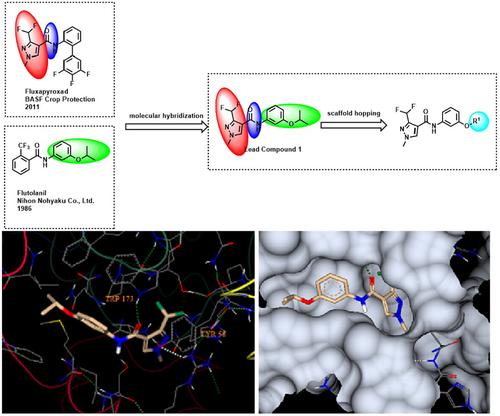
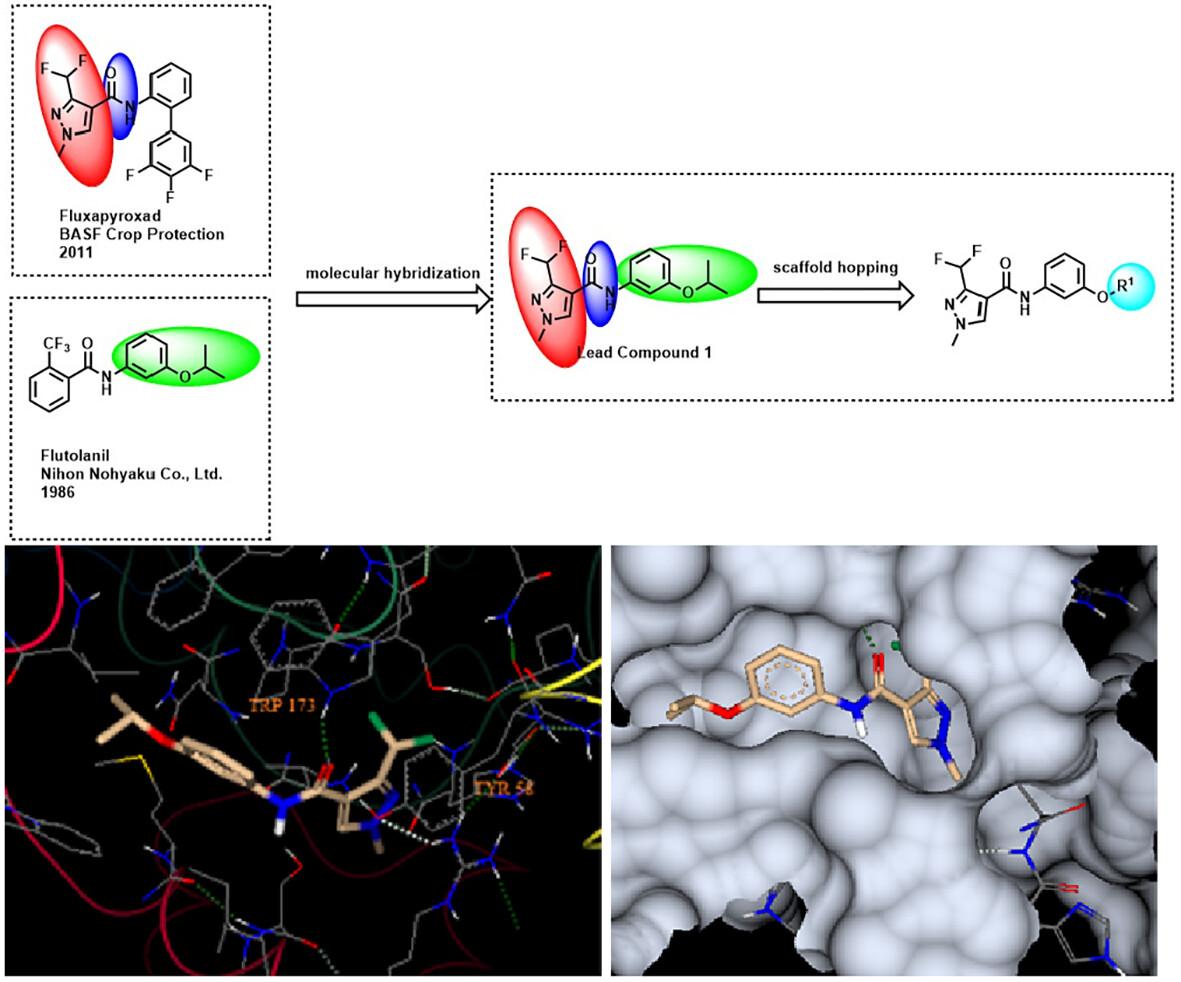
In this work, we used the highly active fluxapyroxad and flutolanil as parent structures, to design and synthesize a series of pyrazole-4-carboxamide derivatives. Some of the pyrazole-4-carboxamide derivatives exhibit fungicidal activities that are comparable to or higher than those of the commercialized fungicides fluxapyroxad and bixafen. In particular, compounds TM-1, TM-2, TM-3, TM-4, TM-5, TM-7 and TM-8 showed excellent fungicidal activities against corn rust that were 2–4 times higher than those of fluxapyroxad and bixafen. Field trial results demonstrated that at the same dosage levels, compound TM-2 exhibited comparable field control efficacy against wheat rust as compared to triadimefon and pyrazophenamide. Molecular docking simulations reveal that compound TM-2 interacts with TRP 173 of succinate dehydrogenase (SDH) through hydrogen bonding, which could explain the probable mechanism of action between compound TM-2 and the target protein.
期刊介绍:
Pest Management Science is the international journal of research and development in crop protection and pest control. Since its launch in 1970, the journal has become the premier forum for papers on the discovery, application, and impact on the environment of products and strategies designed for pest management.
Published for SCI by John Wiley & Sons Ltd.






 京公网安备 11010802042870号
京ICP备2023020795号-1
京公网安备 11010802042870号
京ICP备2023020795号-1

 分享
分享
 求助内容:
求助内容: 应助结果提醒方式:
 扫码关注我们
