{"title":"Sophorae tonkinensis Radix et Rhizoma:民族药理学、植物化学、药理学、药代动力学、毒理学和解毒策略的全面综述。","authors":"Fen-Fen Zeng , Zi-Hao Chen , Fu-Hui Luo, Cheng-Jun Liu, Xia Yang, Feng-Xiang Zhang, Wei Shi","doi":"10.1016/j.jep.2024.118784","DOIUrl":null,"url":null,"abstract":"<div><h3>Ethnopharmacological relevance</h3><p><em>Sophorae tonkinensis</em> Radix et Rhizoma (STR), the dried root and rhizome of <em>Sophora tonkinensis</em> Gagnep., is commonly used in the treatment of tonsillitis and pharyngitis, throat soreness and throat obstruction, swelling and aching of gum, <em>etc</em>. in China or other Asian countries. STR is usually used as the core herb in traditional Chinese medicine preparations, such as “Biyanling Tablets”, “Fufang Muji Granules” and “Ganyanling Injections”, <em>etc</em>.</p></div><div><h3>Aim of the review</h3><p>This review aimed to provide a comprehensive analysis of STR in terms of botany, traditional use, phytochemistry, ethnopharmacology, pharmacology, pharmacokinetics, toxicology and detoxification strategy, to provide a rational application in future research.</p></div><div><h3>Materials and methods</h3><p>The information involved in the study was gathered from a variety of electronic resources, including China National Knowledge Infrastructure (CNKI), SciFinder, Google Scholar, PubMed, Web of Science, and Chinese Masters and Doctoral Dissertations.</p></div><div><h3>Results</h3><p>Till now, a total of 333 chemical components have been identified in STR, including 85 alkaloids, 124 flavonoids, 24 triterpenes, 27 triterpene saponins, 34 organic acids, 8 polysaccharides, <em>etc</em>. STR and its main active constituents have cardiovascular protection, anti-tumor activity, anti-inflammatory activity, antipyretic activity, analgesic activity, antibacterial activity, antifungal activity, antiviral activity, and hepatoprotective activity, <em>etc</em>. However, toxic effects of STR on the liver, nerves, heart, and gastrointestinal tract have also been observed. To mitigate these risks, STR needs attenuation before use, with the most common detoxification methods being processing and combined use with other drugs. The pharmacokinetics of STR <em>in vivo</em> and traditional and clinical prescriptions containing STR have been sorted out. Despite the potential therapeutic benefits of STR, further research is warranted to elucidate its hepatotoxicity, particularly <em>in vivo</em>, exploring aspects such as <em>in vivo</em> metabolism, distribution, and mechanisms.</p></div><div><h3>Conclusion</h3><p>This review serves to emphasize the therapeutic potential of STR and highlights the crucial need to address its toxicity concerns before considering clinical application. Further research is required to comprehensively investigate the toxicological properties of STR, with particular emphasis on its hepatotoxicity and neurotoxicity. Such research endeavors have the potential to standardize the rational application of STR for optimal therapeutic outcomes.</p></div>","PeriodicalId":15761,"journal":{"name":"Journal of ethnopharmacology","volume":"337 ","pages":"Article 118784"},"PeriodicalIF":6.8000,"publicationDate":"2025-01-30","publicationTypes":"Journal Article","fieldsOfStudy":null,"isOpenAccess":false,"openAccessPdf":"","citationCount":"0","resultStr":"{\"title\":\"Sophorae tonkinensis radix et rhizoma: A comprehensive review of the ethnopharmacology, phytochemistry, pharmacology, pharmacokinetics, toxicology and detoxification strategy\",\"authors\":\"Fen-Fen Zeng , Zi-Hao Chen , Fu-Hui Luo, Cheng-Jun Liu, Xia Yang, Feng-Xiang Zhang, Wei Shi\",\"doi\":\"10.1016/j.jep.2024.118784\",\"DOIUrl\":null,\"url\":null,\"abstract\":\"<div><h3>Ethnopharmacological relevance</h3><p><em>Sophorae tonkinensis</em> Radix et Rhizoma (STR), the dried root and rhizome of <em>Sophora tonkinensis</em> Gagnep., is commonly used in the treatment of tonsillitis and pharyngitis, throat soreness and throat obstruction, swelling and aching of gum, <em>etc</em>. in China or other Asian countries. STR is usually used as the core herb in traditional Chinese medicine preparations, such as “Biyanling Tablets”, “Fufang Muji Granules” and “Ganyanling Injections”, <em>etc</em>.</p></div><div><h3>Aim of the review</h3><p>This review aimed to provide a comprehensive analysis of STR in terms of botany, traditional use, phytochemistry, ethnopharmacology, pharmacology, pharmacokinetics, toxicology and detoxification strategy, to provide a rational application in future research.</p></div><div><h3>Materials and methods</h3><p>The information involved in the study was gathered from a variety of electronic resources, including China National Knowledge Infrastructure (CNKI), SciFinder, Google Scholar, PubMed, Web of Science, and Chinese Masters and Doctoral Dissertations.</p></div><div><h3>Results</h3><p>Till now, a total of 333 chemical components have been identified in STR, including 85 alkaloids, 124 flavonoids, 24 triterpenes, 27 triterpene saponins, 34 organic acids, 8 polysaccharides, <em>etc</em>. STR and its main active constituents have cardiovascular protection, anti-tumor activity, anti-inflammatory activity, antipyretic activity, analgesic activity, antibacterial activity, antifungal activity, antiviral activity, and hepatoprotective activity, <em>etc</em>. However, toxic effects of STR on the liver, nerves, heart, and gastrointestinal tract have also been observed. To mitigate these risks, STR needs attenuation before use, with the most common detoxification methods being processing and combined use with other drugs. The pharmacokinetics of STR <em>in vivo</em> and traditional and clinical prescriptions containing STR have been sorted out. Despite the potential therapeutic benefits of STR, further research is warranted to elucidate its hepatotoxicity, particularly <em>in vivo</em>, exploring aspects such as <em>in vivo</em> metabolism, distribution, and mechanisms.</p></div><div><h3>Conclusion</h3><p>This review serves to emphasize the therapeutic potential of STR and highlights the crucial need to address its toxicity concerns before considering clinical application. Further research is required to comprehensively investigate the toxicological properties of STR, with particular emphasis on its hepatotoxicity and neurotoxicity. Such research endeavors have the potential to standardize the rational application of STR for optimal therapeutic outcomes.</p></div>\",\"PeriodicalId\":15761,\"journal\":{\"name\":\"Journal of ethnopharmacology\",\"volume\":\"337 \",\"pages\":\"Article 118784\"},\"PeriodicalIF\":6.8000,\"publicationDate\":\"2025-01-30\",\"publicationTypes\":\"Journal Article\",\"fieldsOfStudy\":null,\"isOpenAccess\":false,\"openAccessPdf\":\"\",\"citationCount\":\"0\",\"resultStr\":null,\"platform\":\"Semanticscholar\",\"paperid\":null,\"PeriodicalName\":\"Journal of ethnopharmacology\",\"FirstCategoryId\":\"3\",\"ListUrlMain\":\"https://www.sciencedirect.com/science/article/pii/S0378874124010833\",\"RegionNum\":2,\"RegionCategory\":\"医学\",\"ArticlePicture\":[],\"TitleCN\":null,\"AbstractTextCN\":null,\"PMCID\":null,\"EPubDate\":\"2024/9/5 0:00:00\",\"PubModel\":\"Epub\",\"JCR\":\"Q1\",\"JCRName\":\"CHEMISTRY, MEDICINAL\",\"Score\":null,\"Total\":0}","platform":"Semanticscholar","paperid":null,"PeriodicalName":"Journal of ethnopharmacology","FirstCategoryId":"3","ListUrlMain":"https://www.sciencedirect.com/science/article/pii/S0378874124010833","RegionNum":2,"RegionCategory":"医学","ArticlePicture":[],"TitleCN":null,"AbstractTextCN":null,"PMCID":null,"EPubDate":"2024/9/5 0:00:00","PubModel":"Epub","JCR":"Q1","JCRName":"CHEMISTRY, MEDICINAL","Score":null,"Total":0}
Sophorae tonkinensis radix et rhizoma: A comprehensive review of the ethnopharmacology, phytochemistry, pharmacology, pharmacokinetics, toxicology and detoxification strategy
Ethnopharmacological relevance
Sophorae tonkinensis Radix et Rhizoma (STR), the dried root and rhizome of Sophora tonkinensis Gagnep., is commonly used in the treatment of tonsillitis and pharyngitis, throat soreness and throat obstruction, swelling and aching of gum, etc. in China or other Asian countries. STR is usually used as the core herb in traditional Chinese medicine preparations, such as “Biyanling Tablets”, “Fufang Muji Granules” and “Ganyanling Injections”, etc.
Aim of the review
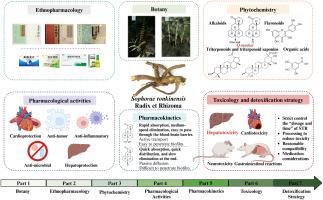
This review aimed to provide a comprehensive analysis of STR in terms of botany, traditional use, phytochemistry, ethnopharmacology, pharmacology, pharmacokinetics, toxicology and detoxification strategy, to provide a rational application in future research.
Materials and methods
The information involved in the study was gathered from a variety of electronic resources, including China National Knowledge Infrastructure (CNKI), SciFinder, Google Scholar, PubMed, Web of Science, and Chinese Masters and Doctoral Dissertations.
Results
Till now, a total of 333 chemical components have been identified in STR, including 85 alkaloids, 124 flavonoids, 24 triterpenes, 27 triterpene saponins, 34 organic acids, 8 polysaccharides, etc. STR and its main active constituents have cardiovascular protection, anti-tumor activity, anti-inflammatory activity, antipyretic activity, analgesic activity, antibacterial activity, antifungal activity, antiviral activity, and hepatoprotective activity, etc. However, toxic effects of STR on the liver, nerves, heart, and gastrointestinal tract have also been observed. To mitigate these risks, STR needs attenuation before use, with the most common detoxification methods being processing and combined use with other drugs. The pharmacokinetics of STR in vivo and traditional and clinical prescriptions containing STR have been sorted out. Despite the potential therapeutic benefits of STR, further research is warranted to elucidate its hepatotoxicity, particularly in vivo, exploring aspects such as in vivo metabolism, distribution, and mechanisms.
Conclusion
This review serves to emphasize the therapeutic potential of STR and highlights the crucial need to address its toxicity concerns before considering clinical application. Further research is required to comprehensively investigate the toxicological properties of STR, with particular emphasis on its hepatotoxicity and neurotoxicity. Such research endeavors have the potential to standardize the rational application of STR for optimal therapeutic outcomes.
期刊介绍:
The Journal of Ethnopharmacology is dedicated to the exchange of information and understandings about people''s use of plants, fungi, animals, microorganisms and minerals and their biological and pharmacological effects based on the principles established through international conventions. Early people confronted with illness and disease, discovered a wealth of useful therapeutic agents in the plant and animal kingdoms. The empirical knowledge of these medicinal substances and their toxic potential was passed on by oral tradition and sometimes recorded in herbals and other texts on materia medica. Many valuable drugs of today (e.g., atropine, ephedrine, tubocurarine, digoxin, reserpine) came into use through the study of indigenous remedies. Chemists continue to use plant-derived drugs (e.g., morphine, taxol, physostigmine, quinidine, emetine) as prototypes in their attempts to develop more effective and less toxic medicinals.





 京公网安备 11010802042870号
京ICP备2023020795号-1
京公网安备 11010802042870号
京ICP备2023020795号-1

 分享
分享
 求助内容:
求助内容: 应助结果提醒方式:
 扫码关注我们
