{"title":"从基因角度看9型枯草蛋白酶/kexin抑制与肌肉疏松症风险之间关系的新见解","authors":"Hongyan Jiang, Lulu Li, Xue Zhang, Jia He, Chuanhuai Chen, Ruimin Sun, Ying Chen, Lijuan Xia, Lei Wen, Yunxiang Chen, Junxiu Liu, Lijiang Zhang, Wanqiang Lv","doi":"10.1002/jcsm.13575","DOIUrl":null,"url":null,"abstract":"<div>\n \n \n <section>\n \n <h3> Background</h3>\n \n <p>The effects of lipid-lowering drugs [including statins, ezetimibe, and proprotein convertase subtilisin/kexin type 9 (PCSK9) inhibitors] on hyperlipidaemia have been established. Some may have treatment effects beyond their reported properties, offering potential opportunities for drug repurposing. Epidemiological studies have reported conflicting findings on the relationship between lipid-lowering medication use and sarcopenia risk.</p>\n </section>\n \n <section>\n \n <h3> Methods</h3>\n \n <p>We performed a two-sample Mendelian randomization (MR) study to investigate the causal association between the use of genetically proxied lipid-lowering drugs (including statins, ezetimibe, and PCSK9 inhibitors, which use low-density lipoprotein as a biomarker), and sarcopenia risk. The inverse-variance weighting method was used with pleiotropy-robust methods (MR–Egger regression and weighted median) and colocalization as sensitivity analyses.</p>\n </section>\n \n <section>\n \n <h3> Results</h3>\n \n <p>According to the positive control analysis, genetically proxied inhibition in lipid-lowering drug targets was associated with a lower risk of coronary heart disease [PCSK9 (OR, 0.67; 95% CI, 0.61 to 0.72; <i>P =</i> 7.7E-21); 3-hydroxy-3-methylglutaryl coenzyme A reductase (HMGCR; OR, 0.68; 95% CI, 0.57 to 0.82; <i>P =</i> 4.6E-05), and Niemann–Pick C1-like 1 (NPC1L1; OR, 0.53; 95% CI, 0.40 to 0.69; <i>P =</i> 3.3E-06)], consistent with drug mechanistic actions and previous trial evidence. Genetically proxied inhibition of PCSK9 (beta, −0.040; 95% CI, −0.068 to −0.012; <i>P =</i> 0.005) and circulating PCSK9 levels (beta, −0.019; 95% CI, −0.033 to −0.005; <i>P =</i> 0.006) were associated with reduced appendicular lean mass (ALM) with concordant estimates in terms of direction and magnitude. Validation analyses using a second instrument for PCSK9 yielded consistent results in terms of direction and magnitude [(PCSK9 to ALM; beta, −0.052; 95% CI, −0.074 to −0.032; <i>P =</i> 7.1E-7); (PCSK9 protein to ALM; beta, −0.060; 95% CI, −0.106 to −0.014; <i>P =</i> 0.010)]. Genetically proxied inhibition of PCSK9 gene expression in the liver may be associated with reduced ALM (beta, −0.013; 95% CI, −0.035 to 0.009; <i>P =</i> 0.25), consistent with the results of PCSK9 drug-target and PCSK9 protein MR analyses, but the magnitude was less precise. No robust association was found between HMGCR inhibition (beta, 0.048; 95% CI, −0.015 to 0.110; <i>P =</i> 0.14) or NPC1L1 (beta, 0.035; 95% CI, −0.074 to 0.144; <i>P =</i> 0.53) inhibition and ALM, and validation and sensitivity MR analyses showed consistent estimates.</p>\n </section>\n \n <section>\n \n <h3> Conclusions</h3>\n \n <p>This MR study suggested that PCSK9 is involved in sarcopenia pathogenesis and that its inhibition is associated with reduced ALM. These findings potentially pave the way for future studies that may allow personalized selection of lipid-lowering drugs for those at risk of sarcopenia.</p>\n </section>\n </div>","PeriodicalId":48911,"journal":{"name":"Journal of Cachexia Sarcopenia and Muscle","volume":"15 6","pages":"2417-2425"},"PeriodicalIF":9.1000,"publicationDate":"2024-09-10","publicationTypes":"Journal Article","fieldsOfStudy":null,"isOpenAccess":false,"openAccessPdf":"https://onlinelibrary.wiley.com/doi/epdf/10.1002/jcsm.13575","citationCount":"0","resultStr":"{\"title\":\"Novel insights into the association between genetically proxied inhibition of proprotein convertase subtilisin/kexin type 9 and risk of sarcopenia\",\"authors\":\"Hongyan Jiang, Lulu Li, Xue Zhang, Jia He, Chuanhuai Chen, Ruimin Sun, Ying Chen, Lijuan Xia, Lei Wen, Yunxiang Chen, Junxiu Liu, Lijiang Zhang, Wanqiang Lv\",\"doi\":\"10.1002/jcsm.13575\",\"DOIUrl\":null,\"url\":null,\"abstract\":\"<div>\\n \\n \\n <section>\\n \\n <h3> Background</h3>\\n \\n <p>The effects of lipid-lowering drugs [including statins, ezetimibe, and proprotein convertase subtilisin/kexin type 9 (PCSK9) inhibitors] on hyperlipidaemia have been established. Some may have treatment effects beyond their reported properties, offering potential opportunities for drug repurposing. Epidemiological studies have reported conflicting findings on the relationship between lipid-lowering medication use and sarcopenia risk.</p>\\n </section>\\n \\n <section>\\n \\n <h3> Methods</h3>\\n \\n <p>We performed a two-sample Mendelian randomization (MR) study to investigate the causal association between the use of genetically proxied lipid-lowering drugs (including statins, ezetimibe, and PCSK9 inhibitors, which use low-density lipoprotein as a biomarker), and sarcopenia risk. The inverse-variance weighting method was used with pleiotropy-robust methods (MR–Egger regression and weighted median) and colocalization as sensitivity analyses.</p>\\n </section>\\n \\n <section>\\n \\n <h3> Results</h3>\\n \\n <p>According to the positive control analysis, genetically proxied inhibition in lipid-lowering drug targets was associated with a lower risk of coronary heart disease [PCSK9 (OR, 0.67; 95% CI, 0.61 to 0.72; <i>P =</i> 7.7E-21); 3-hydroxy-3-methylglutaryl coenzyme A reductase (HMGCR; OR, 0.68; 95% CI, 0.57 to 0.82; <i>P =</i> 4.6E-05), and Niemann–Pick C1-like 1 (NPC1L1; OR, 0.53; 95% CI, 0.40 to 0.69; <i>P =</i> 3.3E-06)], consistent with drug mechanistic actions and previous trial evidence. Genetically proxied inhibition of PCSK9 (beta, −0.040; 95% CI, −0.068 to −0.012; <i>P =</i> 0.005) and circulating PCSK9 levels (beta, −0.019; 95% CI, −0.033 to −0.005; <i>P =</i> 0.006) were associated with reduced appendicular lean mass (ALM) with concordant estimates in terms of direction and magnitude. Validation analyses using a second instrument for PCSK9 yielded consistent results in terms of direction and magnitude [(PCSK9 to ALM; beta, −0.052; 95% CI, −0.074 to −0.032; <i>P =</i> 7.1E-7); (PCSK9 protein to ALM; beta, −0.060; 95% CI, −0.106 to −0.014; <i>P =</i> 0.010)]. Genetically proxied inhibition of PCSK9 gene expression in the liver may be associated with reduced ALM (beta, −0.013; 95% CI, −0.035 to 0.009; <i>P =</i> 0.25), consistent with the results of PCSK9 drug-target and PCSK9 protein MR analyses, but the magnitude was less precise. No robust association was found between HMGCR inhibition (beta, 0.048; 95% CI, −0.015 to 0.110; <i>P =</i> 0.14) or NPC1L1 (beta, 0.035; 95% CI, −0.074 to 0.144; <i>P =</i> 0.53) inhibition and ALM, and validation and sensitivity MR analyses showed consistent estimates.</p>\\n </section>\\n \\n <section>\\n \\n <h3> Conclusions</h3>\\n \\n <p>This MR study suggested that PCSK9 is involved in sarcopenia pathogenesis and that its inhibition is associated with reduced ALM. These findings potentially pave the way for future studies that may allow personalized selection of lipid-lowering drugs for those at risk of sarcopenia.</p>\\n </section>\\n </div>\",\"PeriodicalId\":48911,\"journal\":{\"name\":\"Journal of Cachexia Sarcopenia and Muscle\",\"volume\":\"15 6\",\"pages\":\"2417-2425\"},\"PeriodicalIF\":9.1000,\"publicationDate\":\"2024-09-10\",\"publicationTypes\":\"Journal Article\",\"fieldsOfStudy\":null,\"isOpenAccess\":false,\"openAccessPdf\":\"https://onlinelibrary.wiley.com/doi/epdf/10.1002/jcsm.13575\",\"citationCount\":\"0\",\"resultStr\":null,\"platform\":\"Semanticscholar\",\"paperid\":null,\"PeriodicalName\":\"Journal of Cachexia Sarcopenia and Muscle\",\"FirstCategoryId\":\"3\",\"ListUrlMain\":\"https://onlinelibrary.wiley.com/doi/10.1002/jcsm.13575\",\"RegionNum\":1,\"RegionCategory\":\"医学\",\"ArticlePicture\":[],\"TitleCN\":null,\"AbstractTextCN\":null,\"PMCID\":null,\"EPubDate\":\"\",\"PubModel\":\"\",\"JCR\":\"Q1\",\"JCRName\":\"GERIATRICS & GERONTOLOGY\",\"Score\":null,\"Total\":0}","platform":"Semanticscholar","paperid":null,"PeriodicalName":"Journal of Cachexia Sarcopenia and Muscle","FirstCategoryId":"3","ListUrlMain":"https://onlinelibrary.wiley.com/doi/10.1002/jcsm.13575","RegionNum":1,"RegionCategory":"医学","ArticlePicture":[],"TitleCN":null,"AbstractTextCN":null,"PMCID":null,"EPubDate":"","PubModel":"","JCR":"Q1","JCRName":"GERIATRICS & GERONTOLOGY","Score":null,"Total":0}
Novel insights into the association between genetically proxied inhibition of proprotein convertase subtilisin/kexin type 9 and risk of sarcopenia
Background
The effects of lipid-lowering drugs [including statins, ezetimibe, and proprotein convertase subtilisin/kexin type 9 (PCSK9) inhibitors] on hyperlipidaemia have been established. Some may have treatment effects beyond their reported properties, offering potential opportunities for drug repurposing. Epidemiological studies have reported conflicting findings on the relationship between lipid-lowering medication use and sarcopenia risk.
Methods
We performed a two-sample Mendelian randomization (MR) study to investigate the causal association between the use of genetically proxied lipid-lowering drugs (including statins, ezetimibe, and PCSK9 inhibitors, which use low-density lipoprotein as a biomarker), and sarcopenia risk. The inverse-variance weighting method was used with pleiotropy-robust methods (MR–Egger regression and weighted median) and colocalization as sensitivity analyses.
Results
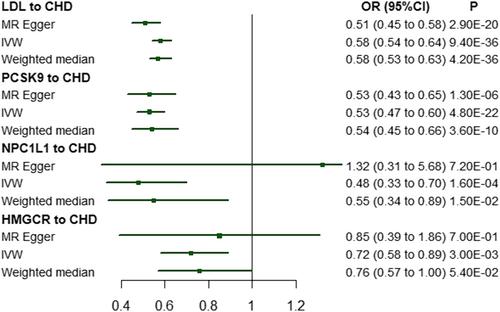
According to the positive control analysis, genetically proxied inhibition in lipid-lowering drug targets was associated with a lower risk of coronary heart disease [PCSK9 (OR, 0.67; 95% CI, 0.61 to 0.72; P = 7.7E-21); 3-hydroxy-3-methylglutaryl coenzyme A reductase (HMGCR; OR, 0.68; 95% CI, 0.57 to 0.82; P = 4.6E-05), and Niemann–Pick C1-like 1 (NPC1L1; OR, 0.53; 95% CI, 0.40 to 0.69; P = 3.3E-06)], consistent with drug mechanistic actions and previous trial evidence. Genetically proxied inhibition of PCSK9 (beta, −0.040; 95% CI, −0.068 to −0.012; P = 0.005) and circulating PCSK9 levels (beta, −0.019; 95% CI, −0.033 to −0.005; P = 0.006) were associated with reduced appendicular lean mass (ALM) with concordant estimates in terms of direction and magnitude. Validation analyses using a second instrument for PCSK9 yielded consistent results in terms of direction and magnitude [(PCSK9 to ALM; beta, −0.052; 95% CI, −0.074 to −0.032; P = 7.1E-7); (PCSK9 protein to ALM; beta, −0.060; 95% CI, −0.106 to −0.014; P = 0.010)]. Genetically proxied inhibition of PCSK9 gene expression in the liver may be associated with reduced ALM (beta, −0.013; 95% CI, −0.035 to 0.009; P = 0.25), consistent with the results of PCSK9 drug-target and PCSK9 protein MR analyses, but the magnitude was less precise. No robust association was found between HMGCR inhibition (beta, 0.048; 95% CI, −0.015 to 0.110; P = 0.14) or NPC1L1 (beta, 0.035; 95% CI, −0.074 to 0.144; P = 0.53) inhibition and ALM, and validation and sensitivity MR analyses showed consistent estimates.
Conclusions
This MR study suggested that PCSK9 is involved in sarcopenia pathogenesis and that its inhibition is associated with reduced ALM. These findings potentially pave the way for future studies that may allow personalized selection of lipid-lowering drugs for those at risk of sarcopenia.
期刊介绍:
The Journal of Cachexia, Sarcopenia and Muscle is a peer-reviewed international journal dedicated to publishing materials related to cachexia and sarcopenia, as well as body composition and its physiological and pathophysiological changes across the lifespan and in response to various illnesses from all fields of life sciences. The journal aims to provide a reliable resource for professionals interested in related research or involved in the clinical care of affected patients, such as those suffering from AIDS, cancer, chronic heart failure, chronic lung disease, liver cirrhosis, chronic kidney failure, rheumatoid arthritis, or sepsis.




 京公网安备 11010802042870号
京ICP备2023020795号-1
京公网安备 11010802042870号
京ICP备2023020795号-1

 分享
分享
 求助内容:
求助内容: 应助结果提醒方式:
 扫码关注我们
