Giorgos N. Tzanetakis, Xenos Petridis, Aleksandar Jakovljevic, Despina Koletsi, Venkateshbabu Nagendrababu, Henry F. Duncan, Paul M. H. Dummer
{"title":"牙髓病学范围综述的报告质量:荟萃研究","authors":"Giorgos N. Tzanetakis, Xenos Petridis, Aleksandar Jakovljevic, Despina Koletsi, Venkateshbabu Nagendrababu, Henry F. Duncan, Paul M. H. Dummer","doi":"10.1111/iej.14141","DOIUrl":null,"url":null,"abstract":"<div>\n \n \n <section>\n \n <h3> Objectives</h3>\n \n <p>To evaluate the reporting quality of Scoping Reviews (ScRs) in endodontics according to the PRISMA Extension Checklist for Scoping Reviews (PRISMA-ScR) and to analyse their association with a range of publication and methodological/reporting characteristics.</p>\n </section>\n \n <section>\n \n <h3> Methods</h3>\n \n <p>Pubmed, Scopus, and Web of Science databases were searched up to 31 January 2024 to identify scoping reviews in the field of endodontics. An additional search was performed in three leading endodontic journals. Study selection and appraising the quality of the studies was carried out independently by two reviewers. Each of the 20 PRISMA-ScR items were allocated a score of either 0, 0.5 or 1 to reflect the completeness of the reporting. An item-specific and overall percentage reporting quality score was calculated and reported through descriptive statistics across a range of publication, as well as methodological/reporting characteristics. A univariable and multivariable quantile regression was performed to identify the effect of publication and methodological/reporting characteristics (year of publication, journal, inclusion of an appropriate reporting guideline, and study registration) on the overall percentage reporting quality score. Association of reporting quality score with publication characteristics was then investigated.</p>\n </section>\n \n <section>\n \n <h3> Results</h3>\n \n <p>A total of 40 ScRs were identified and included for appraisal. Most of the studies were published from 2021 onwards. The overall median reporting quality score was 86%. The most frequent items not included in the studies were: <i>a priori</i> protocol registration (22/40 compliant; 55%), and reporting of funding (16/40 compliant; 40%). Other key elements that were inadequately reported were the abstract (7/40 compliant; 18%), the rationale and justification of the ScR (21/40 compliant; 52%) and the objectives of the study (18/40 compliant; 45%). Studies that adhered to appropriate reporting guidelines were associated with greater reporting quality scores (<i>β</i>-coefficient: 10; 95%CI: 1.1, 18.9; <i>p</i> = .03). ScRs with protocols registered <i>a priori</i> had significantly greater reporting quality scores (<i>β</i>-coefficient: 12.5; 95%CI: 6.1, 18.9; <i>p</i> < .001), compared with non-registered reviews.</p>\n </section>\n \n <section>\n \n <h3> Conclusions</h3>\n \n <p>The reporting quality of the ScRs in endodontics varied and was greater when the ScR protocols were registered <i>a priori</i> and when the authors adhered to reporting guidelines.</p>\n </section>\n </div>","PeriodicalId":13724,"journal":{"name":"International endodontic journal","volume":"57 12","pages":"1717-1726"},"PeriodicalIF":7.1000,"publicationDate":"2024-09-10","publicationTypes":"Journal Article","fieldsOfStudy":null,"isOpenAccess":false,"openAccessPdf":"https://onlinelibrary.wiley.com/doi/epdf/10.1111/iej.14141","citationCount":"0","resultStr":"{\"title\":\"Reporting quality of scoping reviews in endodontics: A meta-research study\",\"authors\":\"Giorgos N. Tzanetakis, Xenos Petridis, Aleksandar Jakovljevic, Despina Koletsi, Venkateshbabu Nagendrababu, Henry F. Duncan, Paul M. H. Dummer\",\"doi\":\"10.1111/iej.14141\",\"DOIUrl\":null,\"url\":null,\"abstract\":\"<div>\\n \\n \\n <section>\\n \\n <h3> Objectives</h3>\\n \\n <p>To evaluate the reporting quality of Scoping Reviews (ScRs) in endodontics according to the PRISMA Extension Checklist for Scoping Reviews (PRISMA-ScR) and to analyse their association with a range of publication and methodological/reporting characteristics.</p>\\n </section>\\n \\n <section>\\n \\n <h3> Methods</h3>\\n \\n <p>Pubmed, Scopus, and Web of Science databases were searched up to 31 January 2024 to identify scoping reviews in the field of endodontics. An additional search was performed in three leading endodontic journals. Study selection and appraising the quality of the studies was carried out independently by two reviewers. Each of the 20 PRISMA-ScR items were allocated a score of either 0, 0.5 or 1 to reflect the completeness of the reporting. An item-specific and overall percentage reporting quality score was calculated and reported through descriptive statistics across a range of publication, as well as methodological/reporting characteristics. A univariable and multivariable quantile regression was performed to identify the effect of publication and methodological/reporting characteristics (year of publication, journal, inclusion of an appropriate reporting guideline, and study registration) on the overall percentage reporting quality score. Association of reporting quality score with publication characteristics was then investigated.</p>\\n </section>\\n \\n <section>\\n \\n <h3> Results</h3>\\n \\n <p>A total of 40 ScRs were identified and included for appraisal. Most of the studies were published from 2021 onwards. The overall median reporting quality score was 86%. The most frequent items not included in the studies were: <i>a priori</i> protocol registration (22/40 compliant; 55%), and reporting of funding (16/40 compliant; 40%). Other key elements that were inadequately reported were the abstract (7/40 compliant; 18%), the rationale and justification of the ScR (21/40 compliant; 52%) and the objectives of the study (18/40 compliant; 45%). Studies that adhered to appropriate reporting guidelines were associated with greater reporting quality scores (<i>β</i>-coefficient: 10; 95%CI: 1.1, 18.9; <i>p</i> = .03). ScRs with protocols registered <i>a priori</i> had significantly greater reporting quality scores (<i>β</i>-coefficient: 12.5; 95%CI: 6.1, 18.9; <i>p</i> < .001), compared with non-registered reviews.</p>\\n </section>\\n \\n <section>\\n \\n <h3> Conclusions</h3>\\n \\n <p>The reporting quality of the ScRs in endodontics varied and was greater when the ScR protocols were registered <i>a priori</i> and when the authors adhered to reporting guidelines.</p>\\n </section>\\n </div>\",\"PeriodicalId\":13724,\"journal\":{\"name\":\"International endodontic journal\",\"volume\":\"57 12\",\"pages\":\"1717-1726\"},\"PeriodicalIF\":7.1000,\"publicationDate\":\"2024-09-10\",\"publicationTypes\":\"Journal Article\",\"fieldsOfStudy\":null,\"isOpenAccess\":false,\"openAccessPdf\":\"https://onlinelibrary.wiley.com/doi/epdf/10.1111/iej.14141\",\"citationCount\":\"0\",\"resultStr\":null,\"platform\":\"Semanticscholar\",\"paperid\":null,\"PeriodicalName\":\"International endodontic journal\",\"FirstCategoryId\":\"3\",\"ListUrlMain\":\"https://onlinelibrary.wiley.com/doi/10.1111/iej.14141\",\"RegionNum\":1,\"RegionCategory\":\"医学\",\"ArticlePicture\":[],\"TitleCN\":null,\"AbstractTextCN\":null,\"PMCID\":null,\"EPubDate\":\"\",\"PubModel\":\"\",\"JCR\":\"Q1\",\"JCRName\":\"DENTISTRY, ORAL SURGERY & MEDICINE\",\"Score\":null,\"Total\":0}","platform":"Semanticscholar","paperid":null,"PeriodicalName":"International endodontic journal","FirstCategoryId":"3","ListUrlMain":"https://onlinelibrary.wiley.com/doi/10.1111/iej.14141","RegionNum":1,"RegionCategory":"医学","ArticlePicture":[],"TitleCN":null,"AbstractTextCN":null,"PMCID":null,"EPubDate":"","PubModel":"","JCR":"Q1","JCRName":"DENTISTRY, ORAL SURGERY & MEDICINE","Score":null,"Total":0}
Reporting quality of scoping reviews in endodontics: A meta-research study
Objectives
To evaluate the reporting quality of Scoping Reviews (ScRs) in endodontics according to the PRISMA Extension Checklist for Scoping Reviews (PRISMA-ScR) and to analyse their association with a range of publication and methodological/reporting characteristics.
Methods
Pubmed, Scopus, and Web of Science databases were searched up to 31 January 2024 to identify scoping reviews in the field of endodontics. An additional search was performed in three leading endodontic journals. Study selection and appraising the quality of the studies was carried out independently by two reviewers. Each of the 20 PRISMA-ScR items were allocated a score of either 0, 0.5 or 1 to reflect the completeness of the reporting. An item-specific and overall percentage reporting quality score was calculated and reported through descriptive statistics across a range of publication, as well as methodological/reporting characteristics. A univariable and multivariable quantile regression was performed to identify the effect of publication and methodological/reporting characteristics (year of publication, journal, inclusion of an appropriate reporting guideline, and study registration) on the overall percentage reporting quality score. Association of reporting quality score with publication characteristics was then investigated.
Results
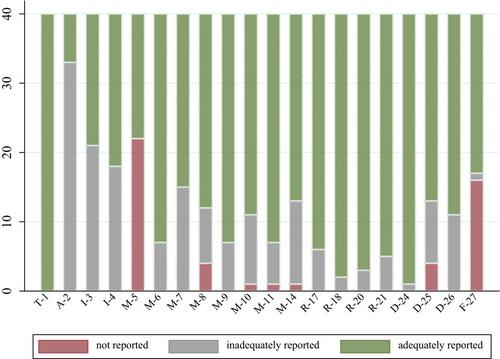
A total of 40 ScRs were identified and included for appraisal. Most of the studies were published from 2021 onwards. The overall median reporting quality score was 86%. The most frequent items not included in the studies were: a priori protocol registration (22/40 compliant; 55%), and reporting of funding (16/40 compliant; 40%). Other key elements that were inadequately reported were the abstract (7/40 compliant; 18%), the rationale and justification of the ScR (21/40 compliant; 52%) and the objectives of the study (18/40 compliant; 45%). Studies that adhered to appropriate reporting guidelines were associated with greater reporting quality scores (β-coefficient: 10; 95%CI: 1.1, 18.9; p = .03). ScRs with protocols registered a priori had significantly greater reporting quality scores (β-coefficient: 12.5; 95%CI: 6.1, 18.9; p < .001), compared with non-registered reviews.
Conclusions
The reporting quality of the ScRs in endodontics varied and was greater when the ScR protocols were registered a priori and when the authors adhered to reporting guidelines.
期刊介绍:
The International Endodontic Journal is published monthly and strives to publish original articles of the highest quality to disseminate scientific and clinical knowledge; all manuscripts are subjected to peer review. Original scientific articles are published in the areas of biomedical science, applied materials science, bioengineering, epidemiology and social science relevant to endodontic disease and its management, and to the restoration of root-treated teeth. In addition, review articles, reports of clinical cases, book reviews, summaries and abstracts of scientific meetings and news items are accepted.
The International Endodontic Journal is essential reading for general dental practitioners, specialist endodontists, research, scientists and dental teachers.




 京公网安备 11010802042870号
京ICP备2023020795号-1
京公网安备 11010802042870号
京ICP备2023020795号-1

 分享
分享
 求助内容:
求助内容: 应助结果提醒方式:
 扫码关注我们
