Nicholas Papadomanolakis-Pakis, Philip V. Munch, Nicolai Carlé, Camilla G. Uhrbrand, Simon Haroutounian, Lone Nikolajsen
{"title":"成人急性手术后疼痛的临床预后预测模型:系统综述","authors":"Nicholas Papadomanolakis-Pakis, Philip V. Munch, Nicolai Carlé, Camilla G. Uhrbrand, Simon Haroutounian, Lone Nikolajsen","doi":"10.1111/anae.16429","DOIUrl":null,"url":null,"abstract":"<div>\n \n \n <section>\n \n <h3> Background</h3>\n \n <p>Acute post-surgical pain is managed inadequately in many patients undergoing surgery. Several prognostic risk prediction models have been developed to identify patients at high risk of developing moderate to severe acute post-surgical pain. The aim of this systematic review was to describe and evaluate the methodological conduct of these prediction models.</p>\n </section>\n \n <section>\n \n <h3> Methods</h3>\n \n <p>We searched MEDLINE, EMBASE and CINAHL for studies of prognostic risk prediction models for acute post-surgical pain using predetermined criteria. Prediction model performance was evaluated according to discrimination and calibration. Adherence to TRIPOD guidelines was assessed. Risk of bias and applicability was independently assessed by two reviewers using the prediction model risk of bias assessment tool.</p>\n </section>\n \n <section>\n \n <h3> Results</h3>\n \n <p>We included 14 studies reporting on 17 prediction models. The most common predictors identified in final prediction models included age; surgery type; sex or gender; anxiety or fear of surgery; pre-operative pain intensity; pre-operative analgesic use; pain catastrophising; and expected surgical incision size. Discrimination, measured by the area under receiver operating characteristic curves or c-statistic, ranged from 0.61 to 0.83. Calibration was only reported for seven models. The median (IQR [range]) overall adherence rate to TRIPOD items was 62 (53–66 [47–72])%. All prediction models were at high risk of bias.</p>\n </section>\n \n <section>\n \n <h3> Conclusions</h3>\n \n <p>Effective prediction models could support the prevention and treatment of acute post-surgical pain; however, existing models are at high risk of bias which may affect their reliability to inform practice. Consideration should be given to the goals, timing of intended use and desired outcomes of a prediction model before development.</p>\n </section>\n </div>","PeriodicalId":7742,"journal":{"name":"Anaesthesia","volume":"79 12","pages":"1335-1347"},"PeriodicalIF":6.9000,"publicationDate":"2024-09-16","publicationTypes":"Journal Article","fieldsOfStudy":null,"isOpenAccess":false,"openAccessPdf":"https://onlinelibrary.wiley.com/doi/epdf/10.1111/anae.16429","citationCount":"0","resultStr":"{\"title\":\"Prognostic clinical prediction models for acute post-surgical pain in adults: a systematic review\",\"authors\":\"Nicholas Papadomanolakis-Pakis, Philip V. Munch, Nicolai Carlé, Camilla G. Uhrbrand, Simon Haroutounian, Lone Nikolajsen\",\"doi\":\"10.1111/anae.16429\",\"DOIUrl\":null,\"url\":null,\"abstract\":\"<div>\\n \\n \\n <section>\\n \\n <h3> Background</h3>\\n \\n <p>Acute post-surgical pain is managed inadequately in many patients undergoing surgery. Several prognostic risk prediction models have been developed to identify patients at high risk of developing moderate to severe acute post-surgical pain. The aim of this systematic review was to describe and evaluate the methodological conduct of these prediction models.</p>\\n </section>\\n \\n <section>\\n \\n <h3> Methods</h3>\\n \\n <p>We searched MEDLINE, EMBASE and CINAHL for studies of prognostic risk prediction models for acute post-surgical pain using predetermined criteria. Prediction model performance was evaluated according to discrimination and calibration. Adherence to TRIPOD guidelines was assessed. Risk of bias and applicability was independently assessed by two reviewers using the prediction model risk of bias assessment tool.</p>\\n </section>\\n \\n <section>\\n \\n <h3> Results</h3>\\n \\n <p>We included 14 studies reporting on 17 prediction models. The most common predictors identified in final prediction models included age; surgery type; sex or gender; anxiety or fear of surgery; pre-operative pain intensity; pre-operative analgesic use; pain catastrophising; and expected surgical incision size. Discrimination, measured by the area under receiver operating characteristic curves or c-statistic, ranged from 0.61 to 0.83. Calibration was only reported for seven models. The median (IQR [range]) overall adherence rate to TRIPOD items was 62 (53–66 [47–72])%. All prediction models were at high risk of bias.</p>\\n </section>\\n \\n <section>\\n \\n <h3> Conclusions</h3>\\n \\n <p>Effective prediction models could support the prevention and treatment of acute post-surgical pain; however, existing models are at high risk of bias which may affect their reliability to inform practice. Consideration should be given to the goals, timing of intended use and desired outcomes of a prediction model before development.</p>\\n </section>\\n </div>\",\"PeriodicalId\":7742,\"journal\":{\"name\":\"Anaesthesia\",\"volume\":\"79 12\",\"pages\":\"1335-1347\"},\"PeriodicalIF\":6.9000,\"publicationDate\":\"2024-09-16\",\"publicationTypes\":\"Journal Article\",\"fieldsOfStudy\":null,\"isOpenAccess\":false,\"openAccessPdf\":\"https://onlinelibrary.wiley.com/doi/epdf/10.1111/anae.16429\",\"citationCount\":\"0\",\"resultStr\":null,\"platform\":\"Semanticscholar\",\"paperid\":null,\"PeriodicalName\":\"Anaesthesia\",\"FirstCategoryId\":\"3\",\"ListUrlMain\":\"https://associationofanaesthetists-publications.onlinelibrary.wiley.com/doi/10.1111/anae.16429\",\"RegionNum\":1,\"RegionCategory\":\"医学\",\"ArticlePicture\":[],\"TitleCN\":null,\"AbstractTextCN\":null,\"PMCID\":null,\"EPubDate\":\"\",\"PubModel\":\"\",\"JCR\":\"Q1\",\"JCRName\":\"ANESTHESIOLOGY\",\"Score\":null,\"Total\":0}","platform":"Semanticscholar","paperid":null,"PeriodicalName":"Anaesthesia","FirstCategoryId":"3","ListUrlMain":"https://associationofanaesthetists-publications.onlinelibrary.wiley.com/doi/10.1111/anae.16429","RegionNum":1,"RegionCategory":"医学","ArticlePicture":[],"TitleCN":null,"AbstractTextCN":null,"PMCID":null,"EPubDate":"","PubModel":"","JCR":"Q1","JCRName":"ANESTHESIOLOGY","Score":null,"Total":0}
Prognostic clinical prediction models for acute post-surgical pain in adults: a systematic review
Background
Acute post-surgical pain is managed inadequately in many patients undergoing surgery. Several prognostic risk prediction models have been developed to identify patients at high risk of developing moderate to severe acute post-surgical pain. The aim of this systematic review was to describe and evaluate the methodological conduct of these prediction models.
Methods
We searched MEDLINE, EMBASE and CINAHL for studies of prognostic risk prediction models for acute post-surgical pain using predetermined criteria. Prediction model performance was evaluated according to discrimination and calibration. Adherence to TRIPOD guidelines was assessed. Risk of bias and applicability was independently assessed by two reviewers using the prediction model risk of bias assessment tool.
Results
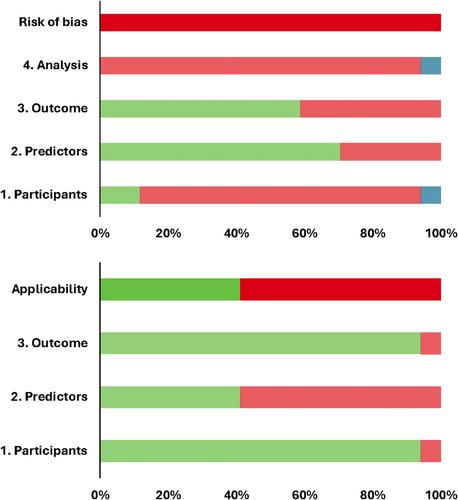
We included 14 studies reporting on 17 prediction models. The most common predictors identified in final prediction models included age; surgery type; sex or gender; anxiety or fear of surgery; pre-operative pain intensity; pre-operative analgesic use; pain catastrophising; and expected surgical incision size. Discrimination, measured by the area under receiver operating characteristic curves or c-statistic, ranged from 0.61 to 0.83. Calibration was only reported for seven models. The median (IQR [range]) overall adherence rate to TRIPOD items was 62 (53–66 [47–72])%. All prediction models were at high risk of bias.
Conclusions
Effective prediction models could support the prevention and treatment of acute post-surgical pain; however, existing models are at high risk of bias which may affect their reliability to inform practice. Consideration should be given to the goals, timing of intended use and desired outcomes of a prediction model before development.
期刊介绍:
The official journal of the Association of Anaesthetists is Anaesthesia. It is a comprehensive international publication that covers a wide range of topics. The journal focuses on general and regional anaesthesia, as well as intensive care and pain therapy. It includes original articles that have undergone peer review, covering all aspects of these fields, including research on equipment.





 京公网安备 11010802042870号
京ICP备2023020795号-1
京公网安备 11010802042870号
京ICP备2023020795号-1

 分享
分享
 求助内容:
求助内容: 应助结果提醒方式:
 扫码关注我们
