Helena Cangadis-Douglass, Ting Xia, J. Simon Bell, Suzanne Nielsen
{"title":"可待因重新上市对开具可待因和其他阿片类药物处方的影响:利用澳大利亚全科医生数据进行的间断时间序列分析","authors":"Helena Cangadis-Douglass, Ting Xia, J. Simon Bell, Suzanne Nielsen","doi":"10.1111/bcp.16246","DOIUrl":null,"url":null,"abstract":"<div>\n \n \n <section>\n \n <h3> Aims</h3>\n \n <p>We aimed to determine the impact of codeine rescheduling on prescribing of codeine and other opioids, with a focus on demographic and diagnoses associated with codeine prescribing before and after rescheduling of codeine to prescription-only in February 2018.</p>\n </section>\n \n <section>\n \n <h3> Methods</h3>\n \n <p>We used interrupted time series analysis (February 2016-February 2020) and probit regression to examine prescribing of codeine and other opioids according to primary care data from 464 general practice clinics in Victoria, Australia.</p>\n </section>\n \n <section>\n \n <h3> Results</h3>\n \n <p>The rate of codeine prescribing increased in the month following rescheduling (additional 76 people/10000, 95% confidence interval [CI] 49-103), then declined to baseline rates (slope −2.02, 95% CI 3.79, −0.25). Prescribing of other opioids did not change. Post rescheduling, females were more likely to receive codeine prescriptions compared to males (β = 0.094, 95% CI 0.08-0.108) and those aged 70-79 years were more likely to receive codeine compared to those aged <30 years. Those residing in the least disadvantaged areas had a greater probability of being prescribed codeine than those in more disadvantaged areas after rescheduling (β = 0.154, 95% CI 0.129-0.179). A documented mental health diagnosis (β = 0.067, 95% CI 0.052-0.082) or migraine diagnosis (β = 0.057, 95% CI 0.037-0.078) was associated with increased likelihood of receiving a codeine prescription after rescheduling compared to before in contrast to those without such a diagnosis.</p>\n </section>\n \n <section>\n \n <h3> Conclusion</h3>\n \n <p>Codeine rescheduling did not result in a sustained increase in codeine prescribing nor a change in the prescribing of other opioids. Patient factors associated with increased codeine prescribing after compared to before rescheduling included female sex, older age, migraine diagnosis and comorbid mental health conditions.</p>\n </section>\n \n <section>\n \n <h3> Registration</h3>\n \n <p>EU PAS Register (EUPAS43218).</p>\n </section>\n </div>","PeriodicalId":9251,"journal":{"name":"British journal of clinical pharmacology","volume":"91 1","pages":"190-198"},"PeriodicalIF":3.0000,"publicationDate":"2024-09-19","publicationTypes":"Journal Article","fieldsOfStudy":null,"isOpenAccess":false,"openAccessPdf":"https://onlinelibrary.wiley.com/doi/epdf/10.1111/bcp.16246","citationCount":"0","resultStr":"{\"title\":\"Impact of codeine rescheduling on prescribing of codeine and other opioids: Interrupted time series analyses using Australian general practice data\",\"authors\":\"Helena Cangadis-Douglass, Ting Xia, J. Simon Bell, Suzanne Nielsen\",\"doi\":\"10.1111/bcp.16246\",\"DOIUrl\":null,\"url\":null,\"abstract\":\"<div>\\n \\n \\n <section>\\n \\n <h3> Aims</h3>\\n \\n <p>We aimed to determine the impact of codeine rescheduling on prescribing of codeine and other opioids, with a focus on demographic and diagnoses associated with codeine prescribing before and after rescheduling of codeine to prescription-only in February 2018.</p>\\n </section>\\n \\n <section>\\n \\n <h3> Methods</h3>\\n \\n <p>We used interrupted time series analysis (February 2016-February 2020) and probit regression to examine prescribing of codeine and other opioids according to primary care data from 464 general practice clinics in Victoria, Australia.</p>\\n </section>\\n \\n <section>\\n \\n <h3> Results</h3>\\n \\n <p>The rate of codeine prescribing increased in the month following rescheduling (additional 76 people/10000, 95% confidence interval [CI] 49-103), then declined to baseline rates (slope −2.02, 95% CI 3.79, −0.25). Prescribing of other opioids did not change. Post rescheduling, females were more likely to receive codeine prescriptions compared to males (β = 0.094, 95% CI 0.08-0.108) and those aged 70-79 years were more likely to receive codeine compared to those aged <30 years. Those residing in the least disadvantaged areas had a greater probability of being prescribed codeine than those in more disadvantaged areas after rescheduling (β = 0.154, 95% CI 0.129-0.179). A documented mental health diagnosis (β = 0.067, 95% CI 0.052-0.082) or migraine diagnosis (β = 0.057, 95% CI 0.037-0.078) was associated with increased likelihood of receiving a codeine prescription after rescheduling compared to before in contrast to those without such a diagnosis.</p>\\n </section>\\n \\n <section>\\n \\n <h3> Conclusion</h3>\\n \\n <p>Codeine rescheduling did not result in a sustained increase in codeine prescribing nor a change in the prescribing of other opioids. Patient factors associated with increased codeine prescribing after compared to before rescheduling included female sex, older age, migraine diagnosis and comorbid mental health conditions.</p>\\n </section>\\n \\n <section>\\n \\n <h3> Registration</h3>\\n \\n <p>EU PAS Register (EUPAS43218).</p>\\n </section>\\n </div>\",\"PeriodicalId\":9251,\"journal\":{\"name\":\"British journal of clinical pharmacology\",\"volume\":\"91 1\",\"pages\":\"190-198\"},\"PeriodicalIF\":3.0000,\"publicationDate\":\"2024-09-19\",\"publicationTypes\":\"Journal Article\",\"fieldsOfStudy\":null,\"isOpenAccess\":false,\"openAccessPdf\":\"https://onlinelibrary.wiley.com/doi/epdf/10.1111/bcp.16246\",\"citationCount\":\"0\",\"resultStr\":null,\"platform\":\"Semanticscholar\",\"paperid\":null,\"PeriodicalName\":\"British journal of clinical pharmacology\",\"FirstCategoryId\":\"3\",\"ListUrlMain\":\"https://bpspubs.onlinelibrary.wiley.com/doi/10.1111/bcp.16246\",\"RegionNum\":3,\"RegionCategory\":\"医学\",\"ArticlePicture\":[],\"TitleCN\":null,\"AbstractTextCN\":null,\"PMCID\":null,\"EPubDate\":\"\",\"PubModel\":\"\",\"JCR\":\"Q2\",\"JCRName\":\"PHARMACOLOGY & PHARMACY\",\"Score\":null,\"Total\":0}","platform":"Semanticscholar","paperid":null,"PeriodicalName":"British journal of clinical pharmacology","FirstCategoryId":"3","ListUrlMain":"https://bpspubs.onlinelibrary.wiley.com/doi/10.1111/bcp.16246","RegionNum":3,"RegionCategory":"医学","ArticlePicture":[],"TitleCN":null,"AbstractTextCN":null,"PMCID":null,"EPubDate":"","PubModel":"","JCR":"Q2","JCRName":"PHARMACOLOGY & PHARMACY","Score":null,"Total":0}
Impact of codeine rescheduling on prescribing of codeine and other opioids: Interrupted time series analyses using Australian general practice data
Aims
We aimed to determine the impact of codeine rescheduling on prescribing of codeine and other opioids, with a focus on demographic and diagnoses associated with codeine prescribing before and after rescheduling of codeine to prescription-only in February 2018.
Methods
We used interrupted time series analysis (February 2016-February 2020) and probit regression to examine prescribing of codeine and other opioids according to primary care data from 464 general practice clinics in Victoria, Australia.
Results
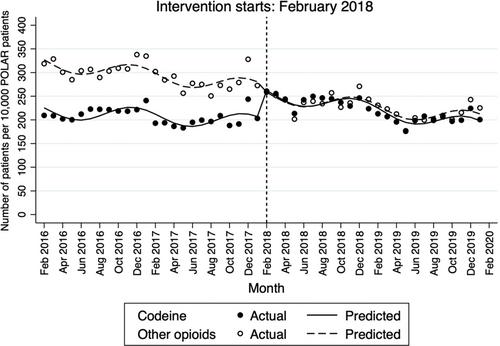
The rate of codeine prescribing increased in the month following rescheduling (additional 76 people/10000, 95% confidence interval [CI] 49-103), then declined to baseline rates (slope −2.02, 95% CI 3.79, −0.25). Prescribing of other opioids did not change. Post rescheduling, females were more likely to receive codeine prescriptions compared to males (β = 0.094, 95% CI 0.08-0.108) and those aged 70-79 years were more likely to receive codeine compared to those aged <30 years. Those residing in the least disadvantaged areas had a greater probability of being prescribed codeine than those in more disadvantaged areas after rescheduling (β = 0.154, 95% CI 0.129-0.179). A documented mental health diagnosis (β = 0.067, 95% CI 0.052-0.082) or migraine diagnosis (β = 0.057, 95% CI 0.037-0.078) was associated with increased likelihood of receiving a codeine prescription after rescheduling compared to before in contrast to those without such a diagnosis.
Conclusion
Codeine rescheduling did not result in a sustained increase in codeine prescribing nor a change in the prescribing of other opioids. Patient factors associated with increased codeine prescribing after compared to before rescheduling included female sex, older age, migraine diagnosis and comorbid mental health conditions.
期刊介绍:
Published on behalf of the British Pharmacological Society, the British Journal of Clinical Pharmacology features papers and reports on all aspects of drug action in humans: review articles, mini review articles, original papers, commentaries, editorials and letters. The Journal enjoys a wide readership, bridging the gap between the medical profession, clinical research and the pharmaceutical industry. It also publishes research on new methods, new drugs and new approaches to treatment. The Journal is recognised as one of the leading publications in its field. It is online only, publishes open access research through its OnlineOpen programme and is published monthly.






 京公网安备 11010802042870号
京ICP备2023020795号-1
京公网安备 11010802042870号
京ICP备2023020795号-1

 分享
分享

 求助内容:
求助内容: 应助结果提醒方式:
 扫码关注我们
