{"title":"利用基因图谱成功为一名低风险头颈部非脑膜旁横纹肌肉瘤患者提供单一手术疗法","authors":"Yusuke Tsumura, Yuko Kakuda, Takashi Mukaigawa, Masakuni Serizawa, Koiku Asakura, Mitsuko Akaihata, Rieko Taniguchi, Ikuko Takahashi, Yuji Ishida","doi":"10.1002/pbc.31323","DOIUrl":null,"url":null,"abstract":"<p>Rhabdomyosarcoma involving the nonparameningeal head and neck region (HNnPM RMS) is known to be a unique subgroup with a better prognosis with local aggressive nature.<span><sup>1, 2</sup></span> In this site, the frequent treatment failures include locoregional relapse/progression under the current standard therapy, which includes multiagent chemotherapy for all risk strata.<span><sup>2, 3</sup></span> However, only a few cases are deemed resectable with sufficient margins owing to the difficulty of avoiding significant functional and cosmetic sequelae.<span><sup>4</sup></span> Thus, because of the insufficient number of cases, the clinical question of whether the intensity of adjuvant chemotherapy can be possibly reduced when this highly localized tumor is completely resected has not yet been fully addressed.</p><p>A recent report shed light on the possibility of safely reducing chemotherapy intensity in patients with completely resected low-risk RMS, even in nongenitourinary sites.<span><sup>5</sup></span> However, the extent to which the treatment intensity can be safely reduced remains unclear.</p><p>With the advances in next-generation sequencing technologies, novel genetic prognostic factors, such as MyoD1 mutation and tumor mutation burden, have been reported in RMS.<span><sup>6, 7</sup></span> Because genetic factors are not yet part of the current stratification methods, their addition could enable a more sophisticated risk stratification. Here, we report a female patient with localized HNnPM RMS who survived over 6 years without recurrence. The patient underwent radical resection without chemoradiotherapy due to prolonged postoperative infection and the patient's informed choice. We retrospectively conducted whole-exome sequencing (WES), which indicated that she did not have any novel poor prognostic factors.</p><p>A 17-year-old female patient presented with an indolent mass on the oral floor. The initial diagnosis was nonmalignant tumor, and unplanned resection was performed three times within 6 months for the regrowing mass. After the third surgery, the resected specimen was pathologically examined for the first time, and the result indicated that the recurrent mass was malignant. The patient was referred to our hospital and underwent follow-up surgery due to positive margins. Due to specimen insufficiency, the mass was tentatively diagnosed as low-grade malignant myoepithelioma-like tumor. Thus, after the removal of the residual lesions, the patient was followed up on an outpatient basis.</p><p>Approximately 1 year later, the patient experienced locoregional relapse without any evidence of metastasis and lymph node involvement (Figure 1). Based on the former pathological diagnosis of myoepithelioma-like tumor, we performed extended radical resection with sufficient margins. Pathological re-examination of fresh and abundant samples changed the diagnosis from myoepithelioma-like tumor to sclerosing RMS without PAX fusion (Figure 2). Because surgical site infection prevented the timely initiation of local irradiation and the patient did not wish to receive adjuvant chemotherapies, we opted for careful observation. The patient was in a good state without any signs of recurrence at the 6-year follow-up after the last tumor resection.</p><p>In this case, we retrospectively conducted WES within the Project Hope (see our previous report for more details) with the patient's consent.<span><sup>8</sup></span> We identified oncogenic <i>HRAS</i> mutation (c.37G>C, p.G13R) as a potential somatic driver of fusion-negative RMS.<span><sup>9</sup></span> In addition, WES analysis revealed that our patient did not harbor <i>MyoD1</i> mutations and had low tumor mutational burden (0.8607/Mb).</p><p>To the best of our knowledge, this is the first report of a patient treated with surgery alone in the postchemotherapy era. In this case, genetic profiling was performed as a special note. Since the 1960s, multimodal treatment incorporating chemotherapy as an essential component has become the standard of care in RMS treatment, which increased the survival rates from 25% to over 70%.<span><sup>10</sup></span> Meanwhile, earlier reports, before the introduction of chemotherapy, described a certain number of long-term survivors in localized cases treated with radical resection alone. Horn and Enterline reported that nine cases of RMS without metastases were treated with local therapy alone and five patients, including three with only surgery, survived more than 1 year without recurrence.<span><sup>11</sup></span> Bardwil and Maccomb reported that 15 of 25 patients with RMS were treated with surgery alone, and three survived more than 3 years without recurrence.<span><sup>12</sup></span> Furthermore, Sutow et al. reported that seven of 54 patients with localized RMS were treated with surgery alone, and five survived without recurrence for more than 5 years.<span><sup>13</sup></span> However, to our knowledge, there are no reports of surgical monotherapy for RMS in the postchemotherapy era.</p><p>Although anecdotal, this case is of great interest in the context of recent success in reducing chemotherapy intensity in low-risk patients with complete resection.<span><sup>5</sup></span> Although further study is warranted, it is quite plausible that there is a subgroup of RMS that may be feasible for further treatment attenuation. To identify patients with ultralow risk, it may be beneficial to combine existing stratification methods with novel genetic risk factors, such as MyoD1 and tumor mutational burden.<span><sup>6, 7</sup></span> Notably, our case did not have these molecular genetic risk factors.</p><p>Minimizing the use of nonessential chemotherapy is important in terms of late complications, quality of life, and healthcare costs. As with the success of hepatoblastoma, future research may identify an ultralow risk group suitable for surgical monotherapy in RMS.<span><sup>14</sup></span> Given the low incidence of metastasis, the head and neck origin may be a potential candidate for ultralow risk factors.</p><p>The authors declare no conflict of interest and no funding sources for this study.</p>","PeriodicalId":19822,"journal":{"name":"Pediatric Blood & Cancer","volume":"71 12","pages":""},"PeriodicalIF":2.3000,"publicationDate":"2024-09-17","publicationTypes":"Journal Article","fieldsOfStudy":null,"isOpenAccess":false,"openAccessPdf":"https://onlinelibrary.wiley.com/doi/epdf/10.1002/pbc.31323","citationCount":"0","resultStr":"{\"title\":\"Successful surgical monotherapy for a patient with low-risk head and neck nonparameningeal rhabdomyosarcoma with genetic profiling\",\"authors\":\"Yusuke Tsumura, Yuko Kakuda, Takashi Mukaigawa, Masakuni Serizawa, Koiku Asakura, Mitsuko Akaihata, Rieko Taniguchi, Ikuko Takahashi, Yuji Ishida\",\"doi\":\"10.1002/pbc.31323\",\"DOIUrl\":null,\"url\":null,\"abstract\":\"<p>Rhabdomyosarcoma involving the nonparameningeal head and neck region (HNnPM RMS) is known to be a unique subgroup with a better prognosis with local aggressive nature.<span><sup>1, 2</sup></span> In this site, the frequent treatment failures include locoregional relapse/progression under the current standard therapy, which includes multiagent chemotherapy for all risk strata.<span><sup>2, 3</sup></span> However, only a few cases are deemed resectable with sufficient margins owing to the difficulty of avoiding significant functional and cosmetic sequelae.<span><sup>4</sup></span> Thus, because of the insufficient number of cases, the clinical question of whether the intensity of adjuvant chemotherapy can be possibly reduced when this highly localized tumor is completely resected has not yet been fully addressed.</p><p>A recent report shed light on the possibility of safely reducing chemotherapy intensity in patients with completely resected low-risk RMS, even in nongenitourinary sites.<span><sup>5</sup></span> However, the extent to which the treatment intensity can be safely reduced remains unclear.</p><p>With the advances in next-generation sequencing technologies, novel genetic prognostic factors, such as MyoD1 mutation and tumor mutation burden, have been reported in RMS.<span><sup>6, 7</sup></span> Because genetic factors are not yet part of the current stratification methods, their addition could enable a more sophisticated risk stratification. Here, we report a female patient with localized HNnPM RMS who survived over 6 years without recurrence. The patient underwent radical resection without chemoradiotherapy due to prolonged postoperative infection and the patient's informed choice. We retrospectively conducted whole-exome sequencing (WES), which indicated that she did not have any novel poor prognostic factors.</p><p>A 17-year-old female patient presented with an indolent mass on the oral floor. The initial diagnosis was nonmalignant tumor, and unplanned resection was performed three times within 6 months for the regrowing mass. After the third surgery, the resected specimen was pathologically examined for the first time, and the result indicated that the recurrent mass was malignant. The patient was referred to our hospital and underwent follow-up surgery due to positive margins. Due to specimen insufficiency, the mass was tentatively diagnosed as low-grade malignant myoepithelioma-like tumor. Thus, after the removal of the residual lesions, the patient was followed up on an outpatient basis.</p><p>Approximately 1 year later, the patient experienced locoregional relapse without any evidence of metastasis and lymph node involvement (Figure 1). Based on the former pathological diagnosis of myoepithelioma-like tumor, we performed extended radical resection with sufficient margins. Pathological re-examination of fresh and abundant samples changed the diagnosis from myoepithelioma-like tumor to sclerosing RMS without PAX fusion (Figure 2). Because surgical site infection prevented the timely initiation of local irradiation and the patient did not wish to receive adjuvant chemotherapies, we opted for careful observation. The patient was in a good state without any signs of recurrence at the 6-year follow-up after the last tumor resection.</p><p>In this case, we retrospectively conducted WES within the Project Hope (see our previous report for more details) with the patient's consent.<span><sup>8</sup></span> We identified oncogenic <i>HRAS</i> mutation (c.37G>C, p.G13R) as a potential somatic driver of fusion-negative RMS.<span><sup>9</sup></span> In addition, WES analysis revealed that our patient did not harbor <i>MyoD1</i> mutations and had low tumor mutational burden (0.8607/Mb).</p><p>To the best of our knowledge, this is the first report of a patient treated with surgery alone in the postchemotherapy era. In this case, genetic profiling was performed as a special note. Since the 1960s, multimodal treatment incorporating chemotherapy as an essential component has become the standard of care in RMS treatment, which increased the survival rates from 25% to over 70%.<span><sup>10</sup></span> Meanwhile, earlier reports, before the introduction of chemotherapy, described a certain number of long-term survivors in localized cases treated with radical resection alone. Horn and Enterline reported that nine cases of RMS without metastases were treated with local therapy alone and five patients, including three with only surgery, survived more than 1 year without recurrence.<span><sup>11</sup></span> Bardwil and Maccomb reported that 15 of 25 patients with RMS were treated with surgery alone, and three survived more than 3 years without recurrence.<span><sup>12</sup></span> Furthermore, Sutow et al. reported that seven of 54 patients with localized RMS were treated with surgery alone, and five survived without recurrence for more than 5 years.<span><sup>13</sup></span> However, to our knowledge, there are no reports of surgical monotherapy for RMS in the postchemotherapy era.</p><p>Although anecdotal, this case is of great interest in the context of recent success in reducing chemotherapy intensity in low-risk patients with complete resection.<span><sup>5</sup></span> Although further study is warranted, it is quite plausible that there is a subgroup of RMS that may be feasible for further treatment attenuation. To identify patients with ultralow risk, it may be beneficial to combine existing stratification methods with novel genetic risk factors, such as MyoD1 and tumor mutational burden.<span><sup>6, 7</sup></span> Notably, our case did not have these molecular genetic risk factors.</p><p>Minimizing the use of nonessential chemotherapy is important in terms of late complications, quality of life, and healthcare costs. As with the success of hepatoblastoma, future research may identify an ultralow risk group suitable for surgical monotherapy in RMS.<span><sup>14</sup></span> Given the low incidence of metastasis, the head and neck origin may be a potential candidate for ultralow risk factors.</p><p>The authors declare no conflict of interest and no funding sources for this study.</p>\",\"PeriodicalId\":19822,\"journal\":{\"name\":\"Pediatric Blood & Cancer\",\"volume\":\"71 12\",\"pages\":\"\"},\"PeriodicalIF\":2.3000,\"publicationDate\":\"2024-09-17\",\"publicationTypes\":\"Journal Article\",\"fieldsOfStudy\":null,\"isOpenAccess\":false,\"openAccessPdf\":\"https://onlinelibrary.wiley.com/doi/epdf/10.1002/pbc.31323\",\"citationCount\":\"0\",\"resultStr\":null,\"platform\":\"Semanticscholar\",\"paperid\":null,\"PeriodicalName\":\"Pediatric Blood & Cancer\",\"FirstCategoryId\":\"3\",\"ListUrlMain\":\"https://onlinelibrary.wiley.com/doi/10.1002/pbc.31323\",\"RegionNum\":3,\"RegionCategory\":\"医学\",\"ArticlePicture\":[],\"TitleCN\":null,\"AbstractTextCN\":null,\"PMCID\":null,\"EPubDate\":\"\",\"PubModel\":\"\",\"JCR\":\"Q2\",\"JCRName\":\"HEMATOLOGY\",\"Score\":null,\"Total\":0}","platform":"Semanticscholar","paperid":null,"PeriodicalName":"Pediatric Blood & Cancer","FirstCategoryId":"3","ListUrlMain":"https://onlinelibrary.wiley.com/doi/10.1002/pbc.31323","RegionNum":3,"RegionCategory":"医学","ArticlePicture":[],"TitleCN":null,"AbstractTextCN":null,"PMCID":null,"EPubDate":"","PubModel":"","JCR":"Q2","JCRName":"HEMATOLOGY","Score":null,"Total":0}
Successful surgical monotherapy for a patient with low-risk head and neck nonparameningeal rhabdomyosarcoma with genetic profiling
Rhabdomyosarcoma involving the nonparameningeal head and neck region (HNnPM RMS) is known to be a unique subgroup with a better prognosis with local aggressive nature.1, 2 In this site, the frequent treatment failures include locoregional relapse/progression under the current standard therapy, which includes multiagent chemotherapy for all risk strata.2, 3 However, only a few cases are deemed resectable with sufficient margins owing to the difficulty of avoiding significant functional and cosmetic sequelae.4 Thus, because of the insufficient number of cases, the clinical question of whether the intensity of adjuvant chemotherapy can be possibly reduced when this highly localized tumor is completely resected has not yet been fully addressed.
A recent report shed light on the possibility of safely reducing chemotherapy intensity in patients with completely resected low-risk RMS, even in nongenitourinary sites.5 However, the extent to which the treatment intensity can be safely reduced remains unclear.
With the advances in next-generation sequencing technologies, novel genetic prognostic factors, such as MyoD1 mutation and tumor mutation burden, have been reported in RMS.6, 7 Because genetic factors are not yet part of the current stratification methods, their addition could enable a more sophisticated risk stratification. Here, we report a female patient with localized HNnPM RMS who survived over 6 years without recurrence. The patient underwent radical resection without chemoradiotherapy due to prolonged postoperative infection and the patient's informed choice. We retrospectively conducted whole-exome sequencing (WES), which indicated that she did not have any novel poor prognostic factors.
A 17-year-old female patient presented with an indolent mass on the oral floor. The initial diagnosis was nonmalignant tumor, and unplanned resection was performed three times within 6 months for the regrowing mass. After the third surgery, the resected specimen was pathologically examined for the first time, and the result indicated that the recurrent mass was malignant. The patient was referred to our hospital and underwent follow-up surgery due to positive margins. Due to specimen insufficiency, the mass was tentatively diagnosed as low-grade malignant myoepithelioma-like tumor. Thus, after the removal of the residual lesions, the patient was followed up on an outpatient basis.
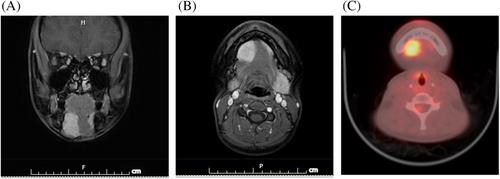
Approximately 1 year later, the patient experienced locoregional relapse without any evidence of metastasis and lymph node involvement (Figure 1). Based on the former pathological diagnosis of myoepithelioma-like tumor, we performed extended radical resection with sufficient margins. Pathological re-examination of fresh and abundant samples changed the diagnosis from myoepithelioma-like tumor to sclerosing RMS without PAX fusion (Figure 2). Because surgical site infection prevented the timely initiation of local irradiation and the patient did not wish to receive adjuvant chemotherapies, we opted for careful observation. The patient was in a good state without any signs of recurrence at the 6-year follow-up after the last tumor resection.
In this case, we retrospectively conducted WES within the Project Hope (see our previous report for more details) with the patient's consent.8 We identified oncogenic HRAS mutation (c.37G>C, p.G13R) as a potential somatic driver of fusion-negative RMS.9 In addition, WES analysis revealed that our patient did not harbor MyoD1 mutations and had low tumor mutational burden (0.8607/Mb).
To the best of our knowledge, this is the first report of a patient treated with surgery alone in the postchemotherapy era. In this case, genetic profiling was performed as a special note. Since the 1960s, multimodal treatment incorporating chemotherapy as an essential component has become the standard of care in RMS treatment, which increased the survival rates from 25% to over 70%.10 Meanwhile, earlier reports, before the introduction of chemotherapy, described a certain number of long-term survivors in localized cases treated with radical resection alone. Horn and Enterline reported that nine cases of RMS without metastases were treated with local therapy alone and five patients, including three with only surgery, survived more than 1 year without recurrence.11 Bardwil and Maccomb reported that 15 of 25 patients with RMS were treated with surgery alone, and three survived more than 3 years without recurrence.12 Furthermore, Sutow et al. reported that seven of 54 patients with localized RMS were treated with surgery alone, and five survived without recurrence for more than 5 years.13 However, to our knowledge, there are no reports of surgical monotherapy for RMS in the postchemotherapy era.
Although anecdotal, this case is of great interest in the context of recent success in reducing chemotherapy intensity in low-risk patients with complete resection.5 Although further study is warranted, it is quite plausible that there is a subgroup of RMS that may be feasible for further treatment attenuation. To identify patients with ultralow risk, it may be beneficial to combine existing stratification methods with novel genetic risk factors, such as MyoD1 and tumor mutational burden.6, 7 Notably, our case did not have these molecular genetic risk factors.
Minimizing the use of nonessential chemotherapy is important in terms of late complications, quality of life, and healthcare costs. As with the success of hepatoblastoma, future research may identify an ultralow risk group suitable for surgical monotherapy in RMS.14 Given the low incidence of metastasis, the head and neck origin may be a potential candidate for ultralow risk factors.
The authors declare no conflict of interest and no funding sources for this study.
期刊介绍:
Pediatric Blood & Cancer publishes the highest quality manuscripts describing basic and clinical investigations of blood disorders and malignant diseases of childhood including diagnosis, treatment, epidemiology, etiology, biology, and molecular and clinical genetics of these diseases as they affect children, adolescents, and young adults. Pediatric Blood & Cancer will also include studies on such treatment options as hematopoietic stem cell transplantation, immunology, and gene therapy.




 京公网安备 11010802042870号
京ICP备2023020795号-1
京公网安备 11010802042870号
京ICP备2023020795号-1

 分享
分享
 求助内容:
求助内容: 应助结果提醒方式:
 扫码关注我们
