Bhawana Pandey, Zhengying Wang, Angela Jimenez, Eshant Bhatia, Ritika Jain, Alexander Beach, Drishti Maniar, Justin Hosten, Laura O'Farrell, Casey Vantucci, David Hur, Richard Noel, Rachel Ringquist, Clinton Smith, Miguel A. Ochoa, Krishnendu Roy
{"title":"肠外-鼻内双佐剂亚单位纳米疫苗可使小鼠产生强大的全身和黏膜免疫力,对抗 SARS-CoV-2","authors":"Bhawana Pandey, Zhengying Wang, Angela Jimenez, Eshant Bhatia, Ritika Jain, Alexander Beach, Drishti Maniar, Justin Hosten, Laura O'Farrell, Casey Vantucci, David Hur, Richard Noel, Rachel Ringquist, Clinton Smith, Miguel A. Ochoa, Krishnendu Roy","doi":"10.1002/advs.202402792","DOIUrl":null,"url":null,"abstract":"<p>Existing parenteral SARS-CoV-2 vaccines produce only limited mucosal responses, essential for reducing transmission and achieving sterilizing immunity. Appropriately designed mucosal boosters can overcome the shortcomings of parenteral vaccines and enhance pre-existing systemic immunity. Here, a new protein subunit nanovaccine is developed by utilizing dual-adjuvanted (RIG-I: PUUC RNA and TLR-9: CpG DNA) polysaccharide-amino acid-lipid nanoparticles (PAL-NPs) along with SARS-CoV-2 S1 trimer protein, that can be delivered both intramuscularly (IM) and intranasally (IN) to generate balanced mucosal-systemic SARS-CoV-2 immunity. Mice receiving IM-Prime PUUC+CpG PAL subunit nanovaccine, followed by an IN-Boost, developed high levels of IgA, IgG, and cellular immunity in the lungs and showed robust systemic humoral immunity. Interestingly, as a purely intranasal subunit vaccine (IN-Prime/IN-Boost), PUUC+CpG PAL-NPs induced stronger lung-specific T cell immunity than IM-Prime/IN-Boost, and a comparable IgA and neutralizing antibodies, although with a lower systemic antibody response, indicating that a fully mucosal delivery route for SARS-CoV-2 vaccination may also be feasible. The data suggest that PUUC+CpG PAL subunit nanovaccine is a promising candidate for generating SARS-CoV-2 specific mucosal immunity.</p>","PeriodicalId":117,"journal":{"name":"Advanced Science","volume":"11 45","pages":""},"PeriodicalIF":14.1000,"publicationDate":"2024-10-01","publicationTypes":"Journal Article","fieldsOfStudy":null,"isOpenAccess":false,"openAccessPdf":"https://onlinelibrary.wiley.com/doi/epdf/10.1002/advs.202402792","citationCount":"0","resultStr":"{\"title\":\"A Dual-Adjuvanted Parenteral-Intranasal Subunit Nanovaccine generates Robust Systemic and Mucosal Immunity Against SARS-CoV-2 in Mice\",\"authors\":\"Bhawana Pandey, Zhengying Wang, Angela Jimenez, Eshant Bhatia, Ritika Jain, Alexander Beach, Drishti Maniar, Justin Hosten, Laura O'Farrell, Casey Vantucci, David Hur, Richard Noel, Rachel Ringquist, Clinton Smith, Miguel A. Ochoa, Krishnendu Roy\",\"doi\":\"10.1002/advs.202402792\",\"DOIUrl\":null,\"url\":null,\"abstract\":\"<p>Existing parenteral SARS-CoV-2 vaccines produce only limited mucosal responses, essential for reducing transmission and achieving sterilizing immunity. Appropriately designed mucosal boosters can overcome the shortcomings of parenteral vaccines and enhance pre-existing systemic immunity. Here, a new protein subunit nanovaccine is developed by utilizing dual-adjuvanted (RIG-I: PUUC RNA and TLR-9: CpG DNA) polysaccharide-amino acid-lipid nanoparticles (PAL-NPs) along with SARS-CoV-2 S1 trimer protein, that can be delivered both intramuscularly (IM) and intranasally (IN) to generate balanced mucosal-systemic SARS-CoV-2 immunity. Mice receiving IM-Prime PUUC+CpG PAL subunit nanovaccine, followed by an IN-Boost, developed high levels of IgA, IgG, and cellular immunity in the lungs and showed robust systemic humoral immunity. Interestingly, as a purely intranasal subunit vaccine (IN-Prime/IN-Boost), PUUC+CpG PAL-NPs induced stronger lung-specific T cell immunity than IM-Prime/IN-Boost, and a comparable IgA and neutralizing antibodies, although with a lower systemic antibody response, indicating that a fully mucosal delivery route for SARS-CoV-2 vaccination may also be feasible. The data suggest that PUUC+CpG PAL subunit nanovaccine is a promising candidate for generating SARS-CoV-2 specific mucosal immunity.</p>\",\"PeriodicalId\":117,\"journal\":{\"name\":\"Advanced Science\",\"volume\":\"11 45\",\"pages\":\"\"},\"PeriodicalIF\":14.1000,\"publicationDate\":\"2024-10-01\",\"publicationTypes\":\"Journal Article\",\"fieldsOfStudy\":null,\"isOpenAccess\":false,\"openAccessPdf\":\"https://onlinelibrary.wiley.com/doi/epdf/10.1002/advs.202402792\",\"citationCount\":\"0\",\"resultStr\":null,\"platform\":\"Semanticscholar\",\"paperid\":null,\"PeriodicalName\":\"Advanced Science\",\"FirstCategoryId\":\"88\",\"ListUrlMain\":\"https://advanced.onlinelibrary.wiley.com/doi/10.1002/advs.202402792\",\"RegionNum\":1,\"RegionCategory\":\"材料科学\",\"ArticlePicture\":[],\"TitleCN\":null,\"AbstractTextCN\":null,\"PMCID\":null,\"EPubDate\":\"\",\"PubModel\":\"\",\"JCR\":\"Q1\",\"JCRName\":\"CHEMISTRY, MULTIDISCIPLINARY\",\"Score\":null,\"Total\":0}","platform":"Semanticscholar","paperid":null,"PeriodicalName":"Advanced Science","FirstCategoryId":"88","ListUrlMain":"https://advanced.onlinelibrary.wiley.com/doi/10.1002/advs.202402792","RegionNum":1,"RegionCategory":"材料科学","ArticlePicture":[],"TitleCN":null,"AbstractTextCN":null,"PMCID":null,"EPubDate":"","PubModel":"","JCR":"Q1","JCRName":"CHEMISTRY, MULTIDISCIPLINARY","Score":null,"Total":0}
引用次数: 0
摘要
现有的 SARS-CoV-2 肠外疫苗只能产生有限的粘膜反应,而粘膜反应对于减少传播和实现灭菌免疫至关重要。适当设计的粘膜增效剂可以克服肠外疫苗的缺点,增强原有的全身免疫力。本文利用多糖-氨基酸-脂质纳米颗粒(PAL-NPs)与 SARS-CoV-2 S1 三聚体蛋白的双重佐剂(RIG-I:PUUC RNA 和 TLR-9:CpG DNA),开发了一种新型蛋白亚单位纳米疫苗,可通过肌肉注射(IM)和鼻内注射(IN)产生平衡的粘膜-全身 SARS-CoV-2 免疫力。小鼠接种 IM-Prime PUUC+CpG PAL 亚基纳米疫苗后再接种 IN-增强剂,肺部可产生高水平的 IgA、IgG 和细胞免疫,并显示出强大的全身体液免疫。有趣的是,作为纯鼻内亚基疫苗(IN-Prime/IN-Boost),PUUC+CpG PAL-NPs 比 IM-Prime/IN-Boost 能诱导更强的肺特异性 T 细胞免疫,以及相当的 IgA 和中和抗体,但全身抗体反应较低,这表明完全通过粘膜给药途径接种 SARS-CoV-2 疫苗也是可行的。这些数据表明,PUUC+CpG PAL 亚基纳米疫苗是产生 SARS-CoV-2 特异性粘膜免疫的一个很有前途的候选方案。
A Dual-Adjuvanted Parenteral-Intranasal Subunit Nanovaccine generates Robust Systemic and Mucosal Immunity Against SARS-CoV-2 in Mice
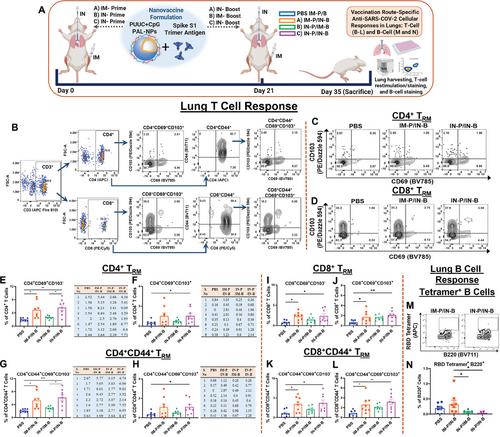
Existing parenteral SARS-CoV-2 vaccines produce only limited mucosal responses, essential for reducing transmission and achieving sterilizing immunity. Appropriately designed mucosal boosters can overcome the shortcomings of parenteral vaccines and enhance pre-existing systemic immunity. Here, a new protein subunit nanovaccine is developed by utilizing dual-adjuvanted (RIG-I: PUUC RNA and TLR-9: CpG DNA) polysaccharide-amino acid-lipid nanoparticles (PAL-NPs) along with SARS-CoV-2 S1 trimer protein, that can be delivered both intramuscularly (IM) and intranasally (IN) to generate balanced mucosal-systemic SARS-CoV-2 immunity. Mice receiving IM-Prime PUUC+CpG PAL subunit nanovaccine, followed by an IN-Boost, developed high levels of IgA, IgG, and cellular immunity in the lungs and showed robust systemic humoral immunity. Interestingly, as a purely intranasal subunit vaccine (IN-Prime/IN-Boost), PUUC+CpG PAL-NPs induced stronger lung-specific T cell immunity than IM-Prime/IN-Boost, and a comparable IgA and neutralizing antibodies, although with a lower systemic antibody response, indicating that a fully mucosal delivery route for SARS-CoV-2 vaccination may also be feasible. The data suggest that PUUC+CpG PAL subunit nanovaccine is a promising candidate for generating SARS-CoV-2 specific mucosal immunity.
期刊介绍:
Advanced Science is a prestigious open access journal that focuses on interdisciplinary research in materials science, physics, chemistry, medical and life sciences, and engineering. The journal aims to promote cutting-edge research by employing a rigorous and impartial review process. It is committed to presenting research articles with the highest quality production standards, ensuring maximum accessibility of top scientific findings. With its vibrant and innovative publication platform, Advanced Science seeks to revolutionize the dissemination and organization of scientific knowledge.





 京公网安备 11010802042870号
京ICP备2023020795号-1
京公网安备 11010802042870号
京ICP备2023020795号-1

 分享
分享
 求助内容:
求助内容: 应助结果提醒方式:
 扫码关注我们
