{"title":"镰状细胞疾病谱。","authors":"Barbara J. Bain","doi":"10.1002/ajh.27494","DOIUrl":null,"url":null,"abstract":"<p>The hemoglobin concentration (Hb) in sickle cell anemia is typically 60–100 g/L with the blood film (top left, all images May–Grünwald–Giemsa, ×100 objective) showing sickle cells boat-shaped cells, target cells, features of hyposplenism (Howell–Jolly bodies, Pappenheimer bodies, large platelets), nucleated red blood cells, polychromasia and sometimes irregularly contracted cells or linear fragments. Some compound heterozygous states, for example, SD (top center), have hematological features very similar to those of sickle cell anemia.<span><sup>1</sup></span> Others differ. Microcytosis and hypochromia are additional features in sickle cell/β thalassemia (top right). Sickle cell/hemoglobin C disease also differs. The Hb tends to be higher and the blood film may show distinctive SC poikilocytes when the crystallization of hemoglobin C and polymerization of hemoglobin S occur in the same cell<span><sup>2</sup></span>; hemoglobin C crystals may also be present (bottom left and center). A distinctive poikilocyte is also associated with hemoglobin S-Oman in heterozygotes (bottom right), homozygotes, and compound heterozygotes; these poikilocytes have been referred to as Napolean hat cells.</p><p>The different types of sickle cell disease differ in their clinicopathological characteristics and disease outcomes. It is, therefore, important that the heterogeneity is recognized and that articles in scientific journals and presentations at congresses make clear in what sense the term “sickle cell disease” is being used.<span><sup>3</sup></span></p><p>The author declares no conflict of interest.</p>","PeriodicalId":7724,"journal":{"name":"American Journal of Hematology","volume":"100 2","pages":"296-297"},"PeriodicalIF":9.9000,"publicationDate":"2024-10-01","publicationTypes":"Journal Article","fieldsOfStudy":null,"isOpenAccess":false,"openAccessPdf":"https://www.ncbi.nlm.nih.gov/pmc/articles/PMC11705198/pdf/","citationCount":"0","resultStr":"{\"title\":\"The spectrum of sickle cell disease\",\"authors\":\"Barbara J. Bain\",\"doi\":\"10.1002/ajh.27494\",\"DOIUrl\":null,\"url\":null,\"abstract\":\"<p>The hemoglobin concentration (Hb) in sickle cell anemia is typically 60–100 g/L with the blood film (top left, all images May–Grünwald–Giemsa, ×100 objective) showing sickle cells boat-shaped cells, target cells, features of hyposplenism (Howell–Jolly bodies, Pappenheimer bodies, large platelets), nucleated red blood cells, polychromasia and sometimes irregularly contracted cells or linear fragments. Some compound heterozygous states, for example, SD (top center), have hematological features very similar to those of sickle cell anemia.<span><sup>1</sup></span> Others differ. Microcytosis and hypochromia are additional features in sickle cell/β thalassemia (top right). Sickle cell/hemoglobin C disease also differs. The Hb tends to be higher and the blood film may show distinctive SC poikilocytes when the crystallization of hemoglobin C and polymerization of hemoglobin S occur in the same cell<span><sup>2</sup></span>; hemoglobin C crystals may also be present (bottom left and center). A distinctive poikilocyte is also associated with hemoglobin S-Oman in heterozygotes (bottom right), homozygotes, and compound heterozygotes; these poikilocytes have been referred to as Napolean hat cells.</p><p>The different types of sickle cell disease differ in their clinicopathological characteristics and disease outcomes. It is, therefore, important that the heterogeneity is recognized and that articles in scientific journals and presentations at congresses make clear in what sense the term “sickle cell disease” is being used.<span><sup>3</sup></span></p><p>The author declares no conflict of interest.</p>\",\"PeriodicalId\":7724,\"journal\":{\"name\":\"American Journal of Hematology\",\"volume\":\"100 2\",\"pages\":\"296-297\"},\"PeriodicalIF\":9.9000,\"publicationDate\":\"2024-10-01\",\"publicationTypes\":\"Journal Article\",\"fieldsOfStudy\":null,\"isOpenAccess\":false,\"openAccessPdf\":\"https://www.ncbi.nlm.nih.gov/pmc/articles/PMC11705198/pdf/\",\"citationCount\":\"0\",\"resultStr\":null,\"platform\":\"Semanticscholar\",\"paperid\":null,\"PeriodicalName\":\"American Journal of Hematology\",\"FirstCategoryId\":\"3\",\"ListUrlMain\":\"https://onlinelibrary.wiley.com/doi/10.1002/ajh.27494\",\"RegionNum\":1,\"RegionCategory\":\"医学\",\"ArticlePicture\":[],\"TitleCN\":null,\"AbstractTextCN\":null,\"PMCID\":null,\"EPubDate\":\"\",\"PubModel\":\"\",\"JCR\":\"Q1\",\"JCRName\":\"HEMATOLOGY\",\"Score\":null,\"Total\":0}","platform":"Semanticscholar","paperid":null,"PeriodicalName":"American Journal of Hematology","FirstCategoryId":"3","ListUrlMain":"https://onlinelibrary.wiley.com/doi/10.1002/ajh.27494","RegionNum":1,"RegionCategory":"医学","ArticlePicture":[],"TitleCN":null,"AbstractTextCN":null,"PMCID":null,"EPubDate":"","PubModel":"","JCR":"Q1","JCRName":"HEMATOLOGY","Score":null,"Total":0}
引用次数: 0
摘要
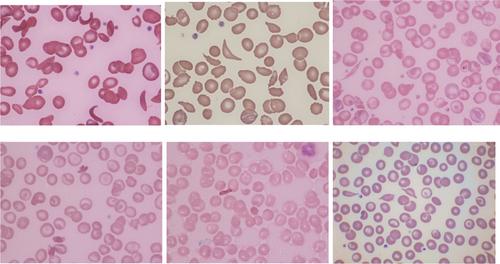
镰状细胞性贫血的血红蛋白浓度(Hb)通常为60-100 g/L,血膜(左上,所有图像may - gr nwald - giemsa, ×100物镜)显示镰状细胞船型细胞、靶细胞、脾功能减退(Howell-Jolly小体、Pappenheimer小体、大血小板)、有核红细胞、多色症,有时不规则收缩细胞或线状碎片。一些复合杂合状态,如SD(上中),其血液学特征与镰状细胞性贫血非常相似其他人是不同的。镰状细胞/β地中海贫血(右上)伴有小细胞增多和低色素血症。镰状细胞/血红蛋白C病也不同。当血红蛋白C的结晶和血红蛋白S的聚合发生在同一个细胞中时,血红蛋白倾向于升高,血膜可能显示出独特的SC变细胞2;血红蛋白C晶体也可能存在(左下和中间)。在杂合子(右下)、纯合子和复合杂合子中,一种独特的异胚细胞也与血红蛋白S-Oman相关;这些准细胞被称为拿破仑帽细胞。不同类型的镰状细胞病在其临床病理特征和疾病结局上有所不同。因此,重要的是要认识到这种异质性,科学期刊上的文章和大会上的发言要明确在什么意义上使用“镰状细胞病”一词。3 .作者声明无利益冲突。
The hemoglobin concentration (Hb) in sickle cell anemia is typically 60–100 g/L with the blood film (top left, all images May–Grünwald–Giemsa, ×100 objective) showing sickle cells boat-shaped cells, target cells, features of hyposplenism (Howell–Jolly bodies, Pappenheimer bodies, large platelets), nucleated red blood cells, polychromasia and sometimes irregularly contracted cells or linear fragments. Some compound heterozygous states, for example, SD (top center), have hematological features very similar to those of sickle cell anemia.1 Others differ. Microcytosis and hypochromia are additional features in sickle cell/β thalassemia (top right). Sickle cell/hemoglobin C disease also differs. The Hb tends to be higher and the blood film may show distinctive SC poikilocytes when the crystallization of hemoglobin C and polymerization of hemoglobin S occur in the same cell2; hemoglobin C crystals may also be present (bottom left and center). A distinctive poikilocyte is also associated with hemoglobin S-Oman in heterozygotes (bottom right), homozygotes, and compound heterozygotes; these poikilocytes have been referred to as Napolean hat cells.
The different types of sickle cell disease differ in their clinicopathological characteristics and disease outcomes. It is, therefore, important that the heterogeneity is recognized and that articles in scientific journals and presentations at congresses make clear in what sense the term “sickle cell disease” is being used.3
期刊介绍:
The American Journal of Hematology offers extensive coverage of experimental and clinical aspects of blood diseases in humans and animal models. The journal publishes original contributions in both non-malignant and malignant hematological diseases, encompassing clinical and basic studies in areas such as hemostasis, thrombosis, immunology, blood banking, and stem cell biology. Clinical translational reports highlighting innovative therapeutic approaches for the diagnosis and treatment of hematological diseases are actively encouraged.The American Journal of Hematology features regular original laboratory and clinical research articles, brief research reports, critical reviews, images in hematology, as well as letters and correspondence.




 京公网安备 11010802042870号
京ICP备2023020795号-1
京公网安备 11010802042870号
京ICP备2023020795号-1

 分享
分享
 求助内容:
求助内容: 应助结果提醒方式:
 扫码关注我们
