Mita Manna, Michelle Brabant, Rowen Greene, Michael Dean Chamberlain, Aalok Kumar, Nimira Alimohamed, Christine Brezden-Masley
{"title":"萨妥珠单抗戈维替康用于转移性三阴性乳腺癌的安全性概述和毒性管理策略的加拿大专家建议。","authors":"Mita Manna, Michelle Brabant, Rowen Greene, Michael Dean Chamberlain, Aalok Kumar, Nimira Alimohamed, Christine Brezden-Masley","doi":"10.3390/curroncol31090422","DOIUrl":null,"url":null,"abstract":"<p><p>Sacituzumab Govitecan (SG) is an antibody-drug conjugate (ADC) comprised of an anti-Trop-2 IgG1 molecule conjugated to SN-38, the active metabolite of irinotecan, via a pH-sensitive hydrolysable linker. As a result of recent Canadian funding for SG in advanced hormone receptor (HR)-positive breast cancer and triple-negative breast cancer (TNBC), experience with using SG and managing adverse events (AEs) has grown. This review presents a summary of evidence and adverse event recommendations derived from Canadian experience, with SG use in metastatic TNBC for extrapolation and guidance in all indicated settings. SG is dosed at 10 mg/kg on day 1 and day 8 of a 21-day cycle. Compared to treatment of physicians' choice (TPC) the phase III ASCENT and TROPiCS-02 studies demonstrated favorable survival data in unresectable locally advanced or metastatic TNBC and HR-positive HER2 negative metastatic breast cancer, respectively. The most common AEs were neutropenia, diarrhea, nausea, fatigue, alopecia, and anemia. This review outlines AE management recommendations for SG based on clinical trial protocols and Canadian guidelines, incorporating treatment delay, dose reductions, and the use of prophylactic and supportive medications.</p>","PeriodicalId":11012,"journal":{"name":"Current oncology","volume":"31 9","pages":"5694-5708"},"PeriodicalIF":3.6000,"publicationDate":"2024-09-21","publicationTypes":"Journal Article","fieldsOfStudy":null,"isOpenAccess":false,"openAccessPdf":"https://www.ncbi.nlm.nih.gov/pmc/articles/PMC11431578/pdf/","citationCount":"0","resultStr":"{\"title\":\"Canadian Expert Recommendations on Safety Overview and Toxicity Management Strategies for Sacituzumab Govitecan Based on Use in Metastatic Triple-Negative Breast Cancer.\",\"authors\":\"Mita Manna, Michelle Brabant, Rowen Greene, Michael Dean Chamberlain, Aalok Kumar, Nimira Alimohamed, Christine Brezden-Masley\",\"doi\":\"10.3390/curroncol31090422\",\"DOIUrl\":null,\"url\":null,\"abstract\":\"<p><p>Sacituzumab Govitecan (SG) is an antibody-drug conjugate (ADC) comprised of an anti-Trop-2 IgG1 molecule conjugated to SN-38, the active metabolite of irinotecan, via a pH-sensitive hydrolysable linker. As a result of recent Canadian funding for SG in advanced hormone receptor (HR)-positive breast cancer and triple-negative breast cancer (TNBC), experience with using SG and managing adverse events (AEs) has grown. This review presents a summary of evidence and adverse event recommendations derived from Canadian experience, with SG use in metastatic TNBC for extrapolation and guidance in all indicated settings. SG is dosed at 10 mg/kg on day 1 and day 8 of a 21-day cycle. Compared to treatment of physicians' choice (TPC) the phase III ASCENT and TROPiCS-02 studies demonstrated favorable survival data in unresectable locally advanced or metastatic TNBC and HR-positive HER2 negative metastatic breast cancer, respectively. The most common AEs were neutropenia, diarrhea, nausea, fatigue, alopecia, and anemia. This review outlines AE management recommendations for SG based on clinical trial protocols and Canadian guidelines, incorporating treatment delay, dose reductions, and the use of prophylactic and supportive medications.</p>\",\"PeriodicalId\":11012,\"journal\":{\"name\":\"Current oncology\",\"volume\":\"31 9\",\"pages\":\"5694-5708\"},\"PeriodicalIF\":3.6000,\"publicationDate\":\"2024-09-21\",\"publicationTypes\":\"Journal Article\",\"fieldsOfStudy\":null,\"isOpenAccess\":false,\"openAccessPdf\":\"https://www.ncbi.nlm.nih.gov/pmc/articles/PMC11431578/pdf/\",\"citationCount\":\"0\",\"resultStr\":null,\"platform\":\"Semanticscholar\",\"paperid\":null,\"PeriodicalName\":\"Current oncology\",\"FirstCategoryId\":\"3\",\"ListUrlMain\":\"https://doi.org/10.3390/curroncol31090422\",\"RegionNum\":4,\"RegionCategory\":\"医学\",\"ArticlePicture\":[],\"TitleCN\":null,\"AbstractTextCN\":null,\"PMCID\":null,\"EPubDate\":\"\",\"PubModel\":\"\",\"JCR\":\"Q2\",\"JCRName\":\"ONCOLOGY\",\"Score\":null,\"Total\":0}","platform":"Semanticscholar","paperid":null,"PeriodicalName":"Current oncology","FirstCategoryId":"3","ListUrlMain":"https://doi.org/10.3390/curroncol31090422","RegionNum":4,"RegionCategory":"医学","ArticlePicture":[],"TitleCN":null,"AbstractTextCN":null,"PMCID":null,"EPubDate":"","PubModel":"","JCR":"Q2","JCRName":"ONCOLOGY","Score":null,"Total":0}
Canadian Expert Recommendations on Safety Overview and Toxicity Management Strategies for Sacituzumab Govitecan Based on Use in Metastatic Triple-Negative Breast Cancer.
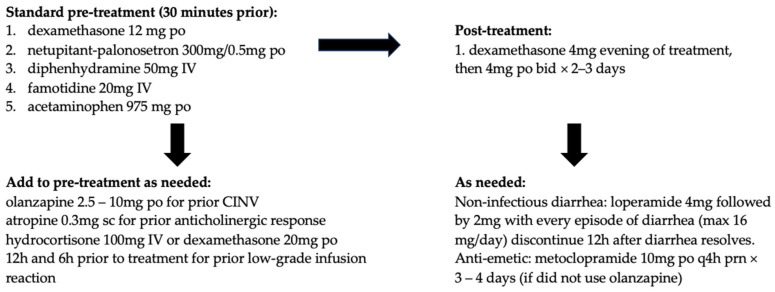
Sacituzumab Govitecan (SG) is an antibody-drug conjugate (ADC) comprised of an anti-Trop-2 IgG1 molecule conjugated to SN-38, the active metabolite of irinotecan, via a pH-sensitive hydrolysable linker. As a result of recent Canadian funding for SG in advanced hormone receptor (HR)-positive breast cancer and triple-negative breast cancer (TNBC), experience with using SG and managing adverse events (AEs) has grown. This review presents a summary of evidence and adverse event recommendations derived from Canadian experience, with SG use in metastatic TNBC for extrapolation and guidance in all indicated settings. SG is dosed at 10 mg/kg on day 1 and day 8 of a 21-day cycle. Compared to treatment of physicians' choice (TPC) the phase III ASCENT and TROPiCS-02 studies demonstrated favorable survival data in unresectable locally advanced or metastatic TNBC and HR-positive HER2 negative metastatic breast cancer, respectively. The most common AEs were neutropenia, diarrhea, nausea, fatigue, alopecia, and anemia. This review outlines AE management recommendations for SG based on clinical trial protocols and Canadian guidelines, incorporating treatment delay, dose reductions, and the use of prophylactic and supportive medications.
期刊介绍:
Current Oncology is a peer-reviewed, Canadian-based and internationally respected journal. Current Oncology represents a multidisciplinary medium encompassing health care workers in the field of cancer therapy in Canada to report upon and to review progress in the management of this disease.
We encourage submissions from all fields of cancer medicine, including radiation oncology, surgical oncology, medical oncology, pediatric oncology, pathology, and cancer rehabilitation and survivorship. Articles published in the journal typically contain information that is relevant directly to clinical oncology practice, and have clear potential for application to the current or future practice of cancer medicine.




 京公网安备 11010802042870号
京ICP备2023020795号-1
京公网安备 11010802042870号
京ICP备2023020795号-1

 分享
分享
 求助内容:
求助内容: 应助结果提醒方式:
 扫码关注我们
