{"title":"年龄对经前期综合征发病率和严重程度的影响:巴西人口调查。","authors":"Adriana Orcesi Pedro, Juliana Dineia Perez Brandão, Samantha Belamarques de Oliveira Silva, Maura Gonzaga Lapa, Vivienne Carduz Castilho","doi":"10.1002/ijgo.15895","DOIUrl":null,"url":null,"abstract":"<div>\n \n \n <section>\n \n <h3> Objective</h3>\n \n <p>To evaluate the relationship between premenstrual disorders (PMD) and age, we analyzed the prevalence and severity of psycho-emotional and physical symptoms in a representative sample of Brazilian women.</p>\n </section>\n \n <section>\n \n <h3> Methods</h3>\n \n <p>This observational and retrospective study analyzed data from Brazilian women aged 20–49 years from five regions of the country who reported premenstrual symptoms. Participants completed a premenstrual symptom screening questionnaire and self-reported the presence and severity of their symptoms. Among 23 104 women reporting does premenstrual symptoms, 38.91% (<i>n</i> = 8990) experienced PMD caused functional impairment. Finally, 5121 participants agreed to complete the adapted version of the screening questionnaire.</p>\n </section>\n \n <section>\n \n <h3> Results</h3>\n \n <p>The age group distribution was 20–29 (46.7%), 30–39 (38.3%), and 40–49 years (15%). The most prevalent and severe physical symptom was acne/oily skin in participants aged 20–29 years and headache in women aged 30–49 years. Regarding psycho-emotional symptoms, the most prevalent was anxiety/tension in women aged 20–29 years and 40–49 years and irritability/anger in those aged 30–39 years. Irritability/anger was the most severe symptom in all groups.</p>\n </section>\n \n <section>\n \n <h3> Conclusion</h3>\n \n <p>PMD significantly impacts the quality of life of Brazilian women with varying intensity. Physical symptoms associated with PMD vary with age, while psycho-emotional symptoms, particularly irritability/anger and anxiety, were intense in Brazilian women of reproductive age. These findings inform early diagnosis and individualized treatment approaches for PMD, addressing the needs of women.</p>\n </section>\n </div>","PeriodicalId":14164,"journal":{"name":"International Journal of Gynecology & Obstetrics","volume":"168 3","pages":"1221-1228"},"PeriodicalIF":2.7000,"publicationDate":"2024-09-25","publicationTypes":"Journal Article","fieldsOfStudy":null,"isOpenAccess":false,"openAccessPdf":"https://onlinelibrary.wiley.com/doi/epdf/10.1002/ijgo.15895","citationCount":"0","resultStr":"{\"title\":\"Impact of age on premenstrual syndrome prevalence and severity: A population-based survey in Brazil\",\"authors\":\"Adriana Orcesi Pedro, Juliana Dineia Perez Brandão, Samantha Belamarques de Oliveira Silva, Maura Gonzaga Lapa, Vivienne Carduz Castilho\",\"doi\":\"10.1002/ijgo.15895\",\"DOIUrl\":null,\"url\":null,\"abstract\":\"<div>\\n \\n \\n <section>\\n \\n <h3> Objective</h3>\\n \\n <p>To evaluate the relationship between premenstrual disorders (PMD) and age, we analyzed the prevalence and severity of psycho-emotional and physical symptoms in a representative sample of Brazilian women.</p>\\n </section>\\n \\n <section>\\n \\n <h3> Methods</h3>\\n \\n <p>This observational and retrospective study analyzed data from Brazilian women aged 20–49 years from five regions of the country who reported premenstrual symptoms. Participants completed a premenstrual symptom screening questionnaire and self-reported the presence and severity of their symptoms. Among 23 104 women reporting does premenstrual symptoms, 38.91% (<i>n</i> = 8990) experienced PMD caused functional impairment. Finally, 5121 participants agreed to complete the adapted version of the screening questionnaire.</p>\\n </section>\\n \\n <section>\\n \\n <h3> Results</h3>\\n \\n <p>The age group distribution was 20–29 (46.7%), 30–39 (38.3%), and 40–49 years (15%). The most prevalent and severe physical symptom was acne/oily skin in participants aged 20–29 years and headache in women aged 30–49 years. Regarding psycho-emotional symptoms, the most prevalent was anxiety/tension in women aged 20–29 years and 40–49 years and irritability/anger in those aged 30–39 years. Irritability/anger was the most severe symptom in all groups.</p>\\n </section>\\n \\n <section>\\n \\n <h3> Conclusion</h3>\\n \\n <p>PMD significantly impacts the quality of life of Brazilian women with varying intensity. Physical symptoms associated with PMD vary with age, while psycho-emotional symptoms, particularly irritability/anger and anxiety, were intense in Brazilian women of reproductive age. These findings inform early diagnosis and individualized treatment approaches for PMD, addressing the needs of women.</p>\\n </section>\\n </div>\",\"PeriodicalId\":14164,\"journal\":{\"name\":\"International Journal of Gynecology & Obstetrics\",\"volume\":\"168 3\",\"pages\":\"1221-1228\"},\"PeriodicalIF\":2.7000,\"publicationDate\":\"2024-09-25\",\"publicationTypes\":\"Journal Article\",\"fieldsOfStudy\":null,\"isOpenAccess\":false,\"openAccessPdf\":\"https://onlinelibrary.wiley.com/doi/epdf/10.1002/ijgo.15895\",\"citationCount\":\"0\",\"resultStr\":null,\"platform\":\"Semanticscholar\",\"paperid\":null,\"PeriodicalName\":\"International Journal of Gynecology & Obstetrics\",\"FirstCategoryId\":\"3\",\"ListUrlMain\":\"https://obgyn.onlinelibrary.wiley.com/doi/10.1002/ijgo.15895\",\"RegionNum\":3,\"RegionCategory\":\"医学\",\"ArticlePicture\":[],\"TitleCN\":null,\"AbstractTextCN\":null,\"PMCID\":null,\"EPubDate\":\"\",\"PubModel\":\"\",\"JCR\":\"Q2\",\"JCRName\":\"OBSTETRICS & GYNECOLOGY\",\"Score\":null,\"Total\":0}","platform":"Semanticscholar","paperid":null,"PeriodicalName":"International Journal of Gynecology & Obstetrics","FirstCategoryId":"3","ListUrlMain":"https://obgyn.onlinelibrary.wiley.com/doi/10.1002/ijgo.15895","RegionNum":3,"RegionCategory":"医学","ArticlePicture":[],"TitleCN":null,"AbstractTextCN":null,"PMCID":null,"EPubDate":"","PubModel":"","JCR":"Q2","JCRName":"OBSTETRICS & GYNECOLOGY","Score":null,"Total":0}
Impact of age on premenstrual syndrome prevalence and severity: A population-based survey in Brazil
Objective
To evaluate the relationship between premenstrual disorders (PMD) and age, we analyzed the prevalence and severity of psycho-emotional and physical symptoms in a representative sample of Brazilian women.
Methods
This observational and retrospective study analyzed data from Brazilian women aged 20–49 years from five regions of the country who reported premenstrual symptoms. Participants completed a premenstrual symptom screening questionnaire and self-reported the presence and severity of their symptoms. Among 23 104 women reporting does premenstrual symptoms, 38.91% (n = 8990) experienced PMD caused functional impairment. Finally, 5121 participants agreed to complete the adapted version of the screening questionnaire.
Results
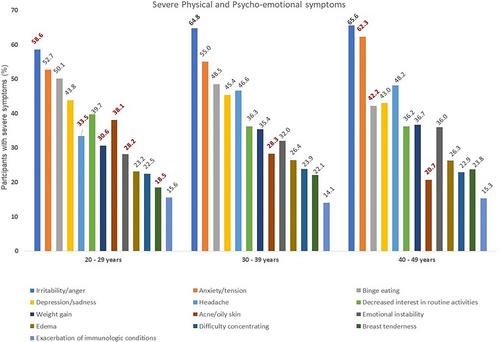
The age group distribution was 20–29 (46.7%), 30–39 (38.3%), and 40–49 years (15%). The most prevalent and severe physical symptom was acne/oily skin in participants aged 20–29 years and headache in women aged 30–49 years. Regarding psycho-emotional symptoms, the most prevalent was anxiety/tension in women aged 20–29 years and 40–49 years and irritability/anger in those aged 30–39 years. Irritability/anger was the most severe symptom in all groups.
Conclusion
PMD significantly impacts the quality of life of Brazilian women with varying intensity. Physical symptoms associated with PMD vary with age, while psycho-emotional symptoms, particularly irritability/anger and anxiety, were intense in Brazilian women of reproductive age. These findings inform early diagnosis and individualized treatment approaches for PMD, addressing the needs of women.
期刊介绍:
The International Journal of Gynecology & Obstetrics publishes articles on all aspects of basic and clinical research in the fields of obstetrics and gynecology and related subjects, with emphasis on matters of worldwide interest.






 京公网安备 11010802042870号
京ICP备2023020795号-1
京公网安备 11010802042870号
京ICP备2023020795号-1

 分享
分享
 求助内容:
求助内容: 应助结果提醒方式:
 扫码关注我们
