Barbara Grzesiak, Michał Hubert Węgrzyn, Agnieszka Turowska, Magdalena Twarużek
{"title":"苏格兰松林地衣中的大型真菌孢子茧群落。","authors":"Barbara Grzesiak, Michał Hubert Węgrzyn, Agnieszka Turowska, Magdalena Twarużek","doi":"10.1515/biol-2022-0973","DOIUrl":null,"url":null,"abstract":"<p><p>The lichen-rich pine forests of <i>Cladonio-Pinetum</i> represent special habitats protected under the Natura 2000 scheme. A rapid decline in their density has been observed in recent years. Macrofungi are an important component of the community and sensitive bioindicators; therefore, observations of the response of their sporocarps can be used to draw conclusions about changes induced in habitats. In our study, we tried to detect differences in species richness, composition, and biomass of the ectomycorrhizal fungal communities in areas rich in lichens indicating the good state of the community, and rich in bryophytes signaling its progressive degradation. The influence of precipitation and temperature on species richness and biomass was checked, and the possibility of using the sporocarps-based method to assess the effectiveness of active protection treatments, which are a form of partial protection carried out to maintain specific natural habitats. For detailed studies, six plots were selected from which sporocarps were collected, dried and weighed. A total of 1,575 sporocarps, representing 49 taxa were collected. A higher number of taxa (39) in lichen-rich plots were found. In bryophyte-rich areas, 27 taxa were recorded. The total yield was 13,151 g dry weight ha<sup>-1</sup>. In lichen-rich plots, the biomass was almost half lower.</p>","PeriodicalId":19605,"journal":{"name":"Open Life Sciences","volume":"19 1","pages":"20220973"},"PeriodicalIF":2.3000,"publicationDate":"2024-09-23","publicationTypes":"Journal Article","fieldsOfStudy":null,"isOpenAccess":false,"openAccessPdf":"https://www.ncbi.nlm.nih.gov/pmc/articles/PMC11426384/pdf/","citationCount":"0","resultStr":"{\"title\":\"Macrofungal sporocarp community in the lichen Scots pine forests.\",\"authors\":\"Barbara Grzesiak, Michał Hubert Węgrzyn, Agnieszka Turowska, Magdalena Twarużek\",\"doi\":\"10.1515/biol-2022-0973\",\"DOIUrl\":null,\"url\":null,\"abstract\":\"<p><p>The lichen-rich pine forests of <i>Cladonio-Pinetum</i> represent special habitats protected under the Natura 2000 scheme. A rapid decline in their density has been observed in recent years. Macrofungi are an important component of the community and sensitive bioindicators; therefore, observations of the response of their sporocarps can be used to draw conclusions about changes induced in habitats. In our study, we tried to detect differences in species richness, composition, and biomass of the ectomycorrhizal fungal communities in areas rich in lichens indicating the good state of the community, and rich in bryophytes signaling its progressive degradation. The influence of precipitation and temperature on species richness and biomass was checked, and the possibility of using the sporocarps-based method to assess the effectiveness of active protection treatments, which are a form of partial protection carried out to maintain specific natural habitats. For detailed studies, six plots were selected from which sporocarps were collected, dried and weighed. A total of 1,575 sporocarps, representing 49 taxa were collected. A higher number of taxa (39) in lichen-rich plots were found. In bryophyte-rich areas, 27 taxa were recorded. The total yield was 13,151 g dry weight ha<sup>-1</sup>. In lichen-rich plots, the biomass was almost half lower.</p>\",\"PeriodicalId\":19605,\"journal\":{\"name\":\"Open Life Sciences\",\"volume\":\"19 1\",\"pages\":\"20220973\"},\"PeriodicalIF\":2.3000,\"publicationDate\":\"2024-09-23\",\"publicationTypes\":\"Journal Article\",\"fieldsOfStudy\":null,\"isOpenAccess\":false,\"openAccessPdf\":\"https://www.ncbi.nlm.nih.gov/pmc/articles/PMC11426384/pdf/\",\"citationCount\":\"0\",\"resultStr\":null,\"platform\":\"Semanticscholar\",\"paperid\":null,\"PeriodicalName\":\"Open Life Sciences\",\"FirstCategoryId\":\"99\",\"ListUrlMain\":\"https://doi.org/10.1515/biol-2022-0973\",\"RegionNum\":4,\"RegionCategory\":\"生物学\",\"ArticlePicture\":[],\"TitleCN\":null,\"AbstractTextCN\":null,\"PMCID\":null,\"EPubDate\":\"2024/1/1 0:00:00\",\"PubModel\":\"eCollection\",\"JCR\":\"Q3\",\"JCRName\":\"BIOLOGY\",\"Score\":null,\"Total\":0}","platform":"Semanticscholar","paperid":null,"PeriodicalName":"Open Life Sciences","FirstCategoryId":"99","ListUrlMain":"https://doi.org/10.1515/biol-2022-0973","RegionNum":4,"RegionCategory":"生物学","ArticlePicture":[],"TitleCN":null,"AbstractTextCN":null,"PMCID":null,"EPubDate":"2024/1/1 0:00:00","PubModel":"eCollection","JCR":"Q3","JCRName":"BIOLOGY","Score":null,"Total":0}
Macrofungal sporocarp community in the lichen Scots pine forests.
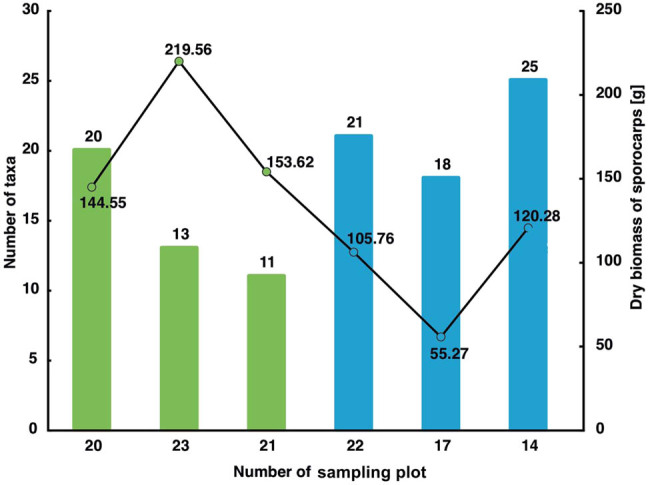
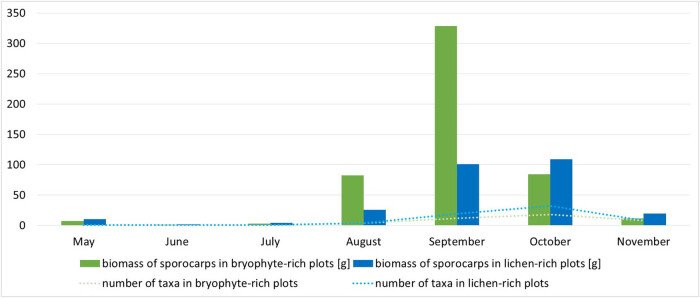
The lichen-rich pine forests of Cladonio-Pinetum represent special habitats protected under the Natura 2000 scheme. A rapid decline in their density has been observed in recent years. Macrofungi are an important component of the community and sensitive bioindicators; therefore, observations of the response of their sporocarps can be used to draw conclusions about changes induced in habitats. In our study, we tried to detect differences in species richness, composition, and biomass of the ectomycorrhizal fungal communities in areas rich in lichens indicating the good state of the community, and rich in bryophytes signaling its progressive degradation. The influence of precipitation and temperature on species richness and biomass was checked, and the possibility of using the sporocarps-based method to assess the effectiveness of active protection treatments, which are a form of partial protection carried out to maintain specific natural habitats. For detailed studies, six plots were selected from which sporocarps were collected, dried and weighed. A total of 1,575 sporocarps, representing 49 taxa were collected. A higher number of taxa (39) in lichen-rich plots were found. In bryophyte-rich areas, 27 taxa were recorded. The total yield was 13,151 g dry weight ha-1. In lichen-rich plots, the biomass was almost half lower.
期刊介绍:
Open Life Sciences (previously Central European Journal of Biology) is a fast growing peer-reviewed journal, devoted to scholarly research in all areas of life sciences, such as molecular biology, plant science, biotechnology, cell biology, biochemistry, biophysics, microbiology and virology, ecology, differentiation and development, genetics and many others. Open Life Sciences assures top quality of published data through critical peer review and editorial involvement throughout the whole publication process. Thanks to the Open Access model of publishing, it also offers unrestricted access to published articles for all users.





 京公网安备 11010802042870号
京ICP备2023020795号-1
京公网安备 11010802042870号
京ICP备2023020795号-1

 分享
分享
 求助内容:
求助内容: 应助结果提醒方式:
 扫码关注我们
