Adam Searby, Dianna Burr, Renae Carolin, Alison Hutchinson
{"title":"心理健康服务整合的障碍和促进因素:范围审查》。","authors":"Adam Searby, Dianna Burr, Renae Carolin, Alison Hutchinson","doi":"10.1111/inm.13449","DOIUrl":null,"url":null,"abstract":"<p>Mental health service integration currently has no consensus definition and exists in a variety of settings, including primary care, addiction treatment and chronic disease management, and mental health nurses have often experienced efforts at service integration with varying degrees of success. The intent of mental health service integration is to enable collaboration between mental health services and other healthcare providers to improve service access and the care provided to individuals with mental health issues or mental illness. This scoping review aimed to explore service integration between mental health services and with a specific focus on those evaluated in peer-reviewed, primary literature, to determine facilitators and barriers to service integration. Using the Arksey and O'Malley's framework for scoping reviews, we located 3148 studies, with screening narrowing final papers for inclusion to 18. Facilitators to service integration included clinician education, adequate resourcing and an interdisciplinary approach, while barriers included staff factors such as a reluctance to work with individuals with mental illness, consumer level barriers such as poor mental health literacy, ‘territorialism’ among staff and organisational climate. Research indicates that service integration is an effective means to detect and treat mental health issues in settings that do not traditionally provide mental health care, lowering the costs of providing healthcare and providing improved care for mental health needs; however, there are several barriers to be addressed to achieve full implementation of integration models.</p>","PeriodicalId":14007,"journal":{"name":"International Journal of Mental Health Nursing","volume":"34 1","pages":""},"PeriodicalIF":3.3000,"publicationDate":"2024-10-09","publicationTypes":"Journal Article","fieldsOfStudy":null,"isOpenAccess":false,"openAccessPdf":"https://www.ncbi.nlm.nih.gov/pmc/articles/PMC11771558/pdf/","citationCount":"0","resultStr":"{\"title\":\"Barriers and Facilitators to Mental Health Service Integration: A Scoping Review\",\"authors\":\"Adam Searby, Dianna Burr, Renae Carolin, Alison Hutchinson\",\"doi\":\"10.1111/inm.13449\",\"DOIUrl\":null,\"url\":null,\"abstract\":\"<p>Mental health service integration currently has no consensus definition and exists in a variety of settings, including primary care, addiction treatment and chronic disease management, and mental health nurses have often experienced efforts at service integration with varying degrees of success. The intent of mental health service integration is to enable collaboration between mental health services and other healthcare providers to improve service access and the care provided to individuals with mental health issues or mental illness. This scoping review aimed to explore service integration between mental health services and with a specific focus on those evaluated in peer-reviewed, primary literature, to determine facilitators and barriers to service integration. Using the Arksey and O'Malley's framework for scoping reviews, we located 3148 studies, with screening narrowing final papers for inclusion to 18. Facilitators to service integration included clinician education, adequate resourcing and an interdisciplinary approach, while barriers included staff factors such as a reluctance to work with individuals with mental illness, consumer level barriers such as poor mental health literacy, ‘territorialism’ among staff and organisational climate. Research indicates that service integration is an effective means to detect and treat mental health issues in settings that do not traditionally provide mental health care, lowering the costs of providing healthcare and providing improved care for mental health needs; however, there are several barriers to be addressed to achieve full implementation of integration models.</p>\",\"PeriodicalId\":14007,\"journal\":{\"name\":\"International Journal of Mental Health Nursing\",\"volume\":\"34 1\",\"pages\":\"\"},\"PeriodicalIF\":3.3000,\"publicationDate\":\"2024-10-09\",\"publicationTypes\":\"Journal Article\",\"fieldsOfStudy\":null,\"isOpenAccess\":false,\"openAccessPdf\":\"https://www.ncbi.nlm.nih.gov/pmc/articles/PMC11771558/pdf/\",\"citationCount\":\"0\",\"resultStr\":null,\"platform\":\"Semanticscholar\",\"paperid\":null,\"PeriodicalName\":\"International Journal of Mental Health Nursing\",\"FirstCategoryId\":\"3\",\"ListUrlMain\":\"https://onlinelibrary.wiley.com/doi/10.1111/inm.13449\",\"RegionNum\":2,\"RegionCategory\":\"医学\",\"ArticlePicture\":[],\"TitleCN\":null,\"AbstractTextCN\":null,\"PMCID\":null,\"EPubDate\":\"\",\"PubModel\":\"\",\"JCR\":\"Q1\",\"JCRName\":\"NURSING\",\"Score\":null,\"Total\":0}","platform":"Semanticscholar","paperid":null,"PeriodicalName":"International Journal of Mental Health Nursing","FirstCategoryId":"3","ListUrlMain":"https://onlinelibrary.wiley.com/doi/10.1111/inm.13449","RegionNum":2,"RegionCategory":"医学","ArticlePicture":[],"TitleCN":null,"AbstractTextCN":null,"PMCID":null,"EPubDate":"","PubModel":"","JCR":"Q1","JCRName":"NURSING","Score":null,"Total":0}
Barriers and Facilitators to Mental Health Service Integration: A Scoping Review
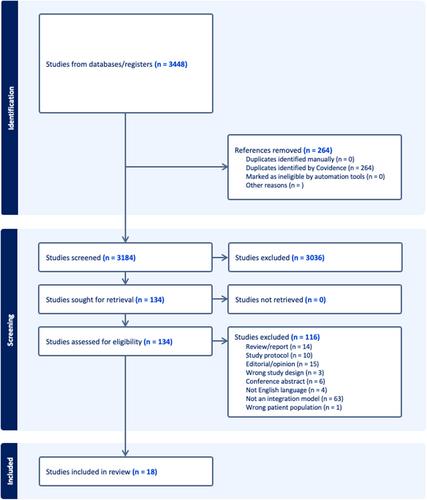
Mental health service integration currently has no consensus definition and exists in a variety of settings, including primary care, addiction treatment and chronic disease management, and mental health nurses have often experienced efforts at service integration with varying degrees of success. The intent of mental health service integration is to enable collaboration between mental health services and other healthcare providers to improve service access and the care provided to individuals with mental health issues or mental illness. This scoping review aimed to explore service integration between mental health services and with a specific focus on those evaluated in peer-reviewed, primary literature, to determine facilitators and barriers to service integration. Using the Arksey and O'Malley's framework for scoping reviews, we located 3148 studies, with screening narrowing final papers for inclusion to 18. Facilitators to service integration included clinician education, adequate resourcing and an interdisciplinary approach, while barriers included staff factors such as a reluctance to work with individuals with mental illness, consumer level barriers such as poor mental health literacy, ‘territorialism’ among staff and organisational climate. Research indicates that service integration is an effective means to detect and treat mental health issues in settings that do not traditionally provide mental health care, lowering the costs of providing healthcare and providing improved care for mental health needs; however, there are several barriers to be addressed to achieve full implementation of integration models.
期刊介绍:
The International Journal of Mental Health Nursing is the official journal of the Australian College of Mental Health Nurses Inc. It is a fully refereed journal that examines current trends and developments in mental health practice and research.
The International Journal of Mental Health Nursing provides a forum for the exchange of ideas on all issues of relevance to mental health nursing. The Journal informs you of developments in mental health nursing practice and research, directions in education and training, professional issues, management approaches, policy development, ethical questions, theoretical inquiry, and clinical issues.
The Journal publishes feature articles, review articles, clinical notes, research notes and book reviews. Contributions on any aspect of mental health nursing are welcomed.
Statements and opinions expressed in the journal reflect the views of the authors and are not necessarily endorsed by the Australian College of Mental Health Nurses Inc.




 京公网安备 11010802042870号
京ICP备2023020795号-1
京公网安备 11010802042870号
京ICP备2023020795号-1

 分享
分享
 求助内容:
求助内容: 应助结果提醒方式:
 扫码关注我们
