Rapid screening for resistance to Sitobion avenae (F.) and Rhopalosiphum padi (L.) in winter wheat seedlings and selection of efficient assessment methods
BACKGROUND
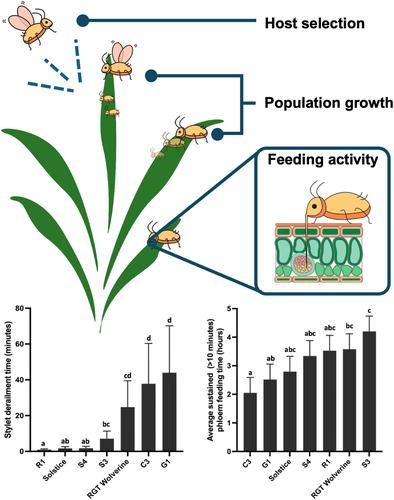
Sitobion avenae (F.) and Rhopalosiphum padi (L.) are harmful pests of wheat [Triticum aestivum (L.)]. No genetic resistance against the aphids has been identified in commercial wheat varieties and resistance phenotyping can be time-consuming and laborious. Here, we tested a high-throughput phenotyping method to screen 29 commercial winter wheat varieties for alate antixenosis and antibiosis. We validated this method using comprehensive behavioural analyses, including alate attraction to volatile organic compounds (VOCs) and a feeding bioassay using an electrical penetration graph (EPG), subsequently highlighting possible sources of resistance.
RESULTS
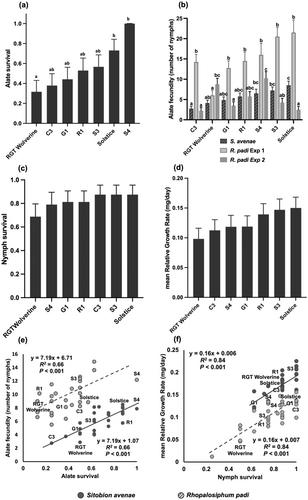
We observed differences in alate behaviour upon assessing alate settlement on wheat seedlings and attraction towards VOCs, revealing the importance of visual and early post-alighting cues for alate host selection. Aphid settlement was four times higher on the most preferred variety than on the least preferred variety. Using an EPG bioassay, we identified phloem feeding and stylet derailment parameters linked to resistance. We found antibiosis assessment on detached leaves to be an inadequate screen because it produced results inconsistent with intact leaves assessment. Alate and nymph mortality were identified as key traits signifying antibiosis, showing significant positive relationships with alate reproduction and nymph mean relative growth rate.
期刊介绍:
Pest Management Science is the international journal of research and development in crop protection and pest control. Since its launch in 1970, the journal has become the premier forum for papers on the discovery, application, and impact on the environment of products and strategies designed for pest management.
Published for SCI by John Wiley & Sons Ltd.







 京公网安备 11010802042870号
京ICP备2023020795号-1
京公网安备 11010802042870号
京ICP备2023020795号-1

 分享
分享
 求助内容:
求助内容: 应助结果提醒方式:
 扫码关注我们
