Jonathan McLaughlin, William J. Scotton, Natalie S. Ryan, John A. Hardy, Maryam Shoai
{"title":"评估阿尔茨海默病试验中的临床进展措施:系统回顾与荟萃分析","authors":"Jonathan McLaughlin, William J. Scotton, Natalie S. Ryan, John A. Hardy, Maryam Shoai","doi":"10.1002/alz.14314","DOIUrl":null,"url":null,"abstract":"<div>\n \n \n <section>\n \n <h3> INTRODUCTION</h3>\n \n <p>Assessing treatments for Alzheimer's disease (AD) relies on reliable tools for measuring AD progression. In this analysis, we evaluate the sensitivity of clinical progression measures in AD within randomized controlled trials (RCTs) with confirmed positive amyloid (Aβ+) status prior to trial enrollment.</p>\n </section>\n \n <section>\n \n <h3> METHODS</h3>\n \n <p>Excluding trials targeting non-cognitive symptoms, we conducted meta-analyses on progression measures from 25 selected RCTs using R version 4.2.0, along with the <i>metafor</i> and <i>emmeans</i> libraries.</p>\n </section>\n \n <section>\n \n <h3> RESULTS</h3>\n \n <p>The Functional Activities Questionnaire (FAQ) demonstrated the greatest sensitivity over 12 weeks. Other cognitive measures demonstrated lower sensitivity. The integrated Alzheimer's Disease Rating Scale (iADRS) and Clinical Dementia Rating-Sum of Boxes (CDR-SB) seemed more effective than their individual cognitive components. Neuropsychiatric measures were the least sensitive in measuring progression.</p>\n </section>\n \n <section>\n \n <h3> DISCUSSION</h3>\n \n <p>Functional measures generally outperformed other measure categories. Purely cognitive domain-based measures were suboptimal for tracking early AD progression. Ideally, future measures should incorporate both cognitive and functional components to enhance sensitivity.</p>\n </section>\n \n <section>\n \n <h3> Highlights</h3>\n \n <div>\n <ul>\n \n <li>Concerns remain regarding the limitations of current outcome measures used in AD clinical trials, particularly their sensitivity in the early and preclinical stages of the disease, which hampers their reliability as indicators of AD progression.</li>\n \n <li>The Functional Activities Questionnaire (FAQ) demonstrated the most substantial weighted mean change over 12 weeks, followed by the Mini-Mental State Examination (MMSE).</li>\n \n <li>Functional measures outperformed other measure categories.</li>\n \n <li>Composite scores of integrated Alzheimer's Disease Rating Scale and Clinical Dementia Rating-Sum of Boxes are more sensitive to change than their individual cognitive components, possibly driven by the functional components of the score.</li>\n \n <li>Neuropsychiatric measures analyzed in this study appeared to be the least sensitive in measuring progression.</li>\n </ul>\n </div>\n </section>\n </div>","PeriodicalId":7471,"journal":{"name":"Alzheimer's & Dementia","volume":"20 12","pages":"8673-8683"},"PeriodicalIF":11.1000,"publicationDate":"2024-10-22","publicationTypes":"Journal Article","fieldsOfStudy":null,"isOpenAccess":false,"openAccessPdf":"https://onlinelibrary.wiley.com/doi/epdf/10.1002/alz.14314","citationCount":"0","resultStr":"{\"title\":\"Assessing clinical progression measures in Alzheimer's disease trials: A systematic review and meta-analysis\",\"authors\":\"Jonathan McLaughlin, William J. Scotton, Natalie S. Ryan, John A. Hardy, Maryam Shoai\",\"doi\":\"10.1002/alz.14314\",\"DOIUrl\":null,\"url\":null,\"abstract\":\"<div>\\n \\n \\n <section>\\n \\n <h3> INTRODUCTION</h3>\\n \\n <p>Assessing treatments for Alzheimer's disease (AD) relies on reliable tools for measuring AD progression. In this analysis, we evaluate the sensitivity of clinical progression measures in AD within randomized controlled trials (RCTs) with confirmed positive amyloid (Aβ+) status prior to trial enrollment.</p>\\n </section>\\n \\n <section>\\n \\n <h3> METHODS</h3>\\n \\n <p>Excluding trials targeting non-cognitive symptoms, we conducted meta-analyses on progression measures from 25 selected RCTs using R version 4.2.0, along with the <i>metafor</i> and <i>emmeans</i> libraries.</p>\\n </section>\\n \\n <section>\\n \\n <h3> RESULTS</h3>\\n \\n <p>The Functional Activities Questionnaire (FAQ) demonstrated the greatest sensitivity over 12 weeks. Other cognitive measures demonstrated lower sensitivity. The integrated Alzheimer's Disease Rating Scale (iADRS) and Clinical Dementia Rating-Sum of Boxes (CDR-SB) seemed more effective than their individual cognitive components. Neuropsychiatric measures were the least sensitive in measuring progression.</p>\\n </section>\\n \\n <section>\\n \\n <h3> DISCUSSION</h3>\\n \\n <p>Functional measures generally outperformed other measure categories. Purely cognitive domain-based measures were suboptimal for tracking early AD progression. Ideally, future measures should incorporate both cognitive and functional components to enhance sensitivity.</p>\\n </section>\\n \\n <section>\\n \\n <h3> Highlights</h3>\\n \\n <div>\\n <ul>\\n \\n <li>Concerns remain regarding the limitations of current outcome measures used in AD clinical trials, particularly their sensitivity in the early and preclinical stages of the disease, which hampers their reliability as indicators of AD progression.</li>\\n \\n <li>The Functional Activities Questionnaire (FAQ) demonstrated the most substantial weighted mean change over 12 weeks, followed by the Mini-Mental State Examination (MMSE).</li>\\n \\n <li>Functional measures outperformed other measure categories.</li>\\n \\n <li>Composite scores of integrated Alzheimer's Disease Rating Scale and Clinical Dementia Rating-Sum of Boxes are more sensitive to change than their individual cognitive components, possibly driven by the functional components of the score.</li>\\n \\n <li>Neuropsychiatric measures analyzed in this study appeared to be the least sensitive in measuring progression.</li>\\n </ul>\\n </div>\\n </section>\\n </div>\",\"PeriodicalId\":7471,\"journal\":{\"name\":\"Alzheimer's & Dementia\",\"volume\":\"20 12\",\"pages\":\"8673-8683\"},\"PeriodicalIF\":11.1000,\"publicationDate\":\"2024-10-22\",\"publicationTypes\":\"Journal Article\",\"fieldsOfStudy\":null,\"isOpenAccess\":false,\"openAccessPdf\":\"https://onlinelibrary.wiley.com/doi/epdf/10.1002/alz.14314\",\"citationCount\":\"0\",\"resultStr\":null,\"platform\":\"Semanticscholar\",\"paperid\":null,\"PeriodicalName\":\"Alzheimer's & Dementia\",\"FirstCategoryId\":\"3\",\"ListUrlMain\":\"https://alz-journals.onlinelibrary.wiley.com/doi/10.1002/alz.14314\",\"RegionNum\":1,\"RegionCategory\":\"医学\",\"ArticlePicture\":[],\"TitleCN\":null,\"AbstractTextCN\":null,\"PMCID\":null,\"EPubDate\":\"\",\"PubModel\":\"\",\"JCR\":\"Q1\",\"JCRName\":\"CLINICAL NEUROLOGY\",\"Score\":null,\"Total\":0}","platform":"Semanticscholar","paperid":null,"PeriodicalName":"Alzheimer's & Dementia","FirstCategoryId":"3","ListUrlMain":"https://alz-journals.onlinelibrary.wiley.com/doi/10.1002/alz.14314","RegionNum":1,"RegionCategory":"医学","ArticlePicture":[],"TitleCN":null,"AbstractTextCN":null,"PMCID":null,"EPubDate":"","PubModel":"","JCR":"Q1","JCRName":"CLINICAL NEUROLOGY","Score":null,"Total":0}
Assessing clinical progression measures in Alzheimer's disease trials: A systematic review and meta-analysis
INTRODUCTION
Assessing treatments for Alzheimer's disease (AD) relies on reliable tools for measuring AD progression. In this analysis, we evaluate the sensitivity of clinical progression measures in AD within randomized controlled trials (RCTs) with confirmed positive amyloid (Aβ+) status prior to trial enrollment.
METHODS
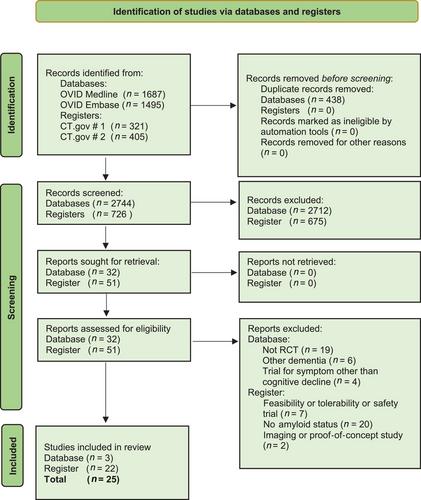
Excluding trials targeting non-cognitive symptoms, we conducted meta-analyses on progression measures from 25 selected RCTs using R version 4.2.0, along with the metafor and emmeans libraries.
RESULTS
The Functional Activities Questionnaire (FAQ) demonstrated the greatest sensitivity over 12 weeks. Other cognitive measures demonstrated lower sensitivity. The integrated Alzheimer's Disease Rating Scale (iADRS) and Clinical Dementia Rating-Sum of Boxes (CDR-SB) seemed more effective than their individual cognitive components. Neuropsychiatric measures were the least sensitive in measuring progression.
DISCUSSION
Functional measures generally outperformed other measure categories. Purely cognitive domain-based measures were suboptimal for tracking early AD progression. Ideally, future measures should incorporate both cognitive and functional components to enhance sensitivity.
Highlights
Concerns remain regarding the limitations of current outcome measures used in AD clinical trials, particularly their sensitivity in the early and preclinical stages of the disease, which hampers their reliability as indicators of AD progression.
The Functional Activities Questionnaire (FAQ) demonstrated the most substantial weighted mean change over 12 weeks, followed by the Mini-Mental State Examination (MMSE).
Functional measures outperformed other measure categories.
Composite scores of integrated Alzheimer's Disease Rating Scale and Clinical Dementia Rating-Sum of Boxes are more sensitive to change than their individual cognitive components, possibly driven by the functional components of the score.
Neuropsychiatric measures analyzed in this study appeared to be the least sensitive in measuring progression.
期刊介绍:
Alzheimer's & Dementia is a peer-reviewed journal that aims to bridge knowledge gaps in dementia research by covering the entire spectrum, from basic science to clinical trials to social and behavioral investigations. It provides a platform for rapid communication of new findings and ideas, optimal translation of research into practical applications, increasing knowledge across diverse disciplines for early detection, diagnosis, and intervention, and identifying promising new research directions. In July 2008, Alzheimer's & Dementia was accepted for indexing by MEDLINE, recognizing its scientific merit and contribution to Alzheimer's research.





 京公网安备 11010802042870号
京ICP备2023020795号-1
京公网安备 11010802042870号
京ICP备2023020795号-1

 分享
分享
 求助内容:
求助内容: 应助结果提醒方式:
 扫码关注我们
