{"title":"使用 Bakri 球囊处理产后出血:调查胎盘滞留风险。","authors":"Shohei Tanabe, Yutoku Shi","doi":"10.12659/AJCR.945672","DOIUrl":null,"url":null,"abstract":"<p><p>BACKGROUND Retained products of conception (RPOC) is a rare complication following second-trimester delivery or pregnancy termination, often leading to significant hemorrhage. Diagnosed via ultrasound or CT, RPOC requires surgical intervention based on endometrial thickness. Risk factors include second-trimester abortion and use of placental forceps. We report a case of RPOC diagnosed 1 month postpartum after using a Bakri balloon for atonic hemorrhage during full-term delivery. CASE REPORT The patient, a 32-year-old woman with a history of 4 pregnancies and 3 births, conceived via frozen embryo transfer, which was her first infertility treatment. At 36 weeks of gestation, blood tests revealed a hemoglobin level of 10.4 g/dl. She delivered vaginally at 38 weeks 2 days, but postpartum uterine contractions were poor, leading to significant bleeding. Oxytocin administration and uterine massage failed to improve contractions, so a Bakri balloon was inserted. The total blood loss was 2263 cc, and 6 units of RBCs were transfused. The next day, the Bakri balloon was removed, and ultrasonography confirmed the absence of retained placenta before discharge on postpartum day 5. However, at her 1-month checkup, a retained placenta was diagnosed, requiring further intervention. The patient declined follow-up. CONCLUSIONS We encountered a case of RPOC 1 month after using a Bakri balloon. Although the relationship between the 2 remains unclear, it may be preferable to avoid such treatment in the future.</p>","PeriodicalId":39064,"journal":{"name":"American Journal of Case Reports","volume":"25 ","pages":"e945672"},"PeriodicalIF":0.7000,"publicationDate":"2024-10-23","publicationTypes":"Journal Article","fieldsOfStudy":null,"isOpenAccess":false,"openAccessPdf":"https://www.ncbi.nlm.nih.gov/pmc/articles/PMC11514519/pdf/","citationCount":"0","resultStr":"{\"title\":\"Postpartum Hemorrhage Management with Bakri Balloon: Investigating Retained Placenta Risk.\",\"authors\":\"Shohei Tanabe, Yutoku Shi\",\"doi\":\"10.12659/AJCR.945672\",\"DOIUrl\":null,\"url\":null,\"abstract\":\"<p><p>BACKGROUND Retained products of conception (RPOC) is a rare complication following second-trimester delivery or pregnancy termination, often leading to significant hemorrhage. Diagnosed via ultrasound or CT, RPOC requires surgical intervention based on endometrial thickness. Risk factors include second-trimester abortion and use of placental forceps. We report a case of RPOC diagnosed 1 month postpartum after using a Bakri balloon for atonic hemorrhage during full-term delivery. CASE REPORT The patient, a 32-year-old woman with a history of 4 pregnancies and 3 births, conceived via frozen embryo transfer, which was her first infertility treatment. At 36 weeks of gestation, blood tests revealed a hemoglobin level of 10.4 g/dl. She delivered vaginally at 38 weeks 2 days, but postpartum uterine contractions were poor, leading to significant bleeding. Oxytocin administration and uterine massage failed to improve contractions, so a Bakri balloon was inserted. The total blood loss was 2263 cc, and 6 units of RBCs were transfused. The next day, the Bakri balloon was removed, and ultrasonography confirmed the absence of retained placenta before discharge on postpartum day 5. However, at her 1-month checkup, a retained placenta was diagnosed, requiring further intervention. The patient declined follow-up. CONCLUSIONS We encountered a case of RPOC 1 month after using a Bakri balloon. Although the relationship between the 2 remains unclear, it may be preferable to avoid such treatment in the future.</p>\",\"PeriodicalId\":39064,\"journal\":{\"name\":\"American Journal of Case Reports\",\"volume\":\"25 \",\"pages\":\"e945672\"},\"PeriodicalIF\":0.7000,\"publicationDate\":\"2024-10-23\",\"publicationTypes\":\"Journal Article\",\"fieldsOfStudy\":null,\"isOpenAccess\":false,\"openAccessPdf\":\"https://www.ncbi.nlm.nih.gov/pmc/articles/PMC11514519/pdf/\",\"citationCount\":\"0\",\"resultStr\":null,\"platform\":\"Semanticscholar\",\"paperid\":null,\"PeriodicalName\":\"American Journal of Case Reports\",\"FirstCategoryId\":\"1085\",\"ListUrlMain\":\"https://doi.org/10.12659/AJCR.945672\",\"RegionNum\":0,\"RegionCategory\":null,\"ArticlePicture\":[],\"TitleCN\":null,\"AbstractTextCN\":null,\"PMCID\":null,\"EPubDate\":\"\",\"PubModel\":\"\",\"JCR\":\"Q3\",\"JCRName\":\"MEDICINE, GENERAL & INTERNAL\",\"Score\":null,\"Total\":0}","platform":"Semanticscholar","paperid":null,"PeriodicalName":"American Journal of Case Reports","FirstCategoryId":"1085","ListUrlMain":"https://doi.org/10.12659/AJCR.945672","RegionNum":0,"RegionCategory":null,"ArticlePicture":[],"TitleCN":null,"AbstractTextCN":null,"PMCID":null,"EPubDate":"","PubModel":"","JCR":"Q3","JCRName":"MEDICINE, GENERAL & INTERNAL","Score":null,"Total":0}
Postpartum Hemorrhage Management with Bakri Balloon: Investigating Retained Placenta Risk.
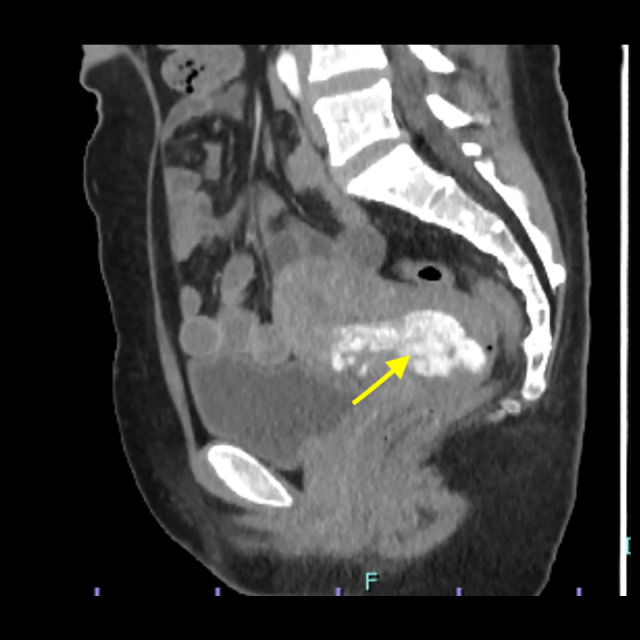
BACKGROUND Retained products of conception (RPOC) is a rare complication following second-trimester delivery or pregnancy termination, often leading to significant hemorrhage. Diagnosed via ultrasound or CT, RPOC requires surgical intervention based on endometrial thickness. Risk factors include second-trimester abortion and use of placental forceps. We report a case of RPOC diagnosed 1 month postpartum after using a Bakri balloon for atonic hemorrhage during full-term delivery. CASE REPORT The patient, a 32-year-old woman with a history of 4 pregnancies and 3 births, conceived via frozen embryo transfer, which was her first infertility treatment. At 36 weeks of gestation, blood tests revealed a hemoglobin level of 10.4 g/dl. She delivered vaginally at 38 weeks 2 days, but postpartum uterine contractions were poor, leading to significant bleeding. Oxytocin administration and uterine massage failed to improve contractions, so a Bakri balloon was inserted. The total blood loss was 2263 cc, and 6 units of RBCs were transfused. The next day, the Bakri balloon was removed, and ultrasonography confirmed the absence of retained placenta before discharge on postpartum day 5. However, at her 1-month checkup, a retained placenta was diagnosed, requiring further intervention. The patient declined follow-up. CONCLUSIONS We encountered a case of RPOC 1 month after using a Bakri balloon. Although the relationship between the 2 remains unclear, it may be preferable to avoid such treatment in the future.
期刊介绍:
American Journal of Case Reports is an international, peer-reviewed scientific journal that publishes single and series case reports in all medical fields. American Journal of Case Reports is issued on a continuous basis as a primary electronic journal. Print copies of a single article or a set of articles can be ordered on demand.







 京公网安备 11010802042870号
京ICP备2023020795号-1
京公网安备 11010802042870号
京ICP备2023020795号-1

 分享
分享
 求助内容:
求助内容: 应助结果提醒方式:
 扫码关注我们
