miRNAs targeted transcription factors HaGATAa/b to mediate the post-mating switch in Helicoverpa armigera female reproductive behavior
BACKGROUND
The process of mating induces significant shifts in female reproductive behavior across various species, with the postmating behavioral switch playing a crucial role in insect reproduction. Previous studies have demonstrated the regulatory role of GATA transcription factors in vitellogenin transcription and egg formation in insects, while miRNAs have been implicated in modulating GATA expression and insect reproductive processes. Nevertheless, the precise regulatory mechanism underlying the interaction between miRNAs and GATA transcription factors in the postmating behavioral switch remains largely unexplored.
RESULTS
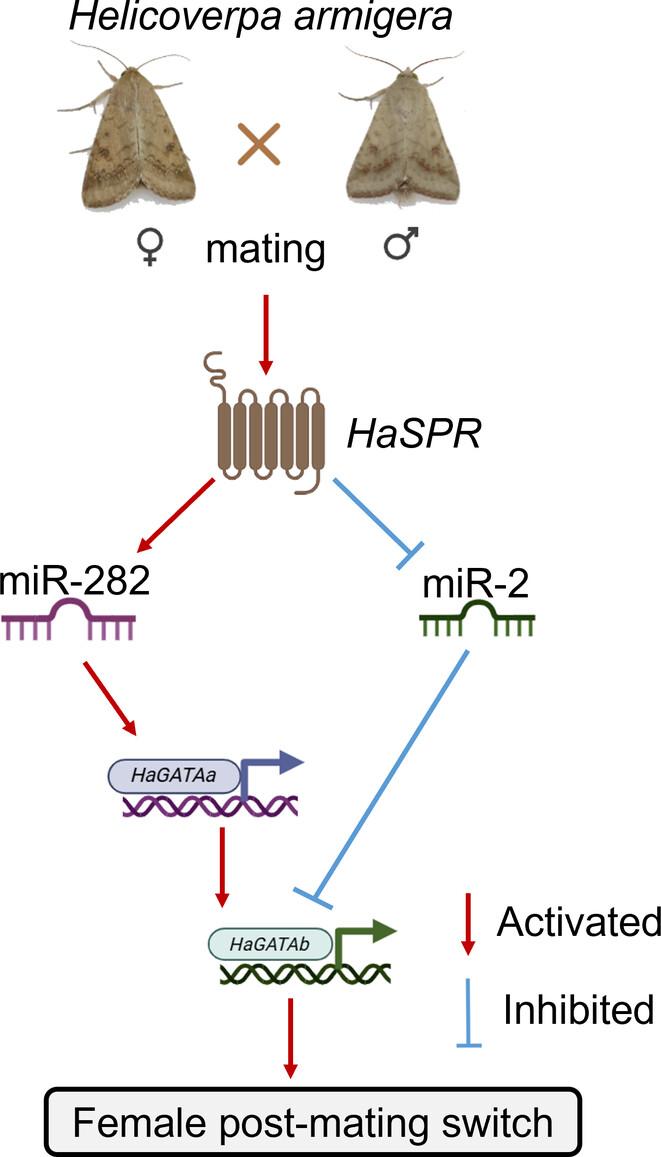
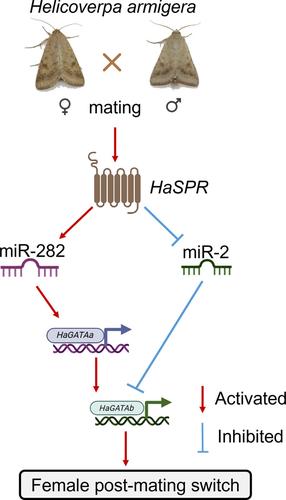
In this study, we identified two key GATA transcription factors, HaGATAa and HaGATAb, as central players in orchestrating the postmating behavior of H. armigera using transcriptomics and RNAi technologies. HaGATAa was found to act upstream of HaGATAb, regulating its expression. Furthermore, we observed a postmating increase in miR-282 levels in females, targeting HaGATAa to regulate egg-laying capacity. Conversely, the decreased expression of miR-2 following mating functioned as a negative feedback regulator, influencing the expression of HaGATAb and thus impacting the postmating behavior of female individuals.
期刊介绍:
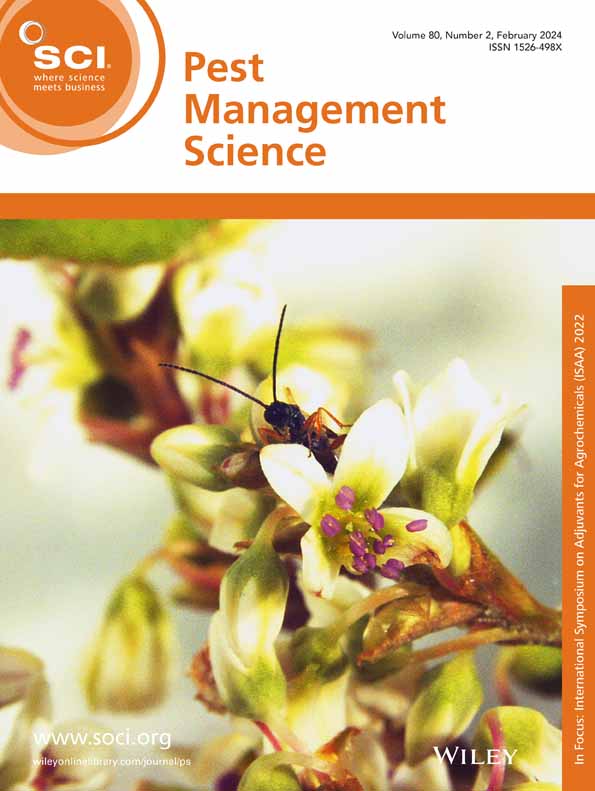
Pest Management Science is the international journal of research and development in crop protection and pest control. Since its launch in 1970, the journal has become the premier forum for papers on the discovery, application, and impact on the environment of products and strategies designed for pest management.
Published for SCI by John Wiley & Sons Ltd.







 京公网安备 11010802042870号
京ICP备2023020795号-1
京公网安备 11010802042870号
京ICP备2023020795号-1

 分享
分享
 求助内容:
求助内容: 应助结果提醒方式:
 扫码关注我们
