{"title":"下一代固体氧化物燃料电池阴极纳米工程的进展","authors":"Chunwen Sun","doi":"10.1039/D4QI02451F","DOIUrl":null,"url":null,"abstract":"<p >In recent years, great efforts have been devoted to develop low or intermediate temperature solid oxide fuel cells (SOFCs) operating at 500–800 °C. Lowering the operating temperature can suppress degradation of components and extend the range of acceptable material selection. Moreover, this is also favorable for improving cell durability and reducing the system cost. However, reducing the operating temperature decreases the electrode kinetics and leads to large interfacial polarization resistances, especially prominent for the oxygen reduction reaction (ORR) at the cathode. This review introduces the research progress of nanoengineering of electrodes employed for SOFCs operating at low and intermediate temperatures, including nanofiber-, nanotube- and nanowire-based cathodes, nanocoatings fabricated by atomic layer deposition (ALD) and pulsed laser deposition (PLD), <em>in situ</em> exsolution nanoparticles from perovskite materials, infiltration nanoparticles, single-atom based cathode catalysts, triple-conducting oxide cathodes, <em>etc</em>. Finally, we also provide future research directions on nanoengineering of cathodes for next-generation SOFCs.</p>","PeriodicalId":79,"journal":{"name":"Inorganic Chemistry Frontiers","volume":" 23","pages":" 8164-8182"},"PeriodicalIF":6.2000,"publicationDate":"2024-10-30","publicationTypes":"Journal Article","fieldsOfStudy":null,"isOpenAccess":false,"openAccessPdf":"","citationCount":"0","resultStr":"{\"title\":\"Advances in nanoengineering of cathodes for next-generation solid oxide fuel cells\",\"authors\":\"Chunwen Sun\",\"doi\":\"10.1039/D4QI02451F\",\"DOIUrl\":null,\"url\":null,\"abstract\":\"<p >In recent years, great efforts have been devoted to develop low or intermediate temperature solid oxide fuel cells (SOFCs) operating at 500–800 °C. Lowering the operating temperature can suppress degradation of components and extend the range of acceptable material selection. Moreover, this is also favorable for improving cell durability and reducing the system cost. However, reducing the operating temperature decreases the electrode kinetics and leads to large interfacial polarization resistances, especially prominent for the oxygen reduction reaction (ORR) at the cathode. This review introduces the research progress of nanoengineering of electrodes employed for SOFCs operating at low and intermediate temperatures, including nanofiber-, nanotube- and nanowire-based cathodes, nanocoatings fabricated by atomic layer deposition (ALD) and pulsed laser deposition (PLD), <em>in situ</em> exsolution nanoparticles from perovskite materials, infiltration nanoparticles, single-atom based cathode catalysts, triple-conducting oxide cathodes, <em>etc</em>. Finally, we also provide future research directions on nanoengineering of cathodes for next-generation SOFCs.</p>\",\"PeriodicalId\":79,\"journal\":{\"name\":\"Inorganic Chemistry Frontiers\",\"volume\":\" 23\",\"pages\":\" 8164-8182\"},\"PeriodicalIF\":6.2000,\"publicationDate\":\"2024-10-30\",\"publicationTypes\":\"Journal Article\",\"fieldsOfStudy\":null,\"isOpenAccess\":false,\"openAccessPdf\":\"\",\"citationCount\":\"0\",\"resultStr\":null,\"platform\":\"Semanticscholar\",\"paperid\":null,\"PeriodicalName\":\"Inorganic Chemistry Frontiers\",\"FirstCategoryId\":\"92\",\"ListUrlMain\":\"https://pubs.rsc.org/en/content/articlelanding/2024/qi/d4qi02451f\",\"RegionNum\":1,\"RegionCategory\":\"化学\",\"ArticlePicture\":[],\"TitleCN\":null,\"AbstractTextCN\":null,\"PMCID\":null,\"EPubDate\":\"\",\"PubModel\":\"\",\"JCR\":\"Q1\",\"JCRName\":\"CHEMISTRY, INORGANIC & NUCLEAR\",\"Score\":null,\"Total\":0}","platform":"Semanticscholar","paperid":null,"PeriodicalName":"Inorganic Chemistry Frontiers","FirstCategoryId":"92","ListUrlMain":"https://pubs.rsc.org/en/content/articlelanding/2024/qi/d4qi02451f","RegionNum":1,"RegionCategory":"化学","ArticlePicture":[],"TitleCN":null,"AbstractTextCN":null,"PMCID":null,"EPubDate":"","PubModel":"","JCR":"Q1","JCRName":"CHEMISTRY, INORGANIC & NUCLEAR","Score":null,"Total":0}
Advances in nanoengineering of cathodes for next-generation solid oxide fuel cells
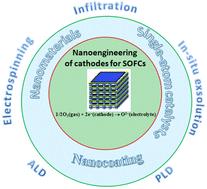
In recent years, great efforts have been devoted to develop low or intermediate temperature solid oxide fuel cells (SOFCs) operating at 500–800 °C. Lowering the operating temperature can suppress degradation of components and extend the range of acceptable material selection. Moreover, this is also favorable for improving cell durability and reducing the system cost. However, reducing the operating temperature decreases the electrode kinetics and leads to large interfacial polarization resistances, especially prominent for the oxygen reduction reaction (ORR) at the cathode. This review introduces the research progress of nanoengineering of electrodes employed for SOFCs operating at low and intermediate temperatures, including nanofiber-, nanotube- and nanowire-based cathodes, nanocoatings fabricated by atomic layer deposition (ALD) and pulsed laser deposition (PLD), in situ exsolution nanoparticles from perovskite materials, infiltration nanoparticles, single-atom based cathode catalysts, triple-conducting oxide cathodes, etc. Finally, we also provide future research directions on nanoengineering of cathodes for next-generation SOFCs.





 京公网安备 11010802042870号
京ICP备2023020795号-1
京公网安备 11010802042870号
京ICP备2023020795号-1

 分享
分享
 求助内容:
求助内容: 应助结果提醒方式:
 扫码关注我们
