Z-Scheme Enabled 1D/2D Nanocomposite of ZnO Nanorods and Functionalized g-C3 N4 Nanosheets for Sustainable Degradation of Terephthalic Acid(Z-Scheme Enabled 1D/2D Nanocomposite of ZnO Nanorods and Functionalized g-C3 N4 Nanosheets)。
{"title":"Z-Scheme Enabled 1D/2D Nanocomposite of ZnO Nanorods and Functionalized g-C3 N4 Nanosheets for Sustainable Degradation of Terephthalic Acid(Z-Scheme Enabled 1D/2D Nanocomposite of ZnO Nanorods and Functionalized g-C3 N4 Nanosheets)。","authors":"Honey Mittal, Arun Kumar, Diksha Sharma, Manika Khanuja","doi":"10.1002/cssc.202401408","DOIUrl":null,"url":null,"abstract":"<p>The urgent need to mitigate water pollution and achieve Sustainable Development Goal 14 (SDG 14)-Life below water, necessitates developing efficient and eco-friendly wastewater treatment technologies. This research addresses this challenge by photocatalytic degradation of terephthalic acid, a precursor for PET bottles using environment-friendly and biocompatible photocatalysts. The 1D/2D nanocomposite comprising zinc oxide (ZnO) nanorods and functionalized graphitic carbon nitride (Zn-TG) nanosheets were synthesized and thoroughly characterized. The nanocomposite effectively mitigated the individual drawbacks of Zn-TG agglomeration and the wide band gap of ZnO as confirmed through zeta potential and Tauc′s plot studies, respectively. The synthesized nanocomposite achieved ~100 % degradation within 60 minutes, exhibiting superior kinetics (~2.5 times) compared to pristine samples. The enhanced degradation efficiency was elucidated by efficient charge carrier transfer (~5 times faster) and separation (~2 times improved) as confirmed through electrochemical impedance spectroscopy and time-resolved photoluminescence studies. The proposed Z-scheme pathway provides mechanistic insights. This proposed mechanism is supported by extensive electron paramagnetic resonance (EPR) and scavenger studies. The liquid chromatography-mass spectrometry (LC–MS) analysis confirms the formation of less toxic byproducts for ensuring that the wastewater treatment process is efficient and environmentally friendly. This research helps in developing a highly effective and sustainable wastewater treatment technology.</p>","PeriodicalId":149,"journal":{"name":"ChemSusChem","volume":"18 3","pages":""},"PeriodicalIF":6.6000,"publicationDate":"2024-11-05","publicationTypes":"Journal Article","fieldsOfStudy":null,"isOpenAccess":false,"openAccessPdf":"","citationCount":"0","resultStr":"{\"title\":\"Z-Scheme Enabled 1D/2D Nanocomposite of ZnO Nanorods and Functionalized g-C3 N4 Nanosheets for Sustainable Degradation of Terephthalic Acid\",\"authors\":\"Honey Mittal, Arun Kumar, Diksha Sharma, Manika Khanuja\",\"doi\":\"10.1002/cssc.202401408\",\"DOIUrl\":null,\"url\":null,\"abstract\":\"<p>The urgent need to mitigate water pollution and achieve Sustainable Development Goal 14 (SDG 14)-Life below water, necessitates developing efficient and eco-friendly wastewater treatment technologies. This research addresses this challenge by photocatalytic degradation of terephthalic acid, a precursor for PET bottles using environment-friendly and biocompatible photocatalysts. The 1D/2D nanocomposite comprising zinc oxide (ZnO) nanorods and functionalized graphitic carbon nitride (Zn-TG) nanosheets were synthesized and thoroughly characterized. The nanocomposite effectively mitigated the individual drawbacks of Zn-TG agglomeration and the wide band gap of ZnO as confirmed through zeta potential and Tauc′s plot studies, respectively. The synthesized nanocomposite achieved ~100 % degradation within 60 minutes, exhibiting superior kinetics (~2.5 times) compared to pristine samples. The enhanced degradation efficiency was elucidated by efficient charge carrier transfer (~5 times faster) and separation (~2 times improved) as confirmed through electrochemical impedance spectroscopy and time-resolved photoluminescence studies. The proposed Z-scheme pathway provides mechanistic insights. This proposed mechanism is supported by extensive electron paramagnetic resonance (EPR) and scavenger studies. The liquid chromatography-mass spectrometry (LC–MS) analysis confirms the formation of less toxic byproducts for ensuring that the wastewater treatment process is efficient and environmentally friendly. This research helps in developing a highly effective and sustainable wastewater treatment technology.</p>\",\"PeriodicalId\":149,\"journal\":{\"name\":\"ChemSusChem\",\"volume\":\"18 3\",\"pages\":\"\"},\"PeriodicalIF\":6.6000,\"publicationDate\":\"2024-11-05\",\"publicationTypes\":\"Journal Article\",\"fieldsOfStudy\":null,\"isOpenAccess\":false,\"openAccessPdf\":\"\",\"citationCount\":\"0\",\"resultStr\":null,\"platform\":\"Semanticscholar\",\"paperid\":null,\"PeriodicalName\":\"ChemSusChem\",\"FirstCategoryId\":\"92\",\"ListUrlMain\":\"https://chemistry-europe.onlinelibrary.wiley.com/doi/10.1002/cssc.202401408\",\"RegionNum\":2,\"RegionCategory\":\"化学\",\"ArticlePicture\":[],\"TitleCN\":null,\"AbstractTextCN\":null,\"PMCID\":null,\"EPubDate\":\"\",\"PubModel\":\"\",\"JCR\":\"Q1\",\"JCRName\":\"CHEMISTRY, MULTIDISCIPLINARY\",\"Score\":null,\"Total\":0}","platform":"Semanticscholar","paperid":null,"PeriodicalName":"ChemSusChem","FirstCategoryId":"92","ListUrlMain":"https://chemistry-europe.onlinelibrary.wiley.com/doi/10.1002/cssc.202401408","RegionNum":2,"RegionCategory":"化学","ArticlePicture":[],"TitleCN":null,"AbstractTextCN":null,"PMCID":null,"EPubDate":"","PubModel":"","JCR":"Q1","JCRName":"CHEMISTRY, MULTIDISCIPLINARY","Score":null,"Total":0}
Z-Scheme Enabled 1D/2D Nanocomposite of ZnO Nanorods and Functionalized g-C3 N4 Nanosheets for Sustainable Degradation of Terephthalic Acid
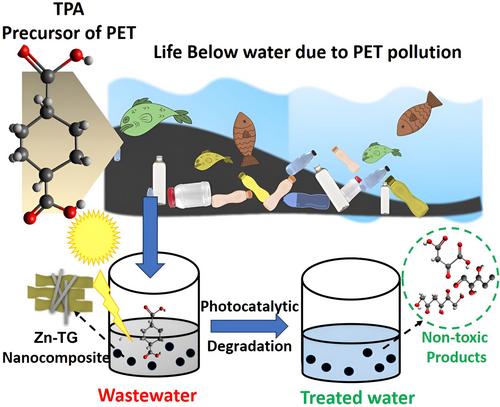
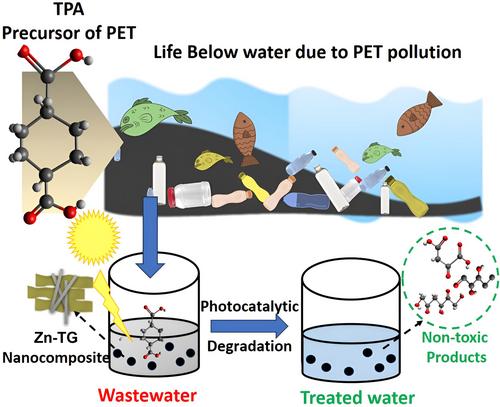
The urgent need to mitigate water pollution and achieve Sustainable Development Goal 14 (SDG 14)-Life below water, necessitates developing efficient and eco-friendly wastewater treatment technologies. This research addresses this challenge by photocatalytic degradation of terephthalic acid, a precursor for PET bottles using environment-friendly and biocompatible photocatalysts. The 1D/2D nanocomposite comprising zinc oxide (ZnO) nanorods and functionalized graphitic carbon nitride (Zn-TG) nanosheets were synthesized and thoroughly characterized. The nanocomposite effectively mitigated the individual drawbacks of Zn-TG agglomeration and the wide band gap of ZnO as confirmed through zeta potential and Tauc′s plot studies, respectively. The synthesized nanocomposite achieved ~100 % degradation within 60 minutes, exhibiting superior kinetics (~2.5 times) compared to pristine samples. The enhanced degradation efficiency was elucidated by efficient charge carrier transfer (~5 times faster) and separation (~2 times improved) as confirmed through electrochemical impedance spectroscopy and time-resolved photoluminescence studies. The proposed Z-scheme pathway provides mechanistic insights. This proposed mechanism is supported by extensive electron paramagnetic resonance (EPR) and scavenger studies. The liquid chromatography-mass spectrometry (LC–MS) analysis confirms the formation of less toxic byproducts for ensuring that the wastewater treatment process is efficient and environmentally friendly. This research helps in developing a highly effective and sustainable wastewater treatment technology.
期刊介绍:
ChemSusChem
Impact Factor (2016): 7.226
Scope:
Interdisciplinary journal
Focuses on research at the interface of chemistry and sustainability
Features the best research on sustainability and energy
Areas Covered:
Chemistry
Materials Science
Chemical Engineering
Biotechnology





 京公网安备 11010802042870号
京ICP备2023020795号-1
京公网安备 11010802042870号
京ICP备2023020795号-1

 分享
分享
 求助内容:
求助内容: 应助结果提醒方式:
 扫码关注我们
