Xu Zhou , Yuyan Zhang , Li Wei , Yuhan Yang , Botao Wang , Cuiping Liu , Junying Bai , Chen Wang
{"title":"褐藻糖胶的体外发酵特性及其对人体肠道微生物群和代谢物的调节作用","authors":"Xu Zhou , Yuyan Zhang , Li Wei , Yuhan Yang , Botao Wang , Cuiping Liu , Junying Bai , Chen Wang","doi":"10.1016/j.foodchem.2024.141998","DOIUrl":null,"url":null,"abstract":"<div><div>Dietary polysaccharides affect the intestinal microorganisms and their metabolites in the host. Clarifying the relationship among polysaccharides, intestinal microflora, and their metabolites is helpful to formulate dietary nutrition intervention strategies. Thus, we explored the regulatory effects of fucoidan on the human gut microbiota and its metabolites. After 48 h of fermentation, fucoidan significantly reduced the pH value in the broth, accompanied by an increase in total short-chain fatty acids, acetic acid, and propanoic acid contents. Fucoidan significantly reduced the relative abundance of <em>Escherichia_shigella</em> and <em>Blebsiella</em> and increased the relative abundance of <em>Bifidobacterium</em> and <em>Lactobacillus</em>. Concurrently, fucoidan altered the composition of intestinal microbial metabolites. These results indicate that fucoidan can regulate the metabolism of the intestinal flora and host, which may contribute to the intestinal health of the host.</div></div>","PeriodicalId":318,"journal":{"name":"Food Chemistry","volume":"465 ","pages":"Article 141998"},"PeriodicalIF":9.8000,"publicationDate":"2024-11-12","publicationTypes":"Journal Article","fieldsOfStudy":null,"isOpenAccess":false,"openAccessPdf":"","citationCount":"0","resultStr":"{\"title\":\"In vitro fermentation characteristics of fucoidan and its regulatory effects on human gut microbiota and metabolites\",\"authors\":\"Xu Zhou , Yuyan Zhang , Li Wei , Yuhan Yang , Botao Wang , Cuiping Liu , Junying Bai , Chen Wang\",\"doi\":\"10.1016/j.foodchem.2024.141998\",\"DOIUrl\":null,\"url\":null,\"abstract\":\"<div><div>Dietary polysaccharides affect the intestinal microorganisms and their metabolites in the host. Clarifying the relationship among polysaccharides, intestinal microflora, and their metabolites is helpful to formulate dietary nutrition intervention strategies. Thus, we explored the regulatory effects of fucoidan on the human gut microbiota and its metabolites. After 48 h of fermentation, fucoidan significantly reduced the pH value in the broth, accompanied by an increase in total short-chain fatty acids, acetic acid, and propanoic acid contents. Fucoidan significantly reduced the relative abundance of <em>Escherichia_shigella</em> and <em>Blebsiella</em> and increased the relative abundance of <em>Bifidobacterium</em> and <em>Lactobacillus</em>. Concurrently, fucoidan altered the composition of intestinal microbial metabolites. These results indicate that fucoidan can regulate the metabolism of the intestinal flora and host, which may contribute to the intestinal health of the host.</div></div>\",\"PeriodicalId\":318,\"journal\":{\"name\":\"Food Chemistry\",\"volume\":\"465 \",\"pages\":\"Article 141998\"},\"PeriodicalIF\":9.8000,\"publicationDate\":\"2024-11-12\",\"publicationTypes\":\"Journal Article\",\"fieldsOfStudy\":null,\"isOpenAccess\":false,\"openAccessPdf\":\"\",\"citationCount\":\"0\",\"resultStr\":null,\"platform\":\"Semanticscholar\",\"paperid\":null,\"PeriodicalName\":\"Food Chemistry\",\"FirstCategoryId\":\"97\",\"ListUrlMain\":\"https://www.sciencedirect.com/science/article/pii/S0308814624036483\",\"RegionNum\":1,\"RegionCategory\":\"农林科学\",\"ArticlePicture\":[],\"TitleCN\":null,\"AbstractTextCN\":null,\"PMCID\":null,\"EPubDate\":\"\",\"PubModel\":\"\",\"JCR\":\"Q1\",\"JCRName\":\"CHEMISTRY, APPLIED\",\"Score\":null,\"Total\":0}","platform":"Semanticscholar","paperid":null,"PeriodicalName":"Food Chemistry","FirstCategoryId":"97","ListUrlMain":"https://www.sciencedirect.com/science/article/pii/S0308814624036483","RegionNum":1,"RegionCategory":"农林科学","ArticlePicture":[],"TitleCN":null,"AbstractTextCN":null,"PMCID":null,"EPubDate":"","PubModel":"","JCR":"Q1","JCRName":"CHEMISTRY, APPLIED","Score":null,"Total":0}
In vitro fermentation characteristics of fucoidan and its regulatory effects on human gut microbiota and metabolites
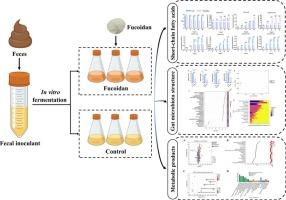
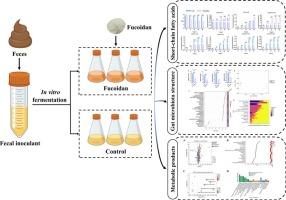
Dietary polysaccharides affect the intestinal microorganisms and their metabolites in the host. Clarifying the relationship among polysaccharides, intestinal microflora, and their metabolites is helpful to formulate dietary nutrition intervention strategies. Thus, we explored the regulatory effects of fucoidan on the human gut microbiota and its metabolites. After 48 h of fermentation, fucoidan significantly reduced the pH value in the broth, accompanied by an increase in total short-chain fatty acids, acetic acid, and propanoic acid contents. Fucoidan significantly reduced the relative abundance of Escherichia_shigella and Blebsiella and increased the relative abundance of Bifidobacterium and Lactobacillus. Concurrently, fucoidan altered the composition of intestinal microbial metabolites. These results indicate that fucoidan can regulate the metabolism of the intestinal flora and host, which may contribute to the intestinal health of the host.
期刊介绍:
Food Chemistry publishes original research papers dealing with the advancement of the chemistry and biochemistry of foods or the analytical methods/ approach used. All papers should focus on the novelty of the research carried out.




 京公网安备 11010802042870号
京ICP备2023020795号-1
京公网安备 11010802042870号
京ICP备2023020795号-1

 分享
分享
 求助内容:
求助内容: 应助结果提醒方式:
 扫码关注我们
