{"title":"肌肉疏松症是肿瘤患者不良反应和死亡率的预后因素:系统回顾与元分析","authors":"Yujie Zhang, Jingjing Zhang, Yunfan Zhan, Zhe Pan, Qiaohong Liu, Wei'an Yuan","doi":"10.1002/jcsm.13629","DOIUrl":null,"url":null,"abstract":"<div>\n \n \n <section>\n \n <h3> Background</h3>\n \n <p>The relationship between sarcopenia and the prognosis of patients with tumours who received radio- and/or chemotherapy still needs to be determined. In this study, we aim to investigate the relationship between sarcopenia and adverse effects and mortality in patients with tumours that received radio- and/or chemotherapy, stratified by study design, tumour category, the method sarcopenia assessed, treatment options, study location and among other factors.</p>\n </section>\n \n <section>\n \n <h3> Methods</h3>\n \n <p>PubMed, Web of Science and Embase were searched from inception to 15 August 2024, without language restrictions and with a manual search of references for additional articles retrieval. Cohort studies of ≥ 100 patients with tumours that evaluated the association between sarcopenia or muscle mass and the adverse effects or overall survival induced by radio- and/or chemotherapy were included.</p>\n </section>\n \n <section>\n \n <h3> Results</h3>\n \n <p>Thirty-nine studies were included, involving 8966 patients with tumours, including 3383 patients with sarcopenia. The pooled prevalence of sarcopenia in patients with tumours was 0.42 (95% CI 0.36–0.48, <i>p</i> < 0.001) overall. The prevalence of sarcopenia is higher in Oceania patients 0.60 (95% CI 0.28–0.89, <i>p</i> < 0.001), those with reproductive tumour 0.57 (95% CI 0.30–0.83, <i>p</i> < 0.001), and sarcopenia assessed by the lumbar-skeletal muscle index 0.46 (95% CI 0.39–0.53, <i>p</i> < 0.001) than in other subgroups, but not show significant differences in sex. Sarcopenia was associated with an increased risk of adverse effects in patients who received radio- and/or chemotherapy, with a relative risk (RR) of 1.44 (95% CI 1.21–1.71, <i>p</i> < 0.001). Retrospective studies (RR = 1.49; 95% CI 1.24–1.79; <i>p</i> < 0.001), sarcopenia assessed by other methods (RR = 2.98; 95% CI 1.52–5.87; <i>p</i> < 0.001), and patients in Europe (RR = 1.92; 95% CI 1.15–3.22; <i>p</i> = 0.013), received chemoradiotherapy (RR = 1.47; 95% CI 1.23–1.76; <i>p</i> < 0.001), and with head and neck tumours (RR = 1.54; 95% CI 1.17–2.01; <i>p</i> = 0.010) had higher relative risk than other subgroups. Sarcopenia was also associated with reduced overall survival in patients with tumours, with a pooled hazard ratio (HR) of 1.66 (95% CI 1.40–1.96, <i>p</i> < 0.001). Prospective studies (HR = 1.72; 95% CI 0.97–3.07; <i>p</i> = 0.065), sarcopenia assessed by the cervical-skeletal muscle index (HR = 2.66; 95% CI 1.73–4.09; <i>p <</i> 0.001), and patients in Asia (HR = 1.91; 95% CI 1.50–2.42; <i>p</i> < 0.001), received chemoradiotherapy (HR = 1.85; 95% CI 1.46–2.45; <i>p</i> < 0.001) and with head and neck tumours (HR = 2.35; 95% CI 1.88–2.95; <i>p</i> < 0.001) had higher HR than other subgroups.</p>\n </section>\n \n <section>\n \n <h3> Conclusions</h3>\n \n <p>Sarcopenia was associated with a higher risk of adverse effects and mortality in patients with tumours received radio- and/or chemotherapy.</p>\n </section>\n </div>","PeriodicalId":48911,"journal":{"name":"Journal of Cachexia Sarcopenia and Muscle","volume":"15 6","pages":"2295-2310"},"PeriodicalIF":9.9000,"publicationDate":"2024-11-11","publicationTypes":"Journal Article","fieldsOfStudy":null,"isOpenAccess":false,"openAccessPdf":"https://onlinelibrary.wiley.com/doi/epdf/10.1002/jcsm.13629","citationCount":"0","resultStr":"{\"title\":\"Sarcopenia Is a Prognostic Factor of Adverse Effects and Mortality in Patients With Tumour: A Systematic Review and Meta-Analysis\",\"authors\":\"Yujie Zhang, Jingjing Zhang, Yunfan Zhan, Zhe Pan, Qiaohong Liu, Wei'an Yuan\",\"doi\":\"10.1002/jcsm.13629\",\"DOIUrl\":null,\"url\":null,\"abstract\":\"<div>\\n \\n \\n <section>\\n \\n <h3> Background</h3>\\n \\n <p>The relationship between sarcopenia and the prognosis of patients with tumours who received radio- and/or chemotherapy still needs to be determined. In this study, we aim to investigate the relationship between sarcopenia and adverse effects and mortality in patients with tumours that received radio- and/or chemotherapy, stratified by study design, tumour category, the method sarcopenia assessed, treatment options, study location and among other factors.</p>\\n </section>\\n \\n <section>\\n \\n <h3> Methods</h3>\\n \\n <p>PubMed, Web of Science and Embase were searched from inception to 15 August 2024, without language restrictions and with a manual search of references for additional articles retrieval. Cohort studies of ≥ 100 patients with tumours that evaluated the association between sarcopenia or muscle mass and the adverse effects or overall survival induced by radio- and/or chemotherapy were included.</p>\\n </section>\\n \\n <section>\\n \\n <h3> Results</h3>\\n \\n <p>Thirty-nine studies were included, involving 8966 patients with tumours, including 3383 patients with sarcopenia. The pooled prevalence of sarcopenia in patients with tumours was 0.42 (95% CI 0.36–0.48, <i>p</i> < 0.001) overall. The prevalence of sarcopenia is higher in Oceania patients 0.60 (95% CI 0.28–0.89, <i>p</i> < 0.001), those with reproductive tumour 0.57 (95% CI 0.30–0.83, <i>p</i> < 0.001), and sarcopenia assessed by the lumbar-skeletal muscle index 0.46 (95% CI 0.39–0.53, <i>p</i> < 0.001) than in other subgroups, but not show significant differences in sex. Sarcopenia was associated with an increased risk of adverse effects in patients who received radio- and/or chemotherapy, with a relative risk (RR) of 1.44 (95% CI 1.21–1.71, <i>p</i> < 0.001). Retrospective studies (RR = 1.49; 95% CI 1.24–1.79; <i>p</i> < 0.001), sarcopenia assessed by other methods (RR = 2.98; 95% CI 1.52–5.87; <i>p</i> < 0.001), and patients in Europe (RR = 1.92; 95% CI 1.15–3.22; <i>p</i> = 0.013), received chemoradiotherapy (RR = 1.47; 95% CI 1.23–1.76; <i>p</i> < 0.001), and with head and neck tumours (RR = 1.54; 95% CI 1.17–2.01; <i>p</i> = 0.010) had higher relative risk than other subgroups. Sarcopenia was also associated with reduced overall survival in patients with tumours, with a pooled hazard ratio (HR) of 1.66 (95% CI 1.40–1.96, <i>p</i> < 0.001). Prospective studies (HR = 1.72; 95% CI 0.97–3.07; <i>p</i> = 0.065), sarcopenia assessed by the cervical-skeletal muscle index (HR = 2.66; 95% CI 1.73–4.09; <i>p <</i> 0.001), and patients in Asia (HR = 1.91; 95% CI 1.50–2.42; <i>p</i> < 0.001), received chemoradiotherapy (HR = 1.85; 95% CI 1.46–2.45; <i>p</i> < 0.001) and with head and neck tumours (HR = 2.35; 95% CI 1.88–2.95; <i>p</i> < 0.001) had higher HR than other subgroups.</p>\\n </section>\\n \\n <section>\\n \\n <h3> Conclusions</h3>\\n \\n <p>Sarcopenia was associated with a higher risk of adverse effects and mortality in patients with tumours received radio- and/or chemotherapy.</p>\\n </section>\\n </div>\",\"PeriodicalId\":48911,\"journal\":{\"name\":\"Journal of Cachexia Sarcopenia and Muscle\",\"volume\":\"15 6\",\"pages\":\"2295-2310\"},\"PeriodicalIF\":9.9000,\"publicationDate\":\"2024-11-11\",\"publicationTypes\":\"Journal Article\",\"fieldsOfStudy\":null,\"isOpenAccess\":false,\"openAccessPdf\":\"https://onlinelibrary.wiley.com/doi/epdf/10.1002/jcsm.13629\",\"citationCount\":\"0\",\"resultStr\":null,\"platform\":\"Semanticscholar\",\"paperid\":null,\"PeriodicalName\":\"Journal of Cachexia Sarcopenia and Muscle\",\"FirstCategoryId\":\"3\",\"ListUrlMain\":\"https://onlinelibrary.wiley.com/doi/10.1002/jcsm.13629\",\"RegionNum\":1,\"RegionCategory\":\"医学\",\"ArticlePicture\":[],\"TitleCN\":null,\"AbstractTextCN\":null,\"PMCID\":null,\"EPubDate\":\"\",\"PubModel\":\"\",\"JCR\":\"Q1\",\"JCRName\":\"GERIATRICS & GERONTOLOGY\",\"Score\":null,\"Total\":0}","platform":"Semanticscholar","paperid":null,"PeriodicalName":"Journal of Cachexia Sarcopenia and Muscle","FirstCategoryId":"3","ListUrlMain":"https://onlinelibrary.wiley.com/doi/10.1002/jcsm.13629","RegionNum":1,"RegionCategory":"医学","ArticlePicture":[],"TitleCN":null,"AbstractTextCN":null,"PMCID":null,"EPubDate":"","PubModel":"","JCR":"Q1","JCRName":"GERIATRICS & GERONTOLOGY","Score":null,"Total":0}
Sarcopenia Is a Prognostic Factor of Adverse Effects and Mortality in Patients With Tumour: A Systematic Review and Meta-Analysis
Background
The relationship between sarcopenia and the prognosis of patients with tumours who received radio- and/or chemotherapy still needs to be determined. In this study, we aim to investigate the relationship between sarcopenia and adverse effects and mortality in patients with tumours that received radio- and/or chemotherapy, stratified by study design, tumour category, the method sarcopenia assessed, treatment options, study location and among other factors.
Methods
PubMed, Web of Science and Embase were searched from inception to 15 August 2024, without language restrictions and with a manual search of references for additional articles retrieval. Cohort studies of ≥ 100 patients with tumours that evaluated the association between sarcopenia or muscle mass and the adverse effects or overall survival induced by radio- and/or chemotherapy were included.
Results
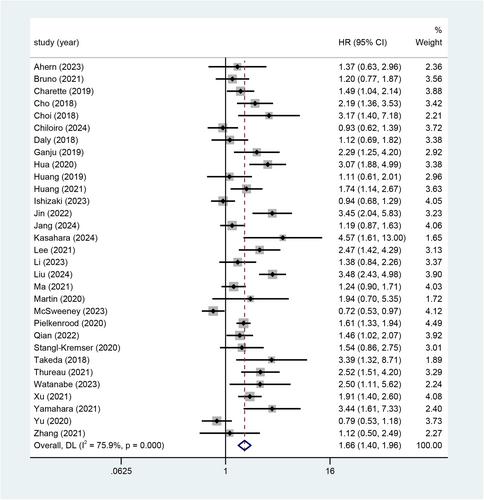
Thirty-nine studies were included, involving 8966 patients with tumours, including 3383 patients with sarcopenia. The pooled prevalence of sarcopenia in patients with tumours was 0.42 (95% CI 0.36–0.48, p < 0.001) overall. The prevalence of sarcopenia is higher in Oceania patients 0.60 (95% CI 0.28–0.89, p < 0.001), those with reproductive tumour 0.57 (95% CI 0.30–0.83, p < 0.001), and sarcopenia assessed by the lumbar-skeletal muscle index 0.46 (95% CI 0.39–0.53, p < 0.001) than in other subgroups, but not show significant differences in sex. Sarcopenia was associated with an increased risk of adverse effects in patients who received radio- and/or chemotherapy, with a relative risk (RR) of 1.44 (95% CI 1.21–1.71, p < 0.001). Retrospective studies (RR = 1.49; 95% CI 1.24–1.79; p < 0.001), sarcopenia assessed by other methods (RR = 2.98; 95% CI 1.52–5.87; p < 0.001), and patients in Europe (RR = 1.92; 95% CI 1.15–3.22; p = 0.013), received chemoradiotherapy (RR = 1.47; 95% CI 1.23–1.76; p < 0.001), and with head and neck tumours (RR = 1.54; 95% CI 1.17–2.01; p = 0.010) had higher relative risk than other subgroups. Sarcopenia was also associated with reduced overall survival in patients with tumours, with a pooled hazard ratio (HR) of 1.66 (95% CI 1.40–1.96, p < 0.001). Prospective studies (HR = 1.72; 95% CI 0.97–3.07; p = 0.065), sarcopenia assessed by the cervical-skeletal muscle index (HR = 2.66; 95% CI 1.73–4.09; p < 0.001), and patients in Asia (HR = 1.91; 95% CI 1.50–2.42; p < 0.001), received chemoradiotherapy (HR = 1.85; 95% CI 1.46–2.45; p < 0.001) and with head and neck tumours (HR = 2.35; 95% CI 1.88–2.95; p < 0.001) had higher HR than other subgroups.
Conclusions
Sarcopenia was associated with a higher risk of adverse effects and mortality in patients with tumours received radio- and/or chemotherapy.
期刊介绍:
The Journal of Cachexia, Sarcopenia and Muscle is a peer-reviewed international journal dedicated to publishing materials related to cachexia and sarcopenia, as well as body composition and its physiological and pathophysiological changes across the lifespan and in response to various illnesses from all fields of life sciences. The journal aims to provide a reliable resource for professionals interested in related research or involved in the clinical care of affected patients, such as those suffering from AIDS, cancer, chronic heart failure, chronic lung disease, liver cirrhosis, chronic kidney failure, rheumatoid arthritis, or sepsis.




 京公网安备 11010802042870号
京ICP备2023020795号-1
京公网安备 11010802042870号
京ICP备2023020795号-1

 分享
分享
 求助内容:
求助内容: 应助结果提醒方式:
 扫码关注我们
