Antifungal activity of chalcone derivatives containing 1,2,3,4-tetrahydroquinoline and studies on them as potential SDH inhibitors
Background
A large number of pathogenic fungi have caused serious damage to the global crop yield, and drug resistance is always a topic that cannot be avoided for traditional fungicides. Therefore, finding efficient, green, and low-toxic fungicides is our primary task, which brings opportunities for the development of natural product green pesticides.
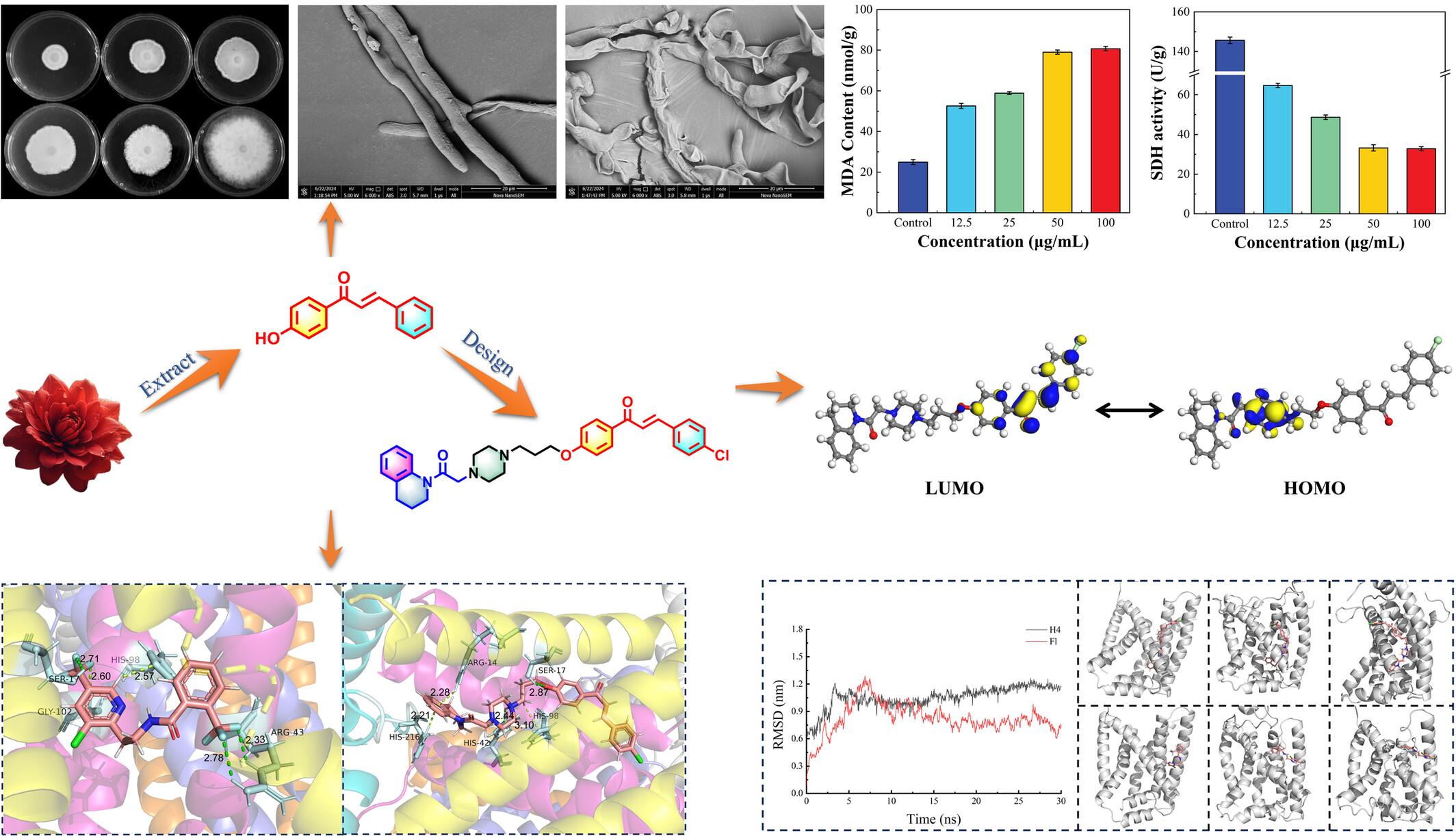
Results
Twenty chalcone derivatives containing 1,2,3,4-tetrahydroquinoline were designed and synthesized, and the compounds were tested for their fungicidal effects against eight plant pathogenic fungi in vitro. The results demonstrate that the original splicing did not have fungicidal activity, so a piperazine fragment was introduced; the test results revealed that H1–H10 all had good antifungal activity. Among them, H4 showed the highest inhibitory activity against Phytophthora capsici (Pc) with a median effect concentration (EC50) value of 5.2 μg/mL, which was higher than that of the control drugs Azoxystrobin (EC50 = 80.2 μg/mL) and Fluopyram (EC50 = 146.8 μg/mL). After the study, it was demonstrated that H4 mainly acted on the cell membrane against Phytophthora capsici and inhibited the activity of the marker enzyme of mitochondria (SDH) in the fungus.
期刊介绍:
Pest Management Science is the international journal of research and development in crop protection and pest control. Since its launch in 1970, the journal has become the premier forum for papers on the discovery, application, and impact on the environment of products and strategies designed for pest management.
Published for SCI by John Wiley & Sons Ltd.







 京公网安备 11010802042870号
京ICP备2023020795号-1
京公网安备 11010802042870号
京ICP备2023020795号-1

 分享
分享
 求助内容:
求助内容: 应助结果提醒方式:
 扫码关注我们
