Wei Chen , Jiayi Chen , Zixin Ni , Wangjing Wu , Junjie Dong , Zi Wang , Yuefei Wang , Jihong Zhou
{"title":"抹茶泡沫形成的综合研究:理化成分分析和影响发泡特性的机制","authors":"Wei Chen , Jiayi Chen , Zixin Ni , Wangjing Wu , Junjie Dong , Zi Wang , Yuefei Wang , Jihong Zhou","doi":"10.1016/j.foodchem.2024.142009","DOIUrl":null,"url":null,"abstract":"<div><div>Tea foam is crucial for new food and drink innovations. This study examined nine types and grades of matcha, identifying Longjing 43 as a high-quality raw material for matcha with good foaming properties. Foam scanning, particle electrophoresis and biochemical analysis revealed that pH (≈6.0), catechins (such as EGCG), amino acids (such as valine), pectin, soluble proteins and lipids enhanced foam formation. These components affected matcha's foaming through inter-component complexation, hydrophobic interaction of groups and intermolecular hydrogen bonds. EGCG had the greatest impact on foaming ability (1.89-fold), while amino acids primarily stabilized the foam. At the molecular level, phenolic hydroxyl groups close to each other promoted foaming, whereas alcoholic hydroxyl groups had the opposite effect. Phenol (5.17-fold) and n-propanol (8.03-fold) were the most effective foam promoters among phenols and alcohols. This study enhances our understanding of tea foam's biochemical mechanisms, driving innovation in food and beverage products.</div></div>","PeriodicalId":318,"journal":{"name":"Food Chemistry","volume":"465 ","pages":"Article 142009"},"PeriodicalIF":10.4000,"publicationDate":"2025-02-15","publicationTypes":"Journal Article","fieldsOfStudy":null,"isOpenAccess":false,"openAccessPdf":"","citationCount":"0","resultStr":"{\"title\":\"Comprehensive study of matcha foam formation: Physicochemical composition analysis and mechanisms impacting foaming properties\",\"authors\":\"Wei Chen , Jiayi Chen , Zixin Ni , Wangjing Wu , Junjie Dong , Zi Wang , Yuefei Wang , Jihong Zhou\",\"doi\":\"10.1016/j.foodchem.2024.142009\",\"DOIUrl\":null,\"url\":null,\"abstract\":\"<div><div>Tea foam is crucial for new food and drink innovations. This study examined nine types and grades of matcha, identifying Longjing 43 as a high-quality raw material for matcha with good foaming properties. Foam scanning, particle electrophoresis and biochemical analysis revealed that pH (≈6.0), catechins (such as EGCG), amino acids (such as valine), pectin, soluble proteins and lipids enhanced foam formation. These components affected matcha's foaming through inter-component complexation, hydrophobic interaction of groups and intermolecular hydrogen bonds. EGCG had the greatest impact on foaming ability (1.89-fold), while amino acids primarily stabilized the foam. At the molecular level, phenolic hydroxyl groups close to each other promoted foaming, whereas alcoholic hydroxyl groups had the opposite effect. Phenol (5.17-fold) and n-propanol (8.03-fold) were the most effective foam promoters among phenols and alcohols. This study enhances our understanding of tea foam's biochemical mechanisms, driving innovation in food and beverage products.</div></div>\",\"PeriodicalId\":318,\"journal\":{\"name\":\"Food Chemistry\",\"volume\":\"465 \",\"pages\":\"Article 142009\"},\"PeriodicalIF\":10.4000,\"publicationDate\":\"2025-02-15\",\"publicationTypes\":\"Journal Article\",\"fieldsOfStudy\":null,\"isOpenAccess\":false,\"openAccessPdf\":\"\",\"citationCount\":\"0\",\"resultStr\":null,\"platform\":\"Semanticscholar\",\"paperid\":null,\"PeriodicalName\":\"Food Chemistry\",\"FirstCategoryId\":\"97\",\"ListUrlMain\":\"https://www.sciencedirect.com/science/article/pii/S0308814624036598\",\"RegionNum\":1,\"RegionCategory\":\"农林科学\",\"ArticlePicture\":[],\"TitleCN\":null,\"AbstractTextCN\":null,\"PMCID\":null,\"EPubDate\":\"2024/11/13 0:00:00\",\"PubModel\":\"Epub\",\"JCR\":\"Q1\",\"JCRName\":\"CHEMISTRY, APPLIED\",\"Score\":null,\"Total\":0}","platform":"Semanticscholar","paperid":null,"PeriodicalName":"Food Chemistry","FirstCategoryId":"97","ListUrlMain":"https://www.sciencedirect.com/science/article/pii/S0308814624036598","RegionNum":1,"RegionCategory":"农林科学","ArticlePicture":[],"TitleCN":null,"AbstractTextCN":null,"PMCID":null,"EPubDate":"2024/11/13 0:00:00","PubModel":"Epub","JCR":"Q1","JCRName":"CHEMISTRY, APPLIED","Score":null,"Total":0}
Comprehensive study of matcha foam formation: Physicochemical composition analysis and mechanisms impacting foaming properties
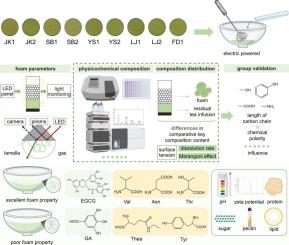
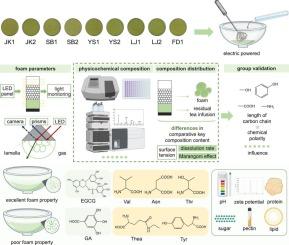
Tea foam is crucial for new food and drink innovations. This study examined nine types and grades of matcha, identifying Longjing 43 as a high-quality raw material for matcha with good foaming properties. Foam scanning, particle electrophoresis and biochemical analysis revealed that pH (≈6.0), catechins (such as EGCG), amino acids (such as valine), pectin, soluble proteins and lipids enhanced foam formation. These components affected matcha's foaming through inter-component complexation, hydrophobic interaction of groups and intermolecular hydrogen bonds. EGCG had the greatest impact on foaming ability (1.89-fold), while amino acids primarily stabilized the foam. At the molecular level, phenolic hydroxyl groups close to each other promoted foaming, whereas alcoholic hydroxyl groups had the opposite effect. Phenol (5.17-fold) and n-propanol (8.03-fold) were the most effective foam promoters among phenols and alcohols. This study enhances our understanding of tea foam's biochemical mechanisms, driving innovation in food and beverage products.
期刊介绍:
Food Chemistry publishes original research papers dealing with the advancement of the chemistry and biochemistry of foods or the analytical methods/ approach used. All papers should focus on the novelty of the research carried out.




 京公网安备 11010802042870号
京ICP备2023020795号-1
京公网安备 11010802042870号
京ICP备2023020795号-1

 分享
分享
 求助内容:
求助内容: 应助结果提醒方式:
 扫码关注我们
