{"title":"利用微流体技术生产的光催化米糠蛋白/羧甲基纤维素/ZrO2 纤维:形成机制、抑菌和草莓保鲜","authors":"Ren Li, Wenhao Ma, Yulin Feng, Mengmeng Zhang, Huijuan Zhang, Jing Wang","doi":"10.1016/j.foodchem.2024.142022","DOIUrl":null,"url":null,"abstract":"<div><div>Developing cost-effective and environmentally sustainable active packaging materials remains an important challenge. We have developed rice bran protein (RBP)-based fibers incorporating carboxymethyl cellulose (CMC) and ZrO<sub>2</sub> nanoparticles (ZrO<sub>2</sub> NPs, 0 %–7 %, m/m) using microfluidic spinning. The integration of RBP, CMC, and ZrO<sub>2</sub> NPs formed a robust hydrogen bond network that enhanced the fibers' thermal stability and crystallinity, reduced surface hydrophobicity, and aligned the molecular orientation. Under the catalysis of visible light (300 W, 12 h), ZrO<sub>2</sub> NPs in the fiber produced reactive oxygen species, which inhibited the oxidative stress resistance system of <em>Bacillus subtilis</em> and destroyed its biofilm and DNA, thus showing excellent antibacterial effect. Additionally, during storage, this fiber also showed the ability to scavenge ethylene, thereby reducing the rate of loss of luminance, hardness and weight of strawberries. This study offers a new idea for RBP fiber in food preservation, antibacterial, and value-added utilization of rice bran by-products.</div></div>","PeriodicalId":318,"journal":{"name":"Food Chemistry","volume":"465 ","pages":"Article 142022"},"PeriodicalIF":10.4000,"publicationDate":"2025-02-15","publicationTypes":"Journal Article","fieldsOfStudy":null,"isOpenAccess":false,"openAccessPdf":"","citationCount":"0","resultStr":"{\"title\":\"Photocatalytic rice bran protein/carboxymethyl cellulose/ZrO2 fiber produced by microfluidics: Formation mechanism, bacteriostasis and strawberry preservation\",\"authors\":\"Ren Li, Wenhao Ma, Yulin Feng, Mengmeng Zhang, Huijuan Zhang, Jing Wang\",\"doi\":\"10.1016/j.foodchem.2024.142022\",\"DOIUrl\":null,\"url\":null,\"abstract\":\"<div><div>Developing cost-effective and environmentally sustainable active packaging materials remains an important challenge. We have developed rice bran protein (RBP)-based fibers incorporating carboxymethyl cellulose (CMC) and ZrO<sub>2</sub> nanoparticles (ZrO<sub>2</sub> NPs, 0 %–7 %, m/m) using microfluidic spinning. The integration of RBP, CMC, and ZrO<sub>2</sub> NPs formed a robust hydrogen bond network that enhanced the fibers' thermal stability and crystallinity, reduced surface hydrophobicity, and aligned the molecular orientation. Under the catalysis of visible light (300 W, 12 h), ZrO<sub>2</sub> NPs in the fiber produced reactive oxygen species, which inhibited the oxidative stress resistance system of <em>Bacillus subtilis</em> and destroyed its biofilm and DNA, thus showing excellent antibacterial effect. Additionally, during storage, this fiber also showed the ability to scavenge ethylene, thereby reducing the rate of loss of luminance, hardness and weight of strawberries. This study offers a new idea for RBP fiber in food preservation, antibacterial, and value-added utilization of rice bran by-products.</div></div>\",\"PeriodicalId\":318,\"journal\":{\"name\":\"Food Chemistry\",\"volume\":\"465 \",\"pages\":\"Article 142022\"},\"PeriodicalIF\":10.4000,\"publicationDate\":\"2025-02-15\",\"publicationTypes\":\"Journal Article\",\"fieldsOfStudy\":null,\"isOpenAccess\":false,\"openAccessPdf\":\"\",\"citationCount\":\"0\",\"resultStr\":null,\"platform\":\"Semanticscholar\",\"paperid\":null,\"PeriodicalName\":\"Food Chemistry\",\"FirstCategoryId\":\"97\",\"ListUrlMain\":\"https://www.sciencedirect.com/science/article/pii/S0308814624036720\",\"RegionNum\":1,\"RegionCategory\":\"农林科学\",\"ArticlePicture\":[],\"TitleCN\":null,\"AbstractTextCN\":null,\"PMCID\":null,\"EPubDate\":\"2024/11/12 0:00:00\",\"PubModel\":\"Epub\",\"JCR\":\"Q1\",\"JCRName\":\"CHEMISTRY, APPLIED\",\"Score\":null,\"Total\":0}","platform":"Semanticscholar","paperid":null,"PeriodicalName":"Food Chemistry","FirstCategoryId":"97","ListUrlMain":"https://www.sciencedirect.com/science/article/pii/S0308814624036720","RegionNum":1,"RegionCategory":"农林科学","ArticlePicture":[],"TitleCN":null,"AbstractTextCN":null,"PMCID":null,"EPubDate":"2024/11/12 0:00:00","PubModel":"Epub","JCR":"Q1","JCRName":"CHEMISTRY, APPLIED","Score":null,"Total":0}
Photocatalytic rice bran protein/carboxymethyl cellulose/ZrO2 fiber produced by microfluidics: Formation mechanism, bacteriostasis and strawberry preservation
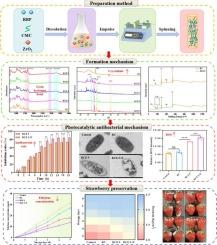
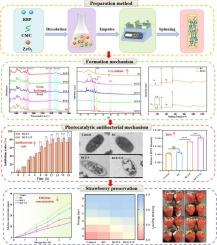
Developing cost-effective and environmentally sustainable active packaging materials remains an important challenge. We have developed rice bran protein (RBP)-based fibers incorporating carboxymethyl cellulose (CMC) and ZrO2 nanoparticles (ZrO2 NPs, 0 %–7 %, m/m) using microfluidic spinning. The integration of RBP, CMC, and ZrO2 NPs formed a robust hydrogen bond network that enhanced the fibers' thermal stability and crystallinity, reduced surface hydrophobicity, and aligned the molecular orientation. Under the catalysis of visible light (300 W, 12 h), ZrO2 NPs in the fiber produced reactive oxygen species, which inhibited the oxidative stress resistance system of Bacillus subtilis and destroyed its biofilm and DNA, thus showing excellent antibacterial effect. Additionally, during storage, this fiber also showed the ability to scavenge ethylene, thereby reducing the rate of loss of luminance, hardness and weight of strawberries. This study offers a new idea for RBP fiber in food preservation, antibacterial, and value-added utilization of rice bran by-products.
期刊介绍:
Food Chemistry publishes original research papers dealing with the advancement of the chemistry and biochemistry of foods or the analytical methods/ approach used. All papers should focus on the novelty of the research carried out.




 京公网安备 11010802042870号
京ICP备2023020795号-1
京公网安备 11010802042870号
京ICP备2023020795号-1

 分享
分享
 求助内容:
求助内容: 应助结果提醒方式:
 扫码关注我们
