Alejandro R. López , Elena Ortega-Caneda , Estrella Espada-Bellido , Nuria Chinchilla , Miguel Palma , María José Aliaño-González , Gerardo Fernández Barbero , Ceferino Carrera
{"title":"开发一种新型环保超声辅助提取法,用于定量检测野生蘑菇中的色氨酸及其有益特性","authors":"Alejandro R. López , Elena Ortega-Caneda , Estrella Espada-Bellido , Nuria Chinchilla , Miguel Palma , María José Aliaño-González , Gerardo Fernández Barbero , Ceferino Carrera","doi":"10.1016/j.foodchem.2024.142006","DOIUrl":null,"url":null,"abstract":"<div><div>Bioactive compounds in food offer health benefits by influencing cellular and physiological functions. Tryptophan, an essential amino acid and precursor to neurotransmitters like melatonin and serotonin, regulates mood and circadian rhythms. However, its quantification in mushrooms is scarce studied. An eco-friendly ultrasound-assisted extraction (UAE) method has been optimized to quantify tryptophan using ultra high-performance liquid chromatography with a diode array and fluorescence detector (UHPLC-DAD-Fl). Tryptophan levels were determined in 26 wild mushroom samples of the genus <em>Lactarius</em> and <em>Boletus.</em> The concentrations ranged from 0.042 mg/g to 0.742 mg/g. The extracts' health benefits were assessed for antioxidant capacity using DPPH (17.7 % - 71.6 %) and ABTS (7.2 % - 24.9 %) methods, while acetylcholinesterase (AChE) inhibitory activity ranged from 13.1 % to 49.8 %. Promising results were obtained. Hierarchical cluster analysis demonstrated a correlation between tryptophan concentration, mushroom species, location, and extract properties, highlighting tryptophan's crucial role in these mushrooms' health benefits.</div></div>","PeriodicalId":318,"journal":{"name":"Food Chemistry","volume":"465 ","pages":"Article 142006"},"PeriodicalIF":10.4000,"publicationDate":"2025-02-15","publicationTypes":"Journal Article","fieldsOfStudy":null,"isOpenAccess":false,"openAccessPdf":"","citationCount":"0","resultStr":"{\"title\":\"Development of a new eco-friendly ultrasound-assisted extraction method to quantify tryptophan in wild mushrooms and determination of its beneficial properties\",\"authors\":\"Alejandro R. López , Elena Ortega-Caneda , Estrella Espada-Bellido , Nuria Chinchilla , Miguel Palma , María José Aliaño-González , Gerardo Fernández Barbero , Ceferino Carrera\",\"doi\":\"10.1016/j.foodchem.2024.142006\",\"DOIUrl\":null,\"url\":null,\"abstract\":\"<div><div>Bioactive compounds in food offer health benefits by influencing cellular and physiological functions. Tryptophan, an essential amino acid and precursor to neurotransmitters like melatonin and serotonin, regulates mood and circadian rhythms. However, its quantification in mushrooms is scarce studied. An eco-friendly ultrasound-assisted extraction (UAE) method has been optimized to quantify tryptophan using ultra high-performance liquid chromatography with a diode array and fluorescence detector (UHPLC-DAD-Fl). Tryptophan levels were determined in 26 wild mushroom samples of the genus <em>Lactarius</em> and <em>Boletus.</em> The concentrations ranged from 0.042 mg/g to 0.742 mg/g. The extracts' health benefits were assessed for antioxidant capacity using DPPH (17.7 % - 71.6 %) and ABTS (7.2 % - 24.9 %) methods, while acetylcholinesterase (AChE) inhibitory activity ranged from 13.1 % to 49.8 %. Promising results were obtained. Hierarchical cluster analysis demonstrated a correlation between tryptophan concentration, mushroom species, location, and extract properties, highlighting tryptophan's crucial role in these mushrooms' health benefits.</div></div>\",\"PeriodicalId\":318,\"journal\":{\"name\":\"Food Chemistry\",\"volume\":\"465 \",\"pages\":\"Article 142006\"},\"PeriodicalIF\":10.4000,\"publicationDate\":\"2025-02-15\",\"publicationTypes\":\"Journal Article\",\"fieldsOfStudy\":null,\"isOpenAccess\":false,\"openAccessPdf\":\"\",\"citationCount\":\"0\",\"resultStr\":null,\"platform\":\"Semanticscholar\",\"paperid\":null,\"PeriodicalName\":\"Food Chemistry\",\"FirstCategoryId\":\"97\",\"ListUrlMain\":\"https://www.sciencedirect.com/science/article/pii/S0308814624036562\",\"RegionNum\":1,\"RegionCategory\":\"农林科学\",\"ArticlePicture\":[],\"TitleCN\":null,\"AbstractTextCN\":null,\"PMCID\":null,\"EPubDate\":\"2024/11/12 0:00:00\",\"PubModel\":\"Epub\",\"JCR\":\"Q1\",\"JCRName\":\"CHEMISTRY, APPLIED\",\"Score\":null,\"Total\":0}","platform":"Semanticscholar","paperid":null,"PeriodicalName":"Food Chemistry","FirstCategoryId":"97","ListUrlMain":"https://www.sciencedirect.com/science/article/pii/S0308814624036562","RegionNum":1,"RegionCategory":"农林科学","ArticlePicture":[],"TitleCN":null,"AbstractTextCN":null,"PMCID":null,"EPubDate":"2024/11/12 0:00:00","PubModel":"Epub","JCR":"Q1","JCRName":"CHEMISTRY, APPLIED","Score":null,"Total":0}
Development of a new eco-friendly ultrasound-assisted extraction method to quantify tryptophan in wild mushrooms and determination of its beneficial properties
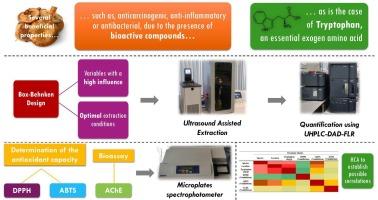
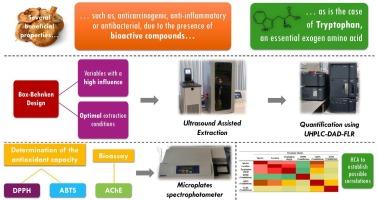
Bioactive compounds in food offer health benefits by influencing cellular and physiological functions. Tryptophan, an essential amino acid and precursor to neurotransmitters like melatonin and serotonin, regulates mood and circadian rhythms. However, its quantification in mushrooms is scarce studied. An eco-friendly ultrasound-assisted extraction (UAE) method has been optimized to quantify tryptophan using ultra high-performance liquid chromatography with a diode array and fluorescence detector (UHPLC-DAD-Fl). Tryptophan levels were determined in 26 wild mushroom samples of the genus Lactarius and Boletus. The concentrations ranged from 0.042 mg/g to 0.742 mg/g. The extracts' health benefits were assessed for antioxidant capacity using DPPH (17.7 % - 71.6 %) and ABTS (7.2 % - 24.9 %) methods, while acetylcholinesterase (AChE) inhibitory activity ranged from 13.1 % to 49.8 %. Promising results were obtained. Hierarchical cluster analysis demonstrated a correlation between tryptophan concentration, mushroom species, location, and extract properties, highlighting tryptophan's crucial role in these mushrooms' health benefits.
期刊介绍:
Food Chemistry publishes original research papers dealing with the advancement of the chemistry and biochemistry of foods or the analytical methods/ approach used. All papers should focus on the novelty of the research carried out.




 京公网安备 11010802042870号
京ICP备2023020795号-1
京公网安备 11010802042870号
京ICP备2023020795号-1

 分享
分享
 求助内容:
求助内容: 应助结果提醒方式:
 扫码关注我们
