Emese Sánta, Alex Kulcsár, József Betlehem, János Haness, Bálint Bánfai, Szabolcs Kudoba, Kitti Máté-Póhr
{"title":"[COVID-19大流行期间救护人员中创伤后应激障碍的患病率]。","authors":"Emese Sánta, Alex Kulcsár, József Betlehem, János Haness, Bálint Bánfai, Szabolcs Kudoba, Kitti Máté-Póhr","doi":"10.1556/650.2024.33169","DOIUrl":null,"url":null,"abstract":"<p><p>Introduction: The coronavirus epidemic in 2019 put ambulance officers’ health at risk in all areas. Objective: The aim of the study was to assess the occurrence of post-traumatic stress disorder among ambulance officers after the pandemic. Data and method: After obtaining the necessary permits, we conducted our cross-sectional, quantitative survey online among the employees of the National Ambulance Service between February and May 2023, using a non-random convenience sample. In addition to John Brier’s Trauma Symptom Checklist-33, our questionnaire included questions about sociodemographic data, work and the coronavirus epidemic. The survey included those who reached the age of 18, had at least 1 year of employment as paramedic or medic, and were active during the pandemic. Data analysis was done with SPSS 26.0 program, using descriptive (average, frequency, confidence range) and mathematical-statistical procedures (chi2-test, T-test, ANOVA, correlation). The results were considered significant at p<0.05. Results: The sample consisted of 237 people (n = 237), 84% of whom were men, the average age was 39.65 ± 10.48 years. Most of them (24.1%) worked in the Budapest rescue service as rescue officers (25.7%). 73.7% of the respondents got infected with COVID–19. On a 5-point Likert scale (where 1 is the least, 5 is the most), the quarantine affected them at an average value of 2.21 ± 1.32, and they feared for their family’s safety from the coronavirus at a value of 3.49 ± 1.29. The average score measured on the post-traumatic stress disorder test (between 0–99 points) was 26.52 ± 19.36, 25.7% of the respondents scored above 40 points, who were the most at risk of the disease. The disease affected more women (p = 0.028), more people living in social relationships (p = 0.013), those who were more affected emotionally by the quarantine (r = 0.296, p<0.001), those who were physically more affected by overwork due to the coronavirus (r = 0.307, p<0.001), and more mentally stressed (r = 0.776, p<0.001). For those whose post-traumatic stress disorder proved to be more severe based on their score, a greater proportion used the help of a mental health specialist provided by the National Ambulance Service (p = 0.002). Conclusion: Special attention should continue to be paid to the mental health care of paramedics, especially in the identified risk groups. Orv Hetil. 2024; 165(45): 1779–1787.</p>","PeriodicalId":19911,"journal":{"name":"Orvosi hetilap","volume":"165 45","pages":"1779-1787"},"PeriodicalIF":0.9000,"publicationDate":"2024-11-10","publicationTypes":"Journal Article","fieldsOfStudy":null,"isOpenAccess":false,"openAccessPdf":"","citationCount":"0","resultStr":"{\"title\":\"[Prevalence of post-traumatic stress disorder among ambulance officers during the COVID-19 pandemic].\",\"authors\":\"Emese Sánta, Alex Kulcsár, József Betlehem, János Haness, Bálint Bánfai, Szabolcs Kudoba, Kitti Máté-Póhr\",\"doi\":\"10.1556/650.2024.33169\",\"DOIUrl\":null,\"url\":null,\"abstract\":\"<p><p>Introduction: The coronavirus epidemic in 2019 put ambulance officers’ health at risk in all areas. Objective: The aim of the study was to assess the occurrence of post-traumatic stress disorder among ambulance officers after the pandemic. Data and method: After obtaining the necessary permits, we conducted our cross-sectional, quantitative survey online among the employees of the National Ambulance Service between February and May 2023, using a non-random convenience sample. In addition to John Brier’s Trauma Symptom Checklist-33, our questionnaire included questions about sociodemographic data, work and the coronavirus epidemic. The survey included those who reached the age of 18, had at least 1 year of employment as paramedic or medic, and were active during the pandemic. Data analysis was done with SPSS 26.0 program, using descriptive (average, frequency, confidence range) and mathematical-statistical procedures (chi2-test, T-test, ANOVA, correlation). The results were considered significant at p<0.05. Results: The sample consisted of 237 people (n = 237), 84% of whom were men, the average age was 39.65 ± 10.48 years. Most of them (24.1%) worked in the Budapest rescue service as rescue officers (25.7%). 73.7% of the respondents got infected with COVID–19. On a 5-point Likert scale (where 1 is the least, 5 is the most), the quarantine affected them at an average value of 2.21 ± 1.32, and they feared for their family’s safety from the coronavirus at a value of 3.49 ± 1.29. The average score measured on the post-traumatic stress disorder test (between 0–99 points) was 26.52 ± 19.36, 25.7% of the respondents scored above 40 points, who were the most at risk of the disease. The disease affected more women (p = 0.028), more people living in social relationships (p = 0.013), those who were more affected emotionally by the quarantine (r = 0.296, p<0.001), those who were physically more affected by overwork due to the coronavirus (r = 0.307, p<0.001), and more mentally stressed (r = 0.776, p<0.001). For those whose post-traumatic stress disorder proved to be more severe based on their score, a greater proportion used the help of a mental health specialist provided by the National Ambulance Service (p = 0.002). Conclusion: Special attention should continue to be paid to the mental health care of paramedics, especially in the identified risk groups. Orv Hetil. 2024; 165(45): 1779–1787.</p>\",\"PeriodicalId\":19911,\"journal\":{\"name\":\"Orvosi hetilap\",\"volume\":\"165 45\",\"pages\":\"1779-1787\"},\"PeriodicalIF\":0.9000,\"publicationDate\":\"2024-11-10\",\"publicationTypes\":\"Journal Article\",\"fieldsOfStudy\":null,\"isOpenAccess\":false,\"openAccessPdf\":\"\",\"citationCount\":\"0\",\"resultStr\":null,\"platform\":\"Semanticscholar\",\"paperid\":null,\"PeriodicalName\":\"Orvosi hetilap\",\"FirstCategoryId\":\"3\",\"ListUrlMain\":\"https://doi.org/10.1556/650.2024.33169\",\"RegionNum\":4,\"RegionCategory\":\"医学\",\"ArticlePicture\":[],\"TitleCN\":null,\"AbstractTextCN\":null,\"PMCID\":null,\"EPubDate\":\"\",\"PubModel\":\"\",\"JCR\":\"Q3\",\"JCRName\":\"MEDICINE, GENERAL & INTERNAL\",\"Score\":null,\"Total\":0}","platform":"Semanticscholar","paperid":null,"PeriodicalName":"Orvosi hetilap","FirstCategoryId":"3","ListUrlMain":"https://doi.org/10.1556/650.2024.33169","RegionNum":4,"RegionCategory":"医学","ArticlePicture":[],"TitleCN":null,"AbstractTextCN":null,"PMCID":null,"EPubDate":"","PubModel":"","JCR":"Q3","JCRName":"MEDICINE, GENERAL & INTERNAL","Score":null,"Total":0}
[Prevalence of post-traumatic stress disorder among ambulance officers during the COVID-19 pandemic].
Introduction: The coronavirus epidemic in 2019 put ambulance officers’ health at risk in all areas. Objective: The aim of the study was to assess the occurrence of post-traumatic stress disorder among ambulance officers after the pandemic. Data and method: After obtaining the necessary permits, we conducted our cross-sectional, quantitative survey online among the employees of the National Ambulance Service between February and May 2023, using a non-random convenience sample. In addition to John Brier’s Trauma Symptom Checklist-33, our questionnaire included questions about sociodemographic data, work and the coronavirus epidemic. The survey included those who reached the age of 18, had at least 1 year of employment as paramedic or medic, and were active during the pandemic. Data analysis was done with SPSS 26.0 program, using descriptive (average, frequency, confidence range) and mathematical-statistical procedures (chi2-test, T-test, ANOVA, correlation). The results were considered significant at p<0.05. Results: The sample consisted of 237 people (n = 237), 84% of whom were men, the average age was 39.65 ± 10.48 years. Most of them (24.1%) worked in the Budapest rescue service as rescue officers (25.7%). 73.7% of the respondents got infected with COVID–19. On a 5-point Likert scale (where 1 is the least, 5 is the most), the quarantine affected them at an average value of 2.21 ± 1.32, and they feared for their family’s safety from the coronavirus at a value of 3.49 ± 1.29. The average score measured on the post-traumatic stress disorder test (between 0–99 points) was 26.52 ± 19.36, 25.7% of the respondents scored above 40 points, who were the most at risk of the disease. The disease affected more women (p = 0.028), more people living in social relationships (p = 0.013), those who were more affected emotionally by the quarantine (r = 0.296, p<0.001), those who were physically more affected by overwork due to the coronavirus (r = 0.307, p<0.001), and more mentally stressed (r = 0.776, p<0.001). For those whose post-traumatic stress disorder proved to be more severe based on their score, a greater proportion used the help of a mental health specialist provided by the National Ambulance Service (p = 0.002). Conclusion: Special attention should continue to be paid to the mental health care of paramedics, especially in the identified risk groups. Orv Hetil. 2024; 165(45): 1779–1787.
期刊介绍:
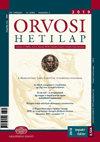
The journal publishes original and review papers in the fields of experimental and clinical medicine. It covers epidemiology, diagnostics, therapy and the prevention of human diseases as well as papers of medical history.
Orvosi Hetilap is the oldest, still in-print, Hungarian publication and also the one-and-only weekly published scientific journal in Hungary.
The strategy of the journal is based on the Curatorium of the Lajos Markusovszky Foundation and on the National and International Editorial Board. The 150 year-old journal is part of the Hungarian Cultural Heritage.




 京公网安备 11010802042870号
京ICP备2023020795号-1
京公网安备 11010802042870号
京ICP备2023020795号-1

 分享
分享
 求助内容:
求助内容: 应助结果提醒方式:
 扫码关注我们
