{"title":"在深海中寻找甜蜜点","authors":"Linn Hoffmann","doi":"10.1038/s42003-024-07220-3","DOIUrl":null,"url":null,"abstract":"‘Candidatus Endonucleobacter’ infects the nuclei of deep-sea mussels but it was unknown how they can prevent apoptosis of the host. A new study by Porras and colleagues, published in Nature Microbiology, suggests that the bacterium upregulates host-derived apoptosis inhibitors and genes for digesting sugars, lipids and amino acids acquired through horizontal gene transfer from the mussels.","PeriodicalId":10552,"journal":{"name":"Communications Biology","volume":" ","pages":"1-2"},"PeriodicalIF":5.1000,"publicationDate":"2024-11-21","publicationTypes":"Journal Article","fieldsOfStudy":null,"isOpenAccess":false,"openAccessPdf":"https://www.ncbi.nlm.nih.gov/pmc/articles/PMC11582554/pdf/","citationCount":"0","resultStr":"{\"title\":\"Finding the sweet spot in the deep ocean\",\"authors\":\"Linn Hoffmann\",\"doi\":\"10.1038/s42003-024-07220-3\",\"DOIUrl\":null,\"url\":null,\"abstract\":\"‘Candidatus Endonucleobacter’ infects the nuclei of deep-sea mussels but it was unknown how they can prevent apoptosis of the host. A new study by Porras and colleagues, published in Nature Microbiology, suggests that the bacterium upregulates host-derived apoptosis inhibitors and genes for digesting sugars, lipids and amino acids acquired through horizontal gene transfer from the mussels.\",\"PeriodicalId\":10552,\"journal\":{\"name\":\"Communications Biology\",\"volume\":\" \",\"pages\":\"1-2\"},\"PeriodicalIF\":5.1000,\"publicationDate\":\"2024-11-21\",\"publicationTypes\":\"Journal Article\",\"fieldsOfStudy\":null,\"isOpenAccess\":false,\"openAccessPdf\":\"https://www.ncbi.nlm.nih.gov/pmc/articles/PMC11582554/pdf/\",\"citationCount\":\"0\",\"resultStr\":null,\"platform\":\"Semanticscholar\",\"paperid\":null,\"PeriodicalName\":\"Communications Biology\",\"FirstCategoryId\":\"99\",\"ListUrlMain\":\"https://www.nature.com/articles/s42003-024-07220-3\",\"RegionNum\":1,\"RegionCategory\":\"生物学\",\"ArticlePicture\":[],\"TitleCN\":null,\"AbstractTextCN\":null,\"PMCID\":null,\"EPubDate\":\"\",\"PubModel\":\"\",\"JCR\":\"Q1\",\"JCRName\":\"BIOLOGY\",\"Score\":null,\"Total\":0}","platform":"Semanticscholar","paperid":null,"PeriodicalName":"Communications Biology","FirstCategoryId":"99","ListUrlMain":"https://www.nature.com/articles/s42003-024-07220-3","RegionNum":1,"RegionCategory":"生物学","ArticlePicture":[],"TitleCN":null,"AbstractTextCN":null,"PMCID":null,"EPubDate":"","PubModel":"","JCR":"Q1","JCRName":"BIOLOGY","Score":null,"Total":0}
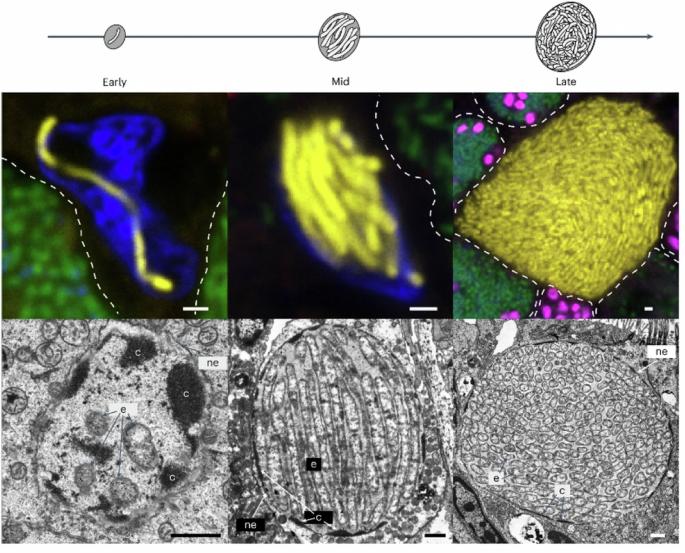
‘Candidatus Endonucleobacter’ infects the nuclei of deep-sea mussels but it was unknown how they can prevent apoptosis of the host. A new study by Porras and colleagues, published in Nature Microbiology, suggests that the bacterium upregulates host-derived apoptosis inhibitors and genes for digesting sugars, lipids and amino acids acquired through horizontal gene transfer from the mussels.
期刊介绍:
Communications Biology is an open access journal from Nature Research publishing high-quality research, reviews and commentary in all areas of the biological sciences. Research papers published by the journal represent significant advances bringing new biological insight to a specialized area of research.




 京公网安备 11010802042870号
京ICP备2023020795号-1
京公网安备 11010802042870号
京ICP备2023020795号-1

 分享
分享
 求助内容:
求助内容: 应助结果提醒方式:
 扫码关注我们
