Jeffrey L. Williams MD, MS, FACC, FHRS , Ryoko Sato PhD , Caroline M. Jacobsen MPhil
{"title":"延长心脏再同步治疗除颤器的电池寿命可节约成本","authors":"Jeffrey L. Williams MD, MS, FACC, FHRS , Ryoko Sato PhD , Caroline M. Jacobsen MPhil","doi":"10.1016/j.hroo.2024.09.008","DOIUrl":null,"url":null,"abstract":"<div><h3>Background</h3><div>Cardiac resynchronization therapy-defibrillators (CRT-D) are devices established as treatment for symptomatic heart failure patients at risk of sudden cardiac death. Battery depletion poses a significant clinical and economic burden; extended service life may reduce costs because of generator changes and associated complications.</div></div><div><h3>Objective</h3><div>This study estimated cost-savings associated with extended battery longevity in Medicare patients receiving CRT-D implantation.</div></div><div><h3>Methods</h3><div>A decision tree was used to explore 3 battery capacities: 1.0 ampere-hours (Ah), 1.6Ah, and 2.1Ah. Yearly risk of all-cause mortality, device-related complications, and end of battery life were estimated. Over 6 years, estimated costs included device implantation, replacement, follow-up appointments, and complications.</div></div><div><h3>Results</h3><div>The average total costs to Medicare over 6 years were $41,527, $48,515, and $56,647 per person (USD 2023) for the 2.1 Ah, 1.6 Ah, and 1.0 Ah, respectively. The total per-person replacement cost for the 1.0-Ah devices was more than 4 times that of the 2.1-Ah devices ($20,126 vs $5,006). When extrapolated to the total number of CRT-D implants over a 6-year period, the difference in costs between 2.1-Ah and 1.0-Ah battery capacity exceeded $500 million.</div></div><div><h3>Conclusion</h3><div>Extended longevity CRT-D batteries demonstrate significant cost savings to Medicare over 6 years. These data indicate long-term economic considerations should be included in device selection.</div></div>","PeriodicalId":29772,"journal":{"name":"Heart Rhythm O2","volume":"5 11","pages":"Pages 755-761"},"PeriodicalIF":2.8000,"publicationDate":"2024-11-01","publicationTypes":"Journal Article","fieldsOfStudy":null,"isOpenAccess":false,"openAccessPdf":"","citationCount":"0","resultStr":"{\"title\":\"Cost savings associated with extended battery longevity in cardiac resynchronization therapy defibrillators\",\"authors\":\"Jeffrey L. Williams MD, MS, FACC, FHRS , Ryoko Sato PhD , Caroline M. Jacobsen MPhil\",\"doi\":\"10.1016/j.hroo.2024.09.008\",\"DOIUrl\":null,\"url\":null,\"abstract\":\"<div><h3>Background</h3><div>Cardiac resynchronization therapy-defibrillators (CRT-D) are devices established as treatment for symptomatic heart failure patients at risk of sudden cardiac death. Battery depletion poses a significant clinical and economic burden; extended service life may reduce costs because of generator changes and associated complications.</div></div><div><h3>Objective</h3><div>This study estimated cost-savings associated with extended battery longevity in Medicare patients receiving CRT-D implantation.</div></div><div><h3>Methods</h3><div>A decision tree was used to explore 3 battery capacities: 1.0 ampere-hours (Ah), 1.6Ah, and 2.1Ah. Yearly risk of all-cause mortality, device-related complications, and end of battery life were estimated. Over 6 years, estimated costs included device implantation, replacement, follow-up appointments, and complications.</div></div><div><h3>Results</h3><div>The average total costs to Medicare over 6 years were $41,527, $48,515, and $56,647 per person (USD 2023) for the 2.1 Ah, 1.6 Ah, and 1.0 Ah, respectively. The total per-person replacement cost for the 1.0-Ah devices was more than 4 times that of the 2.1-Ah devices ($20,126 vs $5,006). When extrapolated to the total number of CRT-D implants over a 6-year period, the difference in costs between 2.1-Ah and 1.0-Ah battery capacity exceeded $500 million.</div></div><div><h3>Conclusion</h3><div>Extended longevity CRT-D batteries demonstrate significant cost savings to Medicare over 6 years. These data indicate long-term economic considerations should be included in device selection.</div></div>\",\"PeriodicalId\":29772,\"journal\":{\"name\":\"Heart Rhythm O2\",\"volume\":\"5 11\",\"pages\":\"Pages 755-761\"},\"PeriodicalIF\":2.8000,\"publicationDate\":\"2024-11-01\",\"publicationTypes\":\"Journal Article\",\"fieldsOfStudy\":null,\"isOpenAccess\":false,\"openAccessPdf\":\"\",\"citationCount\":\"0\",\"resultStr\":null,\"platform\":\"Semanticscholar\",\"paperid\":null,\"PeriodicalName\":\"Heart Rhythm O2\",\"FirstCategoryId\":\"1085\",\"ListUrlMain\":\"https://www.sciencedirect.com/science/article/pii/S266650182400299X\",\"RegionNum\":0,\"RegionCategory\":null,\"ArticlePicture\":[],\"TitleCN\":null,\"AbstractTextCN\":null,\"PMCID\":null,\"EPubDate\":\"2024/9/20 0:00:00\",\"PubModel\":\"Epub\",\"JCR\":\"Q2\",\"JCRName\":\"CARDIAC & CARDIOVASCULAR SYSTEMS\",\"Score\":null,\"Total\":0}","platform":"Semanticscholar","paperid":null,"PeriodicalName":"Heart Rhythm O2","FirstCategoryId":"1085","ListUrlMain":"https://www.sciencedirect.com/science/article/pii/S266650182400299X","RegionNum":0,"RegionCategory":null,"ArticlePicture":[],"TitleCN":null,"AbstractTextCN":null,"PMCID":null,"EPubDate":"2024/9/20 0:00:00","PubModel":"Epub","JCR":"Q2","JCRName":"CARDIAC & CARDIOVASCULAR SYSTEMS","Score":null,"Total":0}
Cost savings associated with extended battery longevity in cardiac resynchronization therapy defibrillators
Background
Cardiac resynchronization therapy-defibrillators (CRT-D) are devices established as treatment for symptomatic heart failure patients at risk of sudden cardiac death. Battery depletion poses a significant clinical and economic burden; extended service life may reduce costs because of generator changes and associated complications.
Objective
This study estimated cost-savings associated with extended battery longevity in Medicare patients receiving CRT-D implantation.
Methods
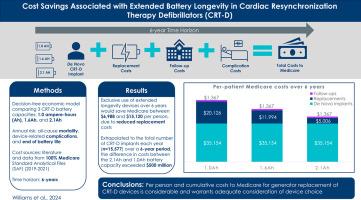
A decision tree was used to explore 3 battery capacities: 1.0 ampere-hours (Ah), 1.6Ah, and 2.1Ah. Yearly risk of all-cause mortality, device-related complications, and end of battery life were estimated. Over 6 years, estimated costs included device implantation, replacement, follow-up appointments, and complications.
Results
The average total costs to Medicare over 6 years were $41,527, $48,515, and $56,647 per person (USD 2023) for the 2.1 Ah, 1.6 Ah, and 1.0 Ah, respectively. The total per-person replacement cost for the 1.0-Ah devices was more than 4 times that of the 2.1-Ah devices ($20,126 vs $5,006). When extrapolated to the total number of CRT-D implants over a 6-year period, the difference in costs between 2.1-Ah and 1.0-Ah battery capacity exceeded $500 million.
Conclusion
Extended longevity CRT-D batteries demonstrate significant cost savings to Medicare over 6 years. These data indicate long-term economic considerations should be included in device selection.





 京公网安备 11010802042870号
京ICP备2023020795号-1
京公网安备 11010802042870号
京ICP备2023020795号-1

 分享
分享
 求助内容:
求助内容: 应助结果提醒方式:
 扫码关注我们
