{"title":"八种杀虫剂对suzukii果蝇及其蛹寄生虫Trichopria drosophilae的毒性","authors":"Huanhuan Gao, Yan Wang, Peng Chen, Ansheng Zhang, Xianhong Zhou, Qianying Zhuang","doi":"10.3390/insects15110910","DOIUrl":null,"url":null,"abstract":"<p><p>The pupal parasitoid <i>Trichopria drosophilae</i> (Hymenoptera: Diapriidae) has been evaluated as a biological agent of <i>Drosophila suzukii</i>. Integrated pest management strategies mostly rely on combined application of multiple insecticides and natural enemies. This study assessed the toxicity of eight common insecticides against <i>D. suzukii</i> in fruit orchards and the effects of semilethal and sublethal doses on <i>T. drosophilae</i>. The eight insecticides had higher toxicities to <i>D. suzukii</i> larvae with lower LC<sub>50</sub> values than those for adults. Adults and larvae showed high susceptibility to emamectin benzoate, spinetoram, lambda-cyhalothrin, abamectin, and sophocarpidine. The median lethal doses (LC<sub>50</sub>) of lambda-cyhalothrin and imidacloprid to <i>T. drosophilae</i> adults were 60.41 mg/L and 100.58 mg/L, higher than the toxicities of the other six insecticides. Applying chlorantraniliprole, emamectin benzoate, sophocarpidine, abamectin, azadirachtin, and spinetoram resulted in low toxicity to <i>D. suzukii</i> pupae. However, the exposure of <i>D. suzukii</i> pupae or larvae to these insecticides at semilethal and sublethal doses decreased the parasitism or eclosion rate of <i>T. drosophilae</i>. These results improve our understanding of the effects of insecticide residues on <i>T. drosophilae</i> development and provide a basis for the combined use of chemical and biological options for managing <i>D. suzukii</i>.</p>","PeriodicalId":13642,"journal":{"name":"Insects","volume":"15 11","pages":""},"PeriodicalIF":2.9000,"publicationDate":"2024-11-20","publicationTypes":"Journal Article","fieldsOfStudy":null,"isOpenAccess":false,"openAccessPdf":"https://www.ncbi.nlm.nih.gov/pmc/articles/PMC11594873/pdf/","citationCount":"0","resultStr":"{\"title\":\"Toxicity of Eight Insecticides on <i>Drosophila suzukii</i> and Its Pupal Parasitoid <i>Trichopria drosophilae</i>.\",\"authors\":\"Huanhuan Gao, Yan Wang, Peng Chen, Ansheng Zhang, Xianhong Zhou, Qianying Zhuang\",\"doi\":\"10.3390/insects15110910\",\"DOIUrl\":null,\"url\":null,\"abstract\":\"<p><p>The pupal parasitoid <i>Trichopria drosophilae</i> (Hymenoptera: Diapriidae) has been evaluated as a biological agent of <i>Drosophila suzukii</i>. Integrated pest management strategies mostly rely on combined application of multiple insecticides and natural enemies. This study assessed the toxicity of eight common insecticides against <i>D. suzukii</i> in fruit orchards and the effects of semilethal and sublethal doses on <i>T. drosophilae</i>. The eight insecticides had higher toxicities to <i>D. suzukii</i> larvae with lower LC<sub>50</sub> values than those for adults. Adults and larvae showed high susceptibility to emamectin benzoate, spinetoram, lambda-cyhalothrin, abamectin, and sophocarpidine. The median lethal doses (LC<sub>50</sub>) of lambda-cyhalothrin and imidacloprid to <i>T. drosophilae</i> adults were 60.41 mg/L and 100.58 mg/L, higher than the toxicities of the other six insecticides. Applying chlorantraniliprole, emamectin benzoate, sophocarpidine, abamectin, azadirachtin, and spinetoram resulted in low toxicity to <i>D. suzukii</i> pupae. However, the exposure of <i>D. suzukii</i> pupae or larvae to these insecticides at semilethal and sublethal doses decreased the parasitism or eclosion rate of <i>T. drosophilae</i>. These results improve our understanding of the effects of insecticide residues on <i>T. drosophilae</i> development and provide a basis for the combined use of chemical and biological options for managing <i>D. suzukii</i>.</p>\",\"PeriodicalId\":13642,\"journal\":{\"name\":\"Insects\",\"volume\":\"15 11\",\"pages\":\"\"},\"PeriodicalIF\":2.9000,\"publicationDate\":\"2024-11-20\",\"publicationTypes\":\"Journal Article\",\"fieldsOfStudy\":null,\"isOpenAccess\":false,\"openAccessPdf\":\"https://www.ncbi.nlm.nih.gov/pmc/articles/PMC11594873/pdf/\",\"citationCount\":\"0\",\"resultStr\":null,\"platform\":\"Semanticscholar\",\"paperid\":null,\"PeriodicalName\":\"Insects\",\"FirstCategoryId\":\"97\",\"ListUrlMain\":\"https://doi.org/10.3390/insects15110910\",\"RegionNum\":2,\"RegionCategory\":\"农林科学\",\"ArticlePicture\":[],\"TitleCN\":null,\"AbstractTextCN\":null,\"PMCID\":null,\"EPubDate\":\"\",\"PubModel\":\"\",\"JCR\":\"Q1\",\"JCRName\":\"ENTOMOLOGY\",\"Score\":null,\"Total\":0}","platform":"Semanticscholar","paperid":null,"PeriodicalName":"Insects","FirstCategoryId":"97","ListUrlMain":"https://doi.org/10.3390/insects15110910","RegionNum":2,"RegionCategory":"农林科学","ArticlePicture":[],"TitleCN":null,"AbstractTextCN":null,"PMCID":null,"EPubDate":"","PubModel":"","JCR":"Q1","JCRName":"ENTOMOLOGY","Score":null,"Total":0}
引用次数: 0
摘要
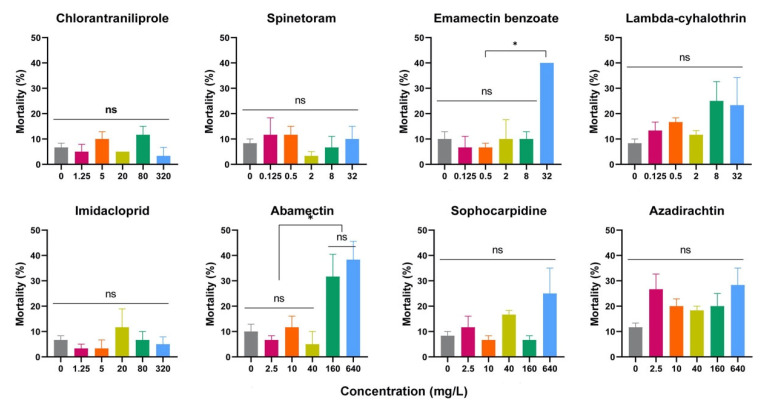
蛹寄生虫 Trichopria drosophilae(膜翅目:Diapriidae)已被评估为一种防治铃木果蝇的生物制剂。害虫综合治理战略大多依赖于多种杀虫剂和天敌的联合应用。本研究评估了八种常见杀虫剂对果园中苏氏果蝇的毒性,以及半致死剂量和亚致死剂量对果蝇天敌的影响。这八种杀虫剂对铃虫幼虫的毒性较高,半致死浓度低于成虫。成虫和幼虫对苯甲酸阿维菌素、辛硫磷、高效氯氟氰菊酯、阿维菌素和氟啶虫脒的敏感性较高。氰戊菊酯和吡虫啉对果蝇成虫的中位致死剂量(LC50)分别为 60.41 毫克/升和 100.58 毫克/升,高于其他六种杀虫剂的毒性。施用氯虫苯甲酰胺、苯甲酸阿维菌素、噻虫嗪、阿维菌素、唑虫酰胺和辛硫磷对铃虫蛹的毒性较低。然而,将 D. suzukii 蛹或幼虫暴露于半致死和亚致死剂量的这些杀虫剂中,会降低 T. drosophilae 的寄生率或羽化率。这些结果加深了我们对杀虫剂残留物对嗜毛滴虫发育的影响的理解,并为综合利用化学和生物方法来管理苏云金蝽提供了依据。
Toxicity of Eight Insecticides on Drosophila suzukii and Its Pupal Parasitoid Trichopria drosophilae.
The pupal parasitoid Trichopria drosophilae (Hymenoptera: Diapriidae) has been evaluated as a biological agent of Drosophila suzukii. Integrated pest management strategies mostly rely on combined application of multiple insecticides and natural enemies. This study assessed the toxicity of eight common insecticides against D. suzukii in fruit orchards and the effects of semilethal and sublethal doses on T. drosophilae. The eight insecticides had higher toxicities to D. suzukii larvae with lower LC50 values than those for adults. Adults and larvae showed high susceptibility to emamectin benzoate, spinetoram, lambda-cyhalothrin, abamectin, and sophocarpidine. The median lethal doses (LC50) of lambda-cyhalothrin and imidacloprid to T. drosophilae adults were 60.41 mg/L and 100.58 mg/L, higher than the toxicities of the other six insecticides. Applying chlorantraniliprole, emamectin benzoate, sophocarpidine, abamectin, azadirachtin, and spinetoram resulted in low toxicity to D. suzukii pupae. However, the exposure of D. suzukii pupae or larvae to these insecticides at semilethal and sublethal doses decreased the parasitism or eclosion rate of T. drosophilae. These results improve our understanding of the effects of insecticide residues on T. drosophilae development and provide a basis for the combined use of chemical and biological options for managing D. suzukii.
InsectsAgricultural and Biological Sciences-Insect Science
CiteScore
5.10
自引率
10.00%
发文量
1013
审稿时长
21.77 days
期刊介绍:
Insects (ISSN 2075-4450) is an international, peer-reviewed open access journal of entomology published by MDPI online quarterly. It publishes reviews, research papers and communications related to the biology, physiology and the behavior of insects and arthropods. Our aim is to encourage scientists to publish their experimental and theoretical results in as much detail as possible. There is no restriction on the length of the papers. The full experimental details must be provided so that the results can be reproduced. Electronic files regarding the full details of the experimental procedure, if unable to be published in a normal way, can be deposited as supplementary material.






 京公网安备 11010802042870号
京ICP备2023020795号-1
京公网安备 11010802042870号
京ICP备2023020795号-1

 分享
分享
 求助内容:
求助内容: 应助结果提醒方式:
 扫码关注我们
