Felicia R Carey, Neika Sharifian, Satbir Boparai, Erin K Dursa, Edward J Boyko, Rudolph P Rull
{"title":"千年队列研究(2001-2021 年)中的全因死亡率和 1990-1991 年海湾战争服役情况。","authors":"Felicia R Carey, Neika Sharifian, Satbir Boparai, Erin K Dursa, Edward J Boyko, Rudolph P Rull","doi":"10.1093/aje/kwae442","DOIUrl":null,"url":null,"abstract":"<p><p>Although 1990-1991 Gulf War deployment has been linked to worse health outcomes such as chronic multisymptom illness (CMI), often referred to as Gulf War Illness, among deployed Gulf War veterans (GWVs), less is known regarding Gulf War service and mortality. Using 20 years of longitudinal data from GWVs and Gulf War era personnel from the Millennium Cohort Study (2001-2021; n = 45 381), Cox proportional hazard models were used to estimate the relative effects of Gulf War service status, CMI, and their corresponding interaction on all-cause mortality. Although age- and sex-adjusted mortality ratios suggested GWVs had higher mortality rates than Gulf War era personnel, no association was observed between Gulf War service status and mortality risk. Screening positive for CMI was associated with greater risk of all-cause mortality compared with not screening positive across both GWV and Gulf War era personnel; interactions between CMI and Gulf War status were not statistically significant. This finding suggests CMI increases mortality risk regardless of whether the symptomology is associated with Gulf War deployment. Research is necessary to examine specific occupational and environmental exposures experienced during deployments and service in support of the 1990-1991 Gulf War and their association with death in this population.</p>","PeriodicalId":7472,"journal":{"name":"American journal of epidemiology","volume":" ","pages":"2765-2774"},"PeriodicalIF":4.1000,"publicationDate":"2025-10-07","publicationTypes":"Journal Article","fieldsOfStudy":null,"isOpenAccess":false,"openAccessPdf":"","citationCount":"0","resultStr":"{\"title\":\"All-cause mortality and 1990-1991 Gulf War service within the Millennium Cohort Study (2001-2021).\",\"authors\":\"Felicia R Carey, Neika Sharifian, Satbir Boparai, Erin K Dursa, Edward J Boyko, Rudolph P Rull\",\"doi\":\"10.1093/aje/kwae442\",\"DOIUrl\":null,\"url\":null,\"abstract\":\"<p><p>Although 1990-1991 Gulf War deployment has been linked to worse health outcomes such as chronic multisymptom illness (CMI), often referred to as Gulf War Illness, among deployed Gulf War veterans (GWVs), less is known regarding Gulf War service and mortality. Using 20 years of longitudinal data from GWVs and Gulf War era personnel from the Millennium Cohort Study (2001-2021; n = 45 381), Cox proportional hazard models were used to estimate the relative effects of Gulf War service status, CMI, and their corresponding interaction on all-cause mortality. Although age- and sex-adjusted mortality ratios suggested GWVs had higher mortality rates than Gulf War era personnel, no association was observed between Gulf War service status and mortality risk. Screening positive for CMI was associated with greater risk of all-cause mortality compared with not screening positive across both GWV and Gulf War era personnel; interactions between CMI and Gulf War status were not statistically significant. This finding suggests CMI increases mortality risk regardless of whether the symptomology is associated with Gulf War deployment. Research is necessary to examine specific occupational and environmental exposures experienced during deployments and service in support of the 1990-1991 Gulf War and their association with death in this population.</p>\",\"PeriodicalId\":7472,\"journal\":{\"name\":\"American journal of epidemiology\",\"volume\":\" \",\"pages\":\"2765-2774\"},\"PeriodicalIF\":4.1000,\"publicationDate\":\"2025-10-07\",\"publicationTypes\":\"Journal Article\",\"fieldsOfStudy\":null,\"isOpenAccess\":false,\"openAccessPdf\":\"\",\"citationCount\":\"0\",\"resultStr\":null,\"platform\":\"Semanticscholar\",\"paperid\":null,\"PeriodicalName\":\"American journal of epidemiology\",\"FirstCategoryId\":\"3\",\"ListUrlMain\":\"https://doi.org/10.1093/aje/kwae442\",\"RegionNum\":2,\"RegionCategory\":\"医学\",\"ArticlePicture\":[],\"TitleCN\":null,\"AbstractTextCN\":null,\"PMCID\":null,\"EPubDate\":\"\",\"PubModel\":\"\",\"JCR\":\"Q1\",\"JCRName\":\"PUBLIC, ENVIRONMENTAL & OCCUPATIONAL HEALTH\",\"Score\":null,\"Total\":0}","platform":"Semanticscholar","paperid":null,"PeriodicalName":"American journal of epidemiology","FirstCategoryId":"3","ListUrlMain":"https://doi.org/10.1093/aje/kwae442","RegionNum":2,"RegionCategory":"医学","ArticlePicture":[],"TitleCN":null,"AbstractTextCN":null,"PMCID":null,"EPubDate":"","PubModel":"","JCR":"Q1","JCRName":"PUBLIC, ENVIRONMENTAL & OCCUPATIONAL HEALTH","Score":null,"Total":0}
All-cause mortality and 1990-1991 Gulf War service within the Millennium Cohort Study (2001-2021).
Although 1990-1991 Gulf War deployment has been linked to worse health outcomes such as chronic multisymptom illness (CMI), often referred to as Gulf War Illness, among deployed Gulf War veterans (GWVs), less is known regarding Gulf War service and mortality. Using 20 years of longitudinal data from GWVs and Gulf War era personnel from the Millennium Cohort Study (2001-2021; n = 45 381), Cox proportional hazard models were used to estimate the relative effects of Gulf War service status, CMI, and their corresponding interaction on all-cause mortality. Although age- and sex-adjusted mortality ratios suggested GWVs had higher mortality rates than Gulf War era personnel, no association was observed between Gulf War service status and mortality risk. Screening positive for CMI was associated with greater risk of all-cause mortality compared with not screening positive across both GWV and Gulf War era personnel; interactions between CMI and Gulf War status were not statistically significant. This finding suggests CMI increases mortality risk regardless of whether the symptomology is associated with Gulf War deployment. Research is necessary to examine specific occupational and environmental exposures experienced during deployments and service in support of the 1990-1991 Gulf War and their association with death in this population.
期刊介绍:
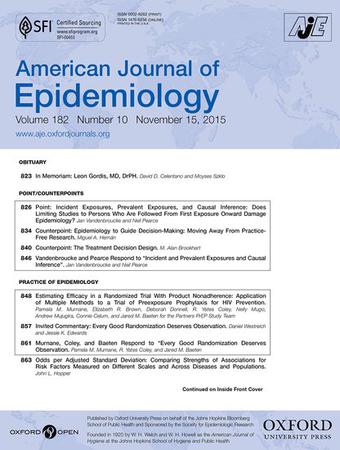
The American Journal of Epidemiology is the oldest and one of the premier epidemiologic journals devoted to the publication of empirical research findings, opinion pieces, and methodological developments in the field of epidemiologic research.
It is a peer-reviewed journal aimed at both fellow epidemiologists and those who use epidemiologic data, including public health workers and clinicians.




 京公网安备 11010802042870号
京ICP备2023020795号-1
京公网安备 11010802042870号
京ICP备2023020795号-1

 分享
分享
 求助内容:
求助内容: 应助结果提醒方式:
 扫码关注我们
