{"title":"通过整合杂合变异和 Hi-C 数据,对 Nanopore 基因组组装进行分期。","authors":"Jun Zhang, Fan Nie, Feng Luo, Jianxin Wang","doi":"10.1093/bioinformatics/btae712","DOIUrl":null,"url":null,"abstract":"<p><strong>Motivation: </strong>Haplotype-resolved genome assemblies serve as vital resources in various research domains, including genomics, medicine, and pangenomics. Algorithms employing Hi-C data to generate haplotype-resolved assemblies are particularly advantageous due to its ready availability. Existing methods primarily depend on mapping quality to filter out uninformative Hi-C alignments which may be susceptible to sequencing errors. Setting a high mapping quality threshold filters out numerous informative Hi-C alignments, whereas a low mapping quality threshold compromises the accuracy of Hi-C alignments. Maintaining high accuracy while retaining a maximum number of Hi-C alignments can be challenging.</p><p><strong>Results: </strong>In our experiments, heterozygous variations play an important role in filtering uninformative Hi-C alignments. Here, we introduce Diphase, a novel phasing tool that harnesses heterozygous variations to accurately identify the informative Hi-C alignments for phasing and to extend primary/alternate assemblies. Diphase leverages mapping quality and heterozygous variations to filter uninformative Hi-C alignments, thereby enhancing the accuracy of phasing and the detection of switches. To validate its performance, we conducted a comparative analysis of Diphase, FALCON-Phase, and GFAse on various human datasets. The results demonstrate that Diphase achieves a longer phased block N50 and exhibits higher phasing accuracy while maintaining a lower hamming error rate.</p><p><strong>Availability and implementation: </strong>The source code of Diphase is available at https://github.com/zhangjuncsu/Diphase.</p>","PeriodicalId":93899,"journal":{"name":"Bioinformatics (Oxford, England)","volume":" ","pages":""},"PeriodicalIF":5.4000,"publicationDate":"2024-11-28","publicationTypes":"Journal Article","fieldsOfStudy":null,"isOpenAccess":false,"openAccessPdf":"https://www.ncbi.nlm.nih.gov/pmc/articles/PMC11663803/pdf/","citationCount":"0","resultStr":"{\"title\":\"Phasing nanopore genome assembly by integrating heterozygous variations and Hi-C data.\",\"authors\":\"Jun Zhang, Fan Nie, Feng Luo, Jianxin Wang\",\"doi\":\"10.1093/bioinformatics/btae712\",\"DOIUrl\":null,\"url\":null,\"abstract\":\"<p><strong>Motivation: </strong>Haplotype-resolved genome assemblies serve as vital resources in various research domains, including genomics, medicine, and pangenomics. Algorithms employing Hi-C data to generate haplotype-resolved assemblies are particularly advantageous due to its ready availability. Existing methods primarily depend on mapping quality to filter out uninformative Hi-C alignments which may be susceptible to sequencing errors. Setting a high mapping quality threshold filters out numerous informative Hi-C alignments, whereas a low mapping quality threshold compromises the accuracy of Hi-C alignments. Maintaining high accuracy while retaining a maximum number of Hi-C alignments can be challenging.</p><p><strong>Results: </strong>In our experiments, heterozygous variations play an important role in filtering uninformative Hi-C alignments. Here, we introduce Diphase, a novel phasing tool that harnesses heterozygous variations to accurately identify the informative Hi-C alignments for phasing and to extend primary/alternate assemblies. Diphase leverages mapping quality and heterozygous variations to filter uninformative Hi-C alignments, thereby enhancing the accuracy of phasing and the detection of switches. To validate its performance, we conducted a comparative analysis of Diphase, FALCON-Phase, and GFAse on various human datasets. The results demonstrate that Diphase achieves a longer phased block N50 and exhibits higher phasing accuracy while maintaining a lower hamming error rate.</p><p><strong>Availability and implementation: </strong>The source code of Diphase is available at https://github.com/zhangjuncsu/Diphase.</p>\",\"PeriodicalId\":93899,\"journal\":{\"name\":\"Bioinformatics (Oxford, England)\",\"volume\":\" \",\"pages\":\"\"},\"PeriodicalIF\":5.4000,\"publicationDate\":\"2024-11-28\",\"publicationTypes\":\"Journal Article\",\"fieldsOfStudy\":null,\"isOpenAccess\":false,\"openAccessPdf\":\"https://www.ncbi.nlm.nih.gov/pmc/articles/PMC11663803/pdf/\",\"citationCount\":\"0\",\"resultStr\":null,\"platform\":\"Semanticscholar\",\"paperid\":null,\"PeriodicalName\":\"Bioinformatics (Oxford, England)\",\"FirstCategoryId\":\"1085\",\"ListUrlMain\":\"https://doi.org/10.1093/bioinformatics/btae712\",\"RegionNum\":0,\"RegionCategory\":null,\"ArticlePicture\":[],\"TitleCN\":null,\"AbstractTextCN\":null,\"PMCID\":null,\"EPubDate\":\"\",\"PubModel\":\"\",\"JCR\":\"\",\"JCRName\":\"\",\"Score\":null,\"Total\":0}","platform":"Semanticscholar","paperid":null,"PeriodicalName":"Bioinformatics (Oxford, England)","FirstCategoryId":"1085","ListUrlMain":"https://doi.org/10.1093/bioinformatics/btae712","RegionNum":0,"RegionCategory":null,"ArticlePicture":[],"TitleCN":null,"AbstractTextCN":null,"PMCID":null,"EPubDate":"","PubModel":"","JCR":"","JCRName":"","Score":null,"Total":0}
Phasing nanopore genome assembly by integrating heterozygous variations and Hi-C data.
Motivation: Haplotype-resolved genome assemblies serve as vital resources in various research domains, including genomics, medicine, and pangenomics. Algorithms employing Hi-C data to generate haplotype-resolved assemblies are particularly advantageous due to its ready availability. Existing methods primarily depend on mapping quality to filter out uninformative Hi-C alignments which may be susceptible to sequencing errors. Setting a high mapping quality threshold filters out numerous informative Hi-C alignments, whereas a low mapping quality threshold compromises the accuracy of Hi-C alignments. Maintaining high accuracy while retaining a maximum number of Hi-C alignments can be challenging.
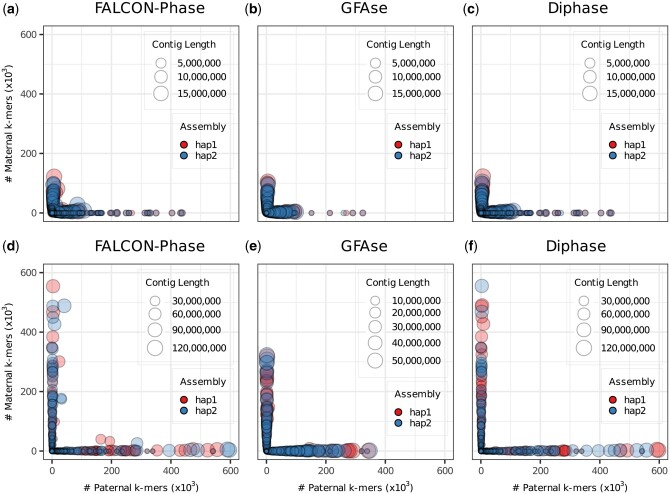
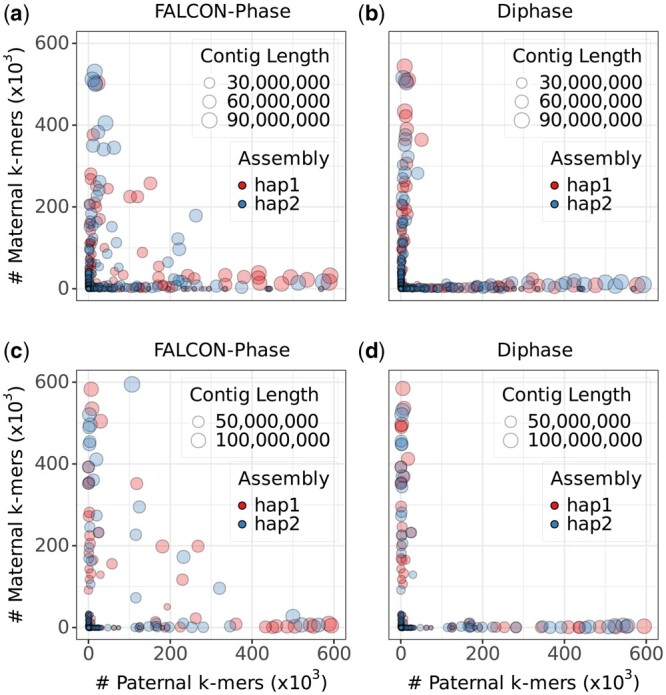
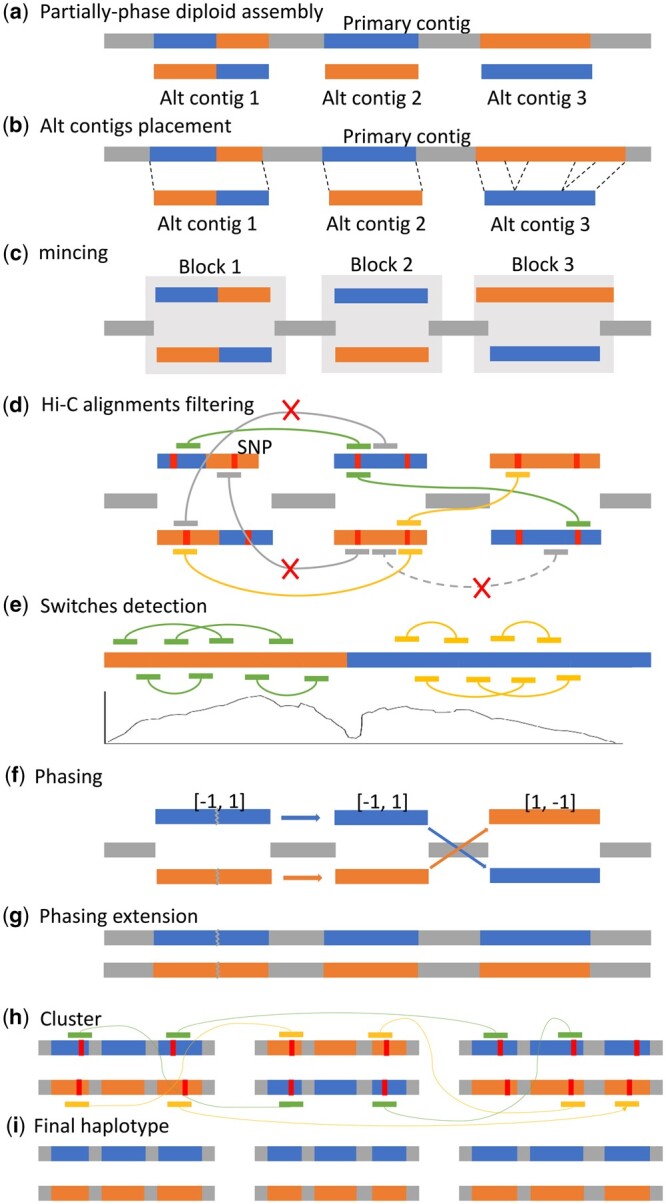
Results: In our experiments, heterozygous variations play an important role in filtering uninformative Hi-C alignments. Here, we introduce Diphase, a novel phasing tool that harnesses heterozygous variations to accurately identify the informative Hi-C alignments for phasing and to extend primary/alternate assemblies. Diphase leverages mapping quality and heterozygous variations to filter uninformative Hi-C alignments, thereby enhancing the accuracy of phasing and the detection of switches. To validate its performance, we conducted a comparative analysis of Diphase, FALCON-Phase, and GFAse on various human datasets. The results demonstrate that Diphase achieves a longer phased block N50 and exhibits higher phasing accuracy while maintaining a lower hamming error rate.
Availability and implementation: The source code of Diphase is available at https://github.com/zhangjuncsu/Diphase.




 京公网安备 11010802042870号
京ICP备2023020795号-1
京公网安备 11010802042870号
京ICP备2023020795号-1

 分享
分享

 求助内容:
求助内容: 应助结果提醒方式:
 扫码关注我们
