{"title":"非侵入性脑刺激治疗脑瘫儿童上肢的安全性和有效性:一项系统综述。","authors":"","doi":"10.1111/dmcn.16194","DOIUrl":null,"url":null,"abstract":"<p>Cerebral palsy (CP) is the most common physical disability in children. CP makes it hard for children to move and be independent. Many children with CP struggle to move their arms and hands. Good therapies for CP can improve movement and brain function, but they can take a lot of time and be costly. Non-invasive brain stimulation (NIBS) might improve function more quickly and effectively. NIBS uses magnetic (repetitive transcranial magnetic stimulation, or rTMS) or electrical (transcranial direct current stimulation, or tDCS) forces to help the brain communicate better with the muscles.</p><p>This study looked at whether rTMS and tDCS are safe for children with CP and if they can help with arm and hand movement. The researchers thoroughly reviewed all the studies published on these questions and found 19 relevant ones. They found that NIBS is safe for children with CP. However, they also found that rTMS and tDCS probably do not change arm and hand function and activity.</p>","PeriodicalId":50587,"journal":{"name":"Developmental Medicine and Child Neurology","volume":"67 2","pages":"e44"},"PeriodicalIF":3.7000,"publicationDate":"2024-11-28","publicationTypes":"Journal Article","fieldsOfStudy":null,"isOpenAccess":false,"openAccessPdf":"https://onlinelibrary.wiley.com/doi/epdf/10.1111/dmcn.16194","citationCount":"0","resultStr":"{\"title\":\"Safety and efficacy of non-invasive brain stimulation for the upper extremities in children with cerebral palsy: A systematic review\",\"authors\":\"\",\"doi\":\"10.1111/dmcn.16194\",\"DOIUrl\":null,\"url\":null,\"abstract\":\"<p>Cerebral palsy (CP) is the most common physical disability in children. CP makes it hard for children to move and be independent. Many children with CP struggle to move their arms and hands. Good therapies for CP can improve movement and brain function, but they can take a lot of time and be costly. Non-invasive brain stimulation (NIBS) might improve function more quickly and effectively. NIBS uses magnetic (repetitive transcranial magnetic stimulation, or rTMS) or electrical (transcranial direct current stimulation, or tDCS) forces to help the brain communicate better with the muscles.</p><p>This study looked at whether rTMS and tDCS are safe for children with CP and if they can help with arm and hand movement. The researchers thoroughly reviewed all the studies published on these questions and found 19 relevant ones. They found that NIBS is safe for children with CP. However, they also found that rTMS and tDCS probably do not change arm and hand function and activity.</p>\",\"PeriodicalId\":50587,\"journal\":{\"name\":\"Developmental Medicine and Child Neurology\",\"volume\":\"67 2\",\"pages\":\"e44\"},\"PeriodicalIF\":3.7000,\"publicationDate\":\"2024-11-28\",\"publicationTypes\":\"Journal Article\",\"fieldsOfStudy\":null,\"isOpenAccess\":false,\"openAccessPdf\":\"https://onlinelibrary.wiley.com/doi/epdf/10.1111/dmcn.16194\",\"citationCount\":\"0\",\"resultStr\":null,\"platform\":\"Semanticscholar\",\"paperid\":null,\"PeriodicalName\":\"Developmental Medicine and Child Neurology\",\"FirstCategoryId\":\"3\",\"ListUrlMain\":\"https://onlinelibrary.wiley.com/doi/10.1111/dmcn.16194\",\"RegionNum\":2,\"RegionCategory\":\"医学\",\"ArticlePicture\":[],\"TitleCN\":null,\"AbstractTextCN\":null,\"PMCID\":null,\"EPubDate\":\"\",\"PubModel\":\"\",\"JCR\":\"Q1\",\"JCRName\":\"CLINICAL NEUROLOGY\",\"Score\":null,\"Total\":0}","platform":"Semanticscholar","paperid":null,"PeriodicalName":"Developmental Medicine and Child Neurology","FirstCategoryId":"3","ListUrlMain":"https://onlinelibrary.wiley.com/doi/10.1111/dmcn.16194","RegionNum":2,"RegionCategory":"医学","ArticlePicture":[],"TitleCN":null,"AbstractTextCN":null,"PMCID":null,"EPubDate":"","PubModel":"","JCR":"Q1","JCRName":"CLINICAL NEUROLOGY","Score":null,"Total":0}
Safety and efficacy of non-invasive brain stimulation for the upper extremities in children with cerebral palsy: A systematic review
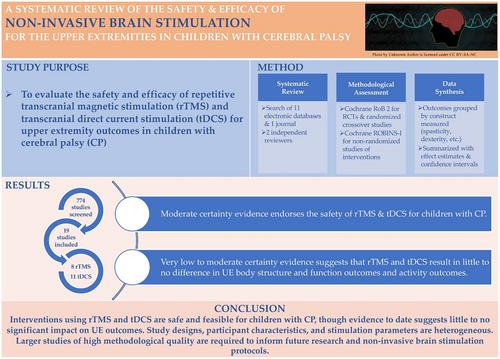
Cerebral palsy (CP) is the most common physical disability in children. CP makes it hard for children to move and be independent. Many children with CP struggle to move their arms and hands. Good therapies for CP can improve movement and brain function, but they can take a lot of time and be costly. Non-invasive brain stimulation (NIBS) might improve function more quickly and effectively. NIBS uses magnetic (repetitive transcranial magnetic stimulation, or rTMS) or electrical (transcranial direct current stimulation, or tDCS) forces to help the brain communicate better with the muscles.
This study looked at whether rTMS and tDCS are safe for children with CP and if they can help with arm and hand movement. The researchers thoroughly reviewed all the studies published on these questions and found 19 relevant ones. They found that NIBS is safe for children with CP. However, they also found that rTMS and tDCS probably do not change arm and hand function and activity.
期刊介绍:
Wiley-Blackwell is pleased to publish Developmental Medicine & Child Neurology (DMCN), a Mac Keith Press publication and official journal of the American Academy for Cerebral Palsy and Developmental Medicine (AACPDM) and the British Paediatric Neurology Association (BPNA).
For over 50 years, DMCN has defined the field of paediatric neurology and neurodisability and is one of the world’s leading journals in the whole field of paediatrics. DMCN disseminates a range of information worldwide to improve the lives of disabled children and their families. The high quality of published articles is maintained by expert review, including independent statistical assessment, before acceptance.




 京公网安备 11010802042870号
京ICP备2023020795号-1
京公网安备 11010802042870号
京ICP备2023020795号-1

 分享
分享
 求助内容:
求助内容: 应助结果提醒方式:
 扫码关注我们
