{"title":"肿瘤科护士如何体验中国临终关怀服务?描述性现象学研究。","authors":"Yingjuan Huang, Qianping Zhang, Cui Wang, Huifen Wang, Jing Zhao, Jianfei Chen, Qing Zhang, Jinbing Bai, Zhijie Zou, Juying Hu, Yanqun Liu","doi":"10.1186/s12904-024-01597-y","DOIUrl":null,"url":null,"abstract":"<p><strong>Objectives: </strong>To explore the experiences and perceptions of oncology nurses providing hospice care in Chinese mainland.</p><p><strong>Methods: </strong>A descriptive phenomenological research method was utilized to describe experience of hospice care among oncology nurses. Eighteen oncology nurses were selected for interviews using purposive sampling from four grade A tertiary hospitals in Wuhan, Hubei province, China. The face-to-face semi-structured interviews were used to collect data. Data were recorded using NVivo 12.0 and analyzed using the Colaizzi's 7-step phenomenological data analysis method.</p><p><strong>Results: </strong>The interview data generated five major themes: (1) end-of-life care for oncology patients, (2) support and care for family members, (3) self-limitation and psychological distress, (4) culture and external environment constraints, and (5) self-coping and gains.</p><p><strong>Conclusions: </strong>In Chinese mainland, oncology nurses encountered barriers and negative emotions in conducting hospice care, but have also made strides in the promotion of hospice care. In the future, the use of different traditional Chinese medicine technology to facilitate symptom management in end-of-life patients should be explored, and more tools to assist in providing psychological care and communication should be developed.</p>","PeriodicalId":48945,"journal":{"name":"BMC Palliative Care","volume":"23 1","pages":"272"},"PeriodicalIF":3.7000,"publicationDate":"2024-11-29","publicationTypes":"Journal Article","fieldsOfStudy":null,"isOpenAccess":false,"openAccessPdf":"https://www.ncbi.nlm.nih.gov/pmc/articles/PMC11605921/pdf/","citationCount":"0","resultStr":"{\"title\":\"How do work in oncology unit nurses experience hospice care provision in China? A descriptive phenomenological study.\",\"authors\":\"Yingjuan Huang, Qianping Zhang, Cui Wang, Huifen Wang, Jing Zhao, Jianfei Chen, Qing Zhang, Jinbing Bai, Zhijie Zou, Juying Hu, Yanqun Liu\",\"doi\":\"10.1186/s12904-024-01597-y\",\"DOIUrl\":null,\"url\":null,\"abstract\":\"<p><strong>Objectives: </strong>To explore the experiences and perceptions of oncology nurses providing hospice care in Chinese mainland.</p><p><strong>Methods: </strong>A descriptive phenomenological research method was utilized to describe experience of hospice care among oncology nurses. Eighteen oncology nurses were selected for interviews using purposive sampling from four grade A tertiary hospitals in Wuhan, Hubei province, China. The face-to-face semi-structured interviews were used to collect data. Data were recorded using NVivo 12.0 and analyzed using the Colaizzi's 7-step phenomenological data analysis method.</p><p><strong>Results: </strong>The interview data generated five major themes: (1) end-of-life care for oncology patients, (2) support and care for family members, (3) self-limitation and psychological distress, (4) culture and external environment constraints, and (5) self-coping and gains.</p><p><strong>Conclusions: </strong>In Chinese mainland, oncology nurses encountered barriers and negative emotions in conducting hospice care, but have also made strides in the promotion of hospice care. In the future, the use of different traditional Chinese medicine technology to facilitate symptom management in end-of-life patients should be explored, and more tools to assist in providing psychological care and communication should be developed.</p>\",\"PeriodicalId\":48945,\"journal\":{\"name\":\"BMC Palliative Care\",\"volume\":\"23 1\",\"pages\":\"272\"},\"PeriodicalIF\":3.7000,\"publicationDate\":\"2024-11-29\",\"publicationTypes\":\"Journal Article\",\"fieldsOfStudy\":null,\"isOpenAccess\":false,\"openAccessPdf\":\"https://www.ncbi.nlm.nih.gov/pmc/articles/PMC11605921/pdf/\",\"citationCount\":\"0\",\"resultStr\":null,\"platform\":\"Semanticscholar\",\"paperid\":null,\"PeriodicalName\":\"BMC Palliative Care\",\"FirstCategoryId\":\"3\",\"ListUrlMain\":\"https://doi.org/10.1186/s12904-024-01597-y\",\"RegionNum\":2,\"RegionCategory\":\"医学\",\"ArticlePicture\":[],\"TitleCN\":null,\"AbstractTextCN\":null,\"PMCID\":null,\"EPubDate\":\"\",\"PubModel\":\"\",\"JCR\":\"Q2\",\"JCRName\":\"HEALTH CARE SCIENCES & SERVICES\",\"Score\":null,\"Total\":0}","platform":"Semanticscholar","paperid":null,"PeriodicalName":"BMC Palliative Care","FirstCategoryId":"3","ListUrlMain":"https://doi.org/10.1186/s12904-024-01597-y","RegionNum":2,"RegionCategory":"医学","ArticlePicture":[],"TitleCN":null,"AbstractTextCN":null,"PMCID":null,"EPubDate":"","PubModel":"","JCR":"Q2","JCRName":"HEALTH CARE SCIENCES & SERVICES","Score":null,"Total":0}
How do work in oncology unit nurses experience hospice care provision in China? A descriptive phenomenological study.
Objectives: To explore the experiences and perceptions of oncology nurses providing hospice care in Chinese mainland.
Methods: A descriptive phenomenological research method was utilized to describe experience of hospice care among oncology nurses. Eighteen oncology nurses were selected for interviews using purposive sampling from four grade A tertiary hospitals in Wuhan, Hubei province, China. The face-to-face semi-structured interviews were used to collect data. Data were recorded using NVivo 12.0 and analyzed using the Colaizzi's 7-step phenomenological data analysis method.
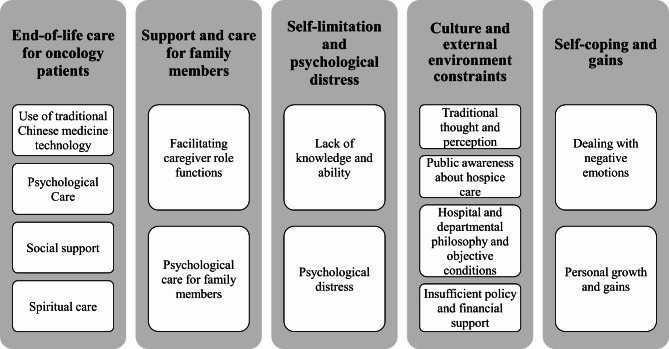
Results: The interview data generated five major themes: (1) end-of-life care for oncology patients, (2) support and care for family members, (3) self-limitation and psychological distress, (4) culture and external environment constraints, and (5) self-coping and gains.
Conclusions: In Chinese mainland, oncology nurses encountered barriers and negative emotions in conducting hospice care, but have also made strides in the promotion of hospice care. In the future, the use of different traditional Chinese medicine technology to facilitate symptom management in end-of-life patients should be explored, and more tools to assist in providing psychological care and communication should be developed.
期刊介绍:
BMC Palliative Care is an open access journal publishing original peer-reviewed research articles in the clinical, scientific, ethical and policy issues, local and international, regarding all aspects of hospice and palliative care for the dying and for those with profound suffering related to chronic illness.




 京公网安备 11010802042870号
京ICP备2023020795号-1
京公网安备 11010802042870号
京ICP备2023020795号-1

 分享
分享
 求助内容:
求助内容: 应助结果提醒方式:
 扫码关注我们
