{"title":"单胎、双胞胎和配偶之间饮食摄入的家族相似性:基于家庭观察的荟萃分析。","authors":"Farshad Teymoori, Mahdi Akbarzadeh, Mostafa Norouzzadeh, Mitra Kazemi Jahromi, Hossein Farhadnejad, Niloufar Saber, Hamid Ahmadirad, Mina Jahangiri, Danial Habibi, Parisa Riahi, Ebrahim Mokhtari, Maryam Zarkesh, Maryam S Daneshpour, Parvin Mirmiran, Mohammadreza Vafa","doi":"10.1186/s12889-024-20798-x","DOIUrl":null,"url":null,"abstract":"<p><strong>Background: </strong>Familial dietary intake can be influenced by both genetic and environmental factors; the current study aimed to examine the role of these two factors on dietary intake by investigating the resemblance in energy, nutrient, and food group intake among spouses and siblings in twin and family-based studies.</p><p><strong>Methods: </strong>The online literature databases, including PubMed, Scopus, Web of Science, and Cochrane Library were systematically searched up to September 2024. The pooled correlation coefficient (r) of studies was calculated using Fisher's z and standard error (SE) of z's of all studies and our final results were reported in six groups including non-twin siblings, monozygotic (MZ) twins, dizygotic (DZ) twins, all-twins, all siblings, and spouse.</p><p><strong>Results: </strong>Our findings on 30 observational studies indicate that siblings, especially MZ twins, tend to have similar dietary intake, with high correlations for vegetables (r: 0.59), red meat (r: 0.58), and fruits (r: 0.56). Among DZ twins, the lowest correlations were observed for eggs (r: 0.07), soft drinks (r: 0.14), and daily intake of simple carbohydrates (r: 0.17). DZ twins did not show significant differences in dietary resemblance compared to non-twin siblings. Among spouses, the highest correlations for dietary intake were found for polyunsaturated fats (r: 0.41), saturated fats (r: 0.40), and total fats (r: 0.39), while the lowest correlation was for protein intake (r: 0.24).</p><p><strong>Conclusions: </strong>While the greatest similarity in dietary intake was observed among MZ twins, no significant difference in dietary intake similarity was noted between DZ twins and non-twin siblings. Furthermore, spouses exhibited a significant degree of similarity in their dietary consumption. Therefore, dietary intake is shaped by a complex interplay of genetic and environmental factors, warranting further investigation to validate these observations.</p>","PeriodicalId":9039,"journal":{"name":"BMC Public Health","volume":"24 1","pages":"3328"},"PeriodicalIF":4.4000,"publicationDate":"2024-11-29","publicationTypes":"Journal Article","fieldsOfStudy":null,"isOpenAccess":false,"openAccessPdf":"https://www.ncbi.nlm.nih.gov/pmc/articles/PMC11605858/pdf/","citationCount":"0","resultStr":"{\"title\":\"Familial resemblance in dietary intake among singletons, twins, and spouses: a meta-analysis of family-based observations.\",\"authors\":\"Farshad Teymoori, Mahdi Akbarzadeh, Mostafa Norouzzadeh, Mitra Kazemi Jahromi, Hossein Farhadnejad, Niloufar Saber, Hamid Ahmadirad, Mina Jahangiri, Danial Habibi, Parisa Riahi, Ebrahim Mokhtari, Maryam Zarkesh, Maryam S Daneshpour, Parvin Mirmiran, Mohammadreza Vafa\",\"doi\":\"10.1186/s12889-024-20798-x\",\"DOIUrl\":null,\"url\":null,\"abstract\":\"<p><strong>Background: </strong>Familial dietary intake can be influenced by both genetic and environmental factors; the current study aimed to examine the role of these two factors on dietary intake by investigating the resemblance in energy, nutrient, and food group intake among spouses and siblings in twin and family-based studies.</p><p><strong>Methods: </strong>The online literature databases, including PubMed, Scopus, Web of Science, and Cochrane Library were systematically searched up to September 2024. The pooled correlation coefficient (r) of studies was calculated using Fisher's z and standard error (SE) of z's of all studies and our final results were reported in six groups including non-twin siblings, monozygotic (MZ) twins, dizygotic (DZ) twins, all-twins, all siblings, and spouse.</p><p><strong>Results: </strong>Our findings on 30 observational studies indicate that siblings, especially MZ twins, tend to have similar dietary intake, with high correlations for vegetables (r: 0.59), red meat (r: 0.58), and fruits (r: 0.56). Among DZ twins, the lowest correlations were observed for eggs (r: 0.07), soft drinks (r: 0.14), and daily intake of simple carbohydrates (r: 0.17). DZ twins did not show significant differences in dietary resemblance compared to non-twin siblings. Among spouses, the highest correlations for dietary intake were found for polyunsaturated fats (r: 0.41), saturated fats (r: 0.40), and total fats (r: 0.39), while the lowest correlation was for protein intake (r: 0.24).</p><p><strong>Conclusions: </strong>While the greatest similarity in dietary intake was observed among MZ twins, no significant difference in dietary intake similarity was noted between DZ twins and non-twin siblings. Furthermore, spouses exhibited a significant degree of similarity in their dietary consumption. Therefore, dietary intake is shaped by a complex interplay of genetic and environmental factors, warranting further investigation to validate these observations.</p>\",\"PeriodicalId\":9039,\"journal\":{\"name\":\"BMC Public Health\",\"volume\":\"24 1\",\"pages\":\"3328\"},\"PeriodicalIF\":4.4000,\"publicationDate\":\"2024-11-29\",\"publicationTypes\":\"Journal Article\",\"fieldsOfStudy\":null,\"isOpenAccess\":false,\"openAccessPdf\":\"https://www.ncbi.nlm.nih.gov/pmc/articles/PMC11605858/pdf/\",\"citationCount\":\"0\",\"resultStr\":null,\"platform\":\"Semanticscholar\",\"paperid\":null,\"PeriodicalName\":\"BMC Public Health\",\"FirstCategoryId\":\"3\",\"ListUrlMain\":\"https://doi.org/10.1186/s12889-024-20798-x\",\"RegionNum\":2,\"RegionCategory\":\"医学\",\"ArticlePicture\":[],\"TitleCN\":null,\"AbstractTextCN\":null,\"PMCID\":null,\"EPubDate\":\"\",\"PubModel\":\"\",\"JCR\":\"Q1\",\"JCRName\":\"PUBLIC, ENVIRONMENTAL & OCCUPATIONAL HEALTH\",\"Score\":null,\"Total\":0}","platform":"Semanticscholar","paperid":null,"PeriodicalName":"BMC Public Health","FirstCategoryId":"3","ListUrlMain":"https://doi.org/10.1186/s12889-024-20798-x","RegionNum":2,"RegionCategory":"医学","ArticlePicture":[],"TitleCN":null,"AbstractTextCN":null,"PMCID":null,"EPubDate":"","PubModel":"","JCR":"Q1","JCRName":"PUBLIC, ENVIRONMENTAL & OCCUPATIONAL HEALTH","Score":null,"Total":0}
Familial resemblance in dietary intake among singletons, twins, and spouses: a meta-analysis of family-based observations.
Background: Familial dietary intake can be influenced by both genetic and environmental factors; the current study aimed to examine the role of these two factors on dietary intake by investigating the resemblance in energy, nutrient, and food group intake among spouses and siblings in twin and family-based studies.
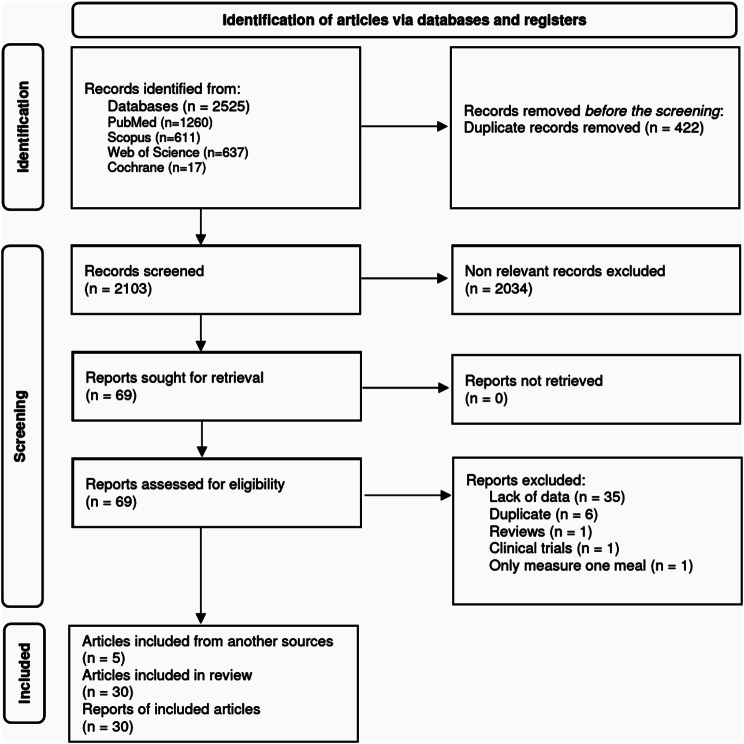
Methods: The online literature databases, including PubMed, Scopus, Web of Science, and Cochrane Library were systematically searched up to September 2024. The pooled correlation coefficient (r) of studies was calculated using Fisher's z and standard error (SE) of z's of all studies and our final results were reported in six groups including non-twin siblings, monozygotic (MZ) twins, dizygotic (DZ) twins, all-twins, all siblings, and spouse.
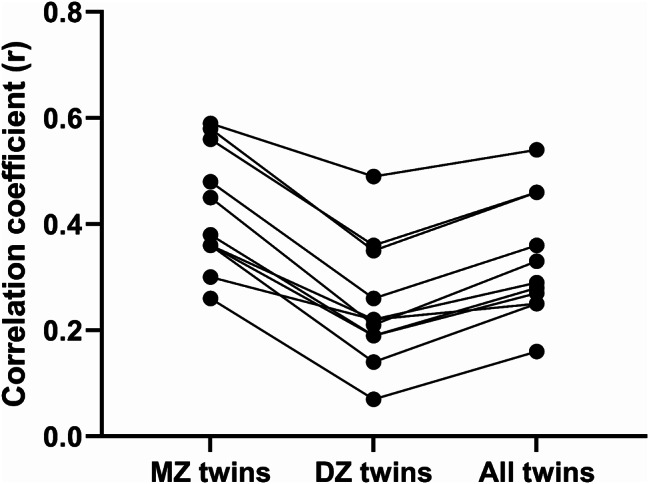
Results: Our findings on 30 observational studies indicate that siblings, especially MZ twins, tend to have similar dietary intake, with high correlations for vegetables (r: 0.59), red meat (r: 0.58), and fruits (r: 0.56). Among DZ twins, the lowest correlations were observed for eggs (r: 0.07), soft drinks (r: 0.14), and daily intake of simple carbohydrates (r: 0.17). DZ twins did not show significant differences in dietary resemblance compared to non-twin siblings. Among spouses, the highest correlations for dietary intake were found for polyunsaturated fats (r: 0.41), saturated fats (r: 0.40), and total fats (r: 0.39), while the lowest correlation was for protein intake (r: 0.24).
Conclusions: While the greatest similarity in dietary intake was observed among MZ twins, no significant difference in dietary intake similarity was noted between DZ twins and non-twin siblings. Furthermore, spouses exhibited a significant degree of similarity in their dietary consumption. Therefore, dietary intake is shaped by a complex interplay of genetic and environmental factors, warranting further investigation to validate these observations.
期刊介绍:
BMC Public Health is an open access, peer-reviewed journal that considers articles on the epidemiology of disease and the understanding of all aspects of public health. The journal has a special focus on the social determinants of health, the environmental, behavioral, and occupational correlates of health and disease, and the impact of health policies, practices and interventions on the community.





 京公网安备 11010802042870号
京ICP备2023020795号-1
京公网安备 11010802042870号
京ICP备2023020795号-1

 分享
分享
 求助内容:
求助内容: 应助结果提醒方式:
 扫码关注我们
