Anna M. Streiber, Tim C. van den Beukel, Ilse vom Hofe, Julia Neitzel, Meike W. Vernooij, Daniel Bos, Elisabeth J. Vinke
{"title":"心脑轴动脉钙化与认知能力随时间的变化","authors":"Anna M. Streiber, Tim C. van den Beukel, Ilse vom Hofe, Julia Neitzel, Meike W. Vernooij, Daniel Bos, Elisabeth J. Vinke","doi":"10.1002/alz.14374","DOIUrl":null,"url":null,"abstract":"<div>\n \n \n <section>\n \n <h3> BACKGROUND</h3>\n \n <p>While cross-sectional studies suggest a link between arteriosclerosis and cognition, longitudinal research is lacking. We investigated how arteriosclerosis in the heart–brain axis is related to cognitive performance trajectories over time.</p>\n </section>\n \n <section>\n \n <h3> METHODS</h3>\n \n <p>Within the population-based Rotterdam Study, 2368 participants underwent noncontrast CT to quantify arterial calcification, a hallmark of arteriosclerosis, in five major arteries in the heart–brain axis. Following this scan, participants underwent repeated cognitive testing. The association between baseline calcification and longitudinal cognitive test performance was investigated using mixed models.</p>\n </section>\n \n <section>\n \n <h3> RESULTS</h3>\n \n <p>Higher calcification was associated with worse baseline cognitive performance across domains (e.g., <i>β</i> for global cognition per 10-percentile increase of intracranial carotid artery calcification: −0.01 [95% confidence interval (CI): −0.03, −0.00]). Cognition declined faster across all cognitive tests, specifically for the intracranial carotid artery (<i>p</i> ≤ 0.001).</p>\n </section>\n \n <section>\n \n <h3> DISCUSSION</h3>\n \n <p>Arterial calcification is associated with accelerated cognitive decline across domains, especially for arteries closer to the brain. This effect may be attributable to hemodynamic changes preceding neurovascular damage.</p>\n </section>\n \n <section>\n \n <h3> Highlights</h3>\n \n <div>\n <ul>\n \n <li>Arterial calcification is related to accelerated cognitive decline.</li>\n \n <li>Arterial calcification closer to the brain exerts the most influence on cognitive decline.</li>\n \n <li>Vascular damage influences cognitive decline across various domains.</li>\n </ul>\n </div>\n </section>\n </div>","PeriodicalId":7471,"journal":{"name":"Alzheimer's & Dementia","volume":"21 1","pages":""},"PeriodicalIF":11.1000,"publicationDate":"2024-12-03","publicationTypes":"Journal Article","fieldsOfStudy":null,"isOpenAccess":false,"openAccessPdf":"https://onlinelibrary.wiley.com/doi/epdf/10.1002/alz.14374","citationCount":"0","resultStr":"{\"title\":\"Arterial calcification in the heart–brain axis and cognitive performance over time\",\"authors\":\"Anna M. Streiber, Tim C. van den Beukel, Ilse vom Hofe, Julia Neitzel, Meike W. Vernooij, Daniel Bos, Elisabeth J. Vinke\",\"doi\":\"10.1002/alz.14374\",\"DOIUrl\":null,\"url\":null,\"abstract\":\"<div>\\n \\n \\n <section>\\n \\n <h3> BACKGROUND</h3>\\n \\n <p>While cross-sectional studies suggest a link between arteriosclerosis and cognition, longitudinal research is lacking. We investigated how arteriosclerosis in the heart–brain axis is related to cognitive performance trajectories over time.</p>\\n </section>\\n \\n <section>\\n \\n <h3> METHODS</h3>\\n \\n <p>Within the population-based Rotterdam Study, 2368 participants underwent noncontrast CT to quantify arterial calcification, a hallmark of arteriosclerosis, in five major arteries in the heart–brain axis. Following this scan, participants underwent repeated cognitive testing. The association between baseline calcification and longitudinal cognitive test performance was investigated using mixed models.</p>\\n </section>\\n \\n <section>\\n \\n <h3> RESULTS</h3>\\n \\n <p>Higher calcification was associated with worse baseline cognitive performance across domains (e.g., <i>β</i> for global cognition per 10-percentile increase of intracranial carotid artery calcification: −0.01 [95% confidence interval (CI): −0.03, −0.00]). Cognition declined faster across all cognitive tests, specifically for the intracranial carotid artery (<i>p</i> ≤ 0.001).</p>\\n </section>\\n \\n <section>\\n \\n <h3> DISCUSSION</h3>\\n \\n <p>Arterial calcification is associated with accelerated cognitive decline across domains, especially for arteries closer to the brain. This effect may be attributable to hemodynamic changes preceding neurovascular damage.</p>\\n </section>\\n \\n <section>\\n \\n <h3> Highlights</h3>\\n \\n <div>\\n <ul>\\n \\n <li>Arterial calcification is related to accelerated cognitive decline.</li>\\n \\n <li>Arterial calcification closer to the brain exerts the most influence on cognitive decline.</li>\\n \\n <li>Vascular damage influences cognitive decline across various domains.</li>\\n </ul>\\n </div>\\n </section>\\n </div>\",\"PeriodicalId\":7471,\"journal\":{\"name\":\"Alzheimer's & Dementia\",\"volume\":\"21 1\",\"pages\":\"\"},\"PeriodicalIF\":11.1000,\"publicationDate\":\"2024-12-03\",\"publicationTypes\":\"Journal Article\",\"fieldsOfStudy\":null,\"isOpenAccess\":false,\"openAccessPdf\":\"https://onlinelibrary.wiley.com/doi/epdf/10.1002/alz.14374\",\"citationCount\":\"0\",\"resultStr\":null,\"platform\":\"Semanticscholar\",\"paperid\":null,\"PeriodicalName\":\"Alzheimer's & Dementia\",\"FirstCategoryId\":\"3\",\"ListUrlMain\":\"https://alz-journals.onlinelibrary.wiley.com/doi/10.1002/alz.14374\",\"RegionNum\":1,\"RegionCategory\":\"医学\",\"ArticlePicture\":[],\"TitleCN\":null,\"AbstractTextCN\":null,\"PMCID\":null,\"EPubDate\":\"\",\"PubModel\":\"\",\"JCR\":\"Q1\",\"JCRName\":\"CLINICAL NEUROLOGY\",\"Score\":null,\"Total\":0}","platform":"Semanticscholar","paperid":null,"PeriodicalName":"Alzheimer's & Dementia","FirstCategoryId":"3","ListUrlMain":"https://alz-journals.onlinelibrary.wiley.com/doi/10.1002/alz.14374","RegionNum":1,"RegionCategory":"医学","ArticlePicture":[],"TitleCN":null,"AbstractTextCN":null,"PMCID":null,"EPubDate":"","PubModel":"","JCR":"Q1","JCRName":"CLINICAL NEUROLOGY","Score":null,"Total":0}
Arterial calcification in the heart–brain axis and cognitive performance over time
BACKGROUND
While cross-sectional studies suggest a link between arteriosclerosis and cognition, longitudinal research is lacking. We investigated how arteriosclerosis in the heart–brain axis is related to cognitive performance trajectories over time.
METHODS
Within the population-based Rotterdam Study, 2368 participants underwent noncontrast CT to quantify arterial calcification, a hallmark of arteriosclerosis, in five major arteries in the heart–brain axis. Following this scan, participants underwent repeated cognitive testing. The association between baseline calcification and longitudinal cognitive test performance was investigated using mixed models.
RESULTS
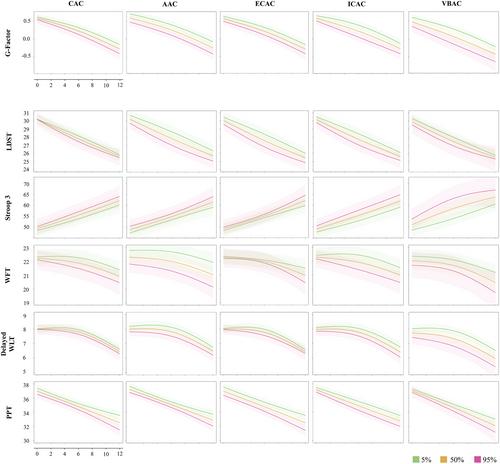
Higher calcification was associated with worse baseline cognitive performance across domains (e.g., β for global cognition per 10-percentile increase of intracranial carotid artery calcification: −0.01 [95% confidence interval (CI): −0.03, −0.00]). Cognition declined faster across all cognitive tests, specifically for the intracranial carotid artery (p ≤ 0.001).
DISCUSSION
Arterial calcification is associated with accelerated cognitive decline across domains, especially for arteries closer to the brain. This effect may be attributable to hemodynamic changes preceding neurovascular damage.
Highlights
Arterial calcification is related to accelerated cognitive decline.
Arterial calcification closer to the brain exerts the most influence on cognitive decline.
Vascular damage influences cognitive decline across various domains.
期刊介绍:
Alzheimer's & Dementia is a peer-reviewed journal that aims to bridge knowledge gaps in dementia research by covering the entire spectrum, from basic science to clinical trials to social and behavioral investigations. It provides a platform for rapid communication of new findings and ideas, optimal translation of research into practical applications, increasing knowledge across diverse disciplines for early detection, diagnosis, and intervention, and identifying promising new research directions. In July 2008, Alzheimer's & Dementia was accepted for indexing by MEDLINE, recognizing its scientific merit and contribution to Alzheimer's research.






 京公网安备 11010802042870号
京ICP备2023020795号-1
京公网安备 11010802042870号
京ICP备2023020795号-1

 分享
分享
 求助内容:
求助内容: 应助结果提醒方式:
 扫码关注我们
