Ange W. Embo-Ibouanga , Michel Nguyen , Lucie Paloque , Jean-Patrick Joly , Raphaël Bikanga , Jean-Michel Augereau , Anne Robert , Gérard Audran , Philippe Mellet , Jérôme Boissier , Françoise Benoit-Vical , Sylvain. R. A. Marque
{"title":"动态共价键(DCB):烷氧胺类药物抗曼氏血吸虫和恶性疟原虫的键稳定性。","authors":"Ange W. Embo-Ibouanga , Michel Nguyen , Lucie Paloque , Jean-Patrick Joly , Raphaël Bikanga , Jean-Michel Augereau , Anne Robert , Gérard Audran , Philippe Mellet , Jérôme Boissier , Françoise Benoit-Vical , Sylvain. R. A. Marque","doi":"10.1039/d4ob01644k","DOIUrl":null,"url":null,"abstract":"<div><div>Dynamic covalent bonding (DCB) has been a rising concept for the past several years in materials sciences. This article describes how the bond lability involved in DCB is applied to develop drugs against tropical parasitic diseases such as malaria and bilharziasis. Recently, we showed that some alkoxyamines (typical molecules exhibiting DCB) exhibit <em>in vitro</em> activities against <em>S. mansoni</em> (for , 100% worm mortality in 48 hours at 10 μg ml<sup>−1</sup>) and <em>P. falciparum</em> (for , IC<sub>50</sub> = 270 nM). Here, the combination of enzymatic-physical (solvent effect) activation or of enzymatic-chemical (acetal hydrolysis) activation is used to develop alkoxyamines that show activity against both parasites. The enzymatic step controls the specificity of the drug.</div></div>","PeriodicalId":96,"journal":{"name":"Organic & Biomolecular Chemistry","volume":"23 3","pages":"Pages 734-743"},"PeriodicalIF":2.8000,"publicationDate":"2024-11-04","publicationTypes":"Journal Article","fieldsOfStudy":null,"isOpenAccess":false,"openAccessPdf":"","citationCount":"0","resultStr":"{\"title\":\"Dynamic covalent bonding (DCB): the bond lability of alkoxyamines as drugs against Schistosoma mansoni and Plasmodium falciparum†\",\"authors\":\"Ange W. Embo-Ibouanga , Michel Nguyen , Lucie Paloque , Jean-Patrick Joly , Raphaël Bikanga , Jean-Michel Augereau , Anne Robert , Gérard Audran , Philippe Mellet , Jérôme Boissier , Françoise Benoit-Vical , Sylvain. R. A. Marque\",\"doi\":\"10.1039/d4ob01644k\",\"DOIUrl\":null,\"url\":null,\"abstract\":\"<div><div>Dynamic covalent bonding (DCB) has been a rising concept for the past several years in materials sciences. This article describes how the bond lability involved in DCB is applied to develop drugs against tropical parasitic diseases such as malaria and bilharziasis. Recently, we showed that some alkoxyamines (typical molecules exhibiting DCB) exhibit <em>in vitro</em> activities against <em>S. mansoni</em> (for , 100% worm mortality in 48 hours at 10 μg ml<sup>−1</sup>) and <em>P. falciparum</em> (for , IC<sub>50</sub> = 270 nM). Here, the combination of enzymatic-physical (solvent effect) activation or of enzymatic-chemical (acetal hydrolysis) activation is used to develop alkoxyamines that show activity against both parasites. The enzymatic step controls the specificity of the drug.</div></div>\",\"PeriodicalId\":96,\"journal\":{\"name\":\"Organic & Biomolecular Chemistry\",\"volume\":\"23 3\",\"pages\":\"Pages 734-743\"},\"PeriodicalIF\":2.8000,\"publicationDate\":\"2024-11-04\",\"publicationTypes\":\"Journal Article\",\"fieldsOfStudy\":null,\"isOpenAccess\":false,\"openAccessPdf\":\"\",\"citationCount\":\"0\",\"resultStr\":null,\"platform\":\"Semanticscholar\",\"paperid\":null,\"PeriodicalName\":\"Organic & Biomolecular Chemistry\",\"FirstCategoryId\":\"92\",\"ListUrlMain\":\"https://www.sciencedirect.com/org/science/article/pii/S1477052024010383\",\"RegionNum\":3,\"RegionCategory\":\"化学\",\"ArticlePicture\":[],\"TitleCN\":null,\"AbstractTextCN\":null,\"PMCID\":null,\"EPubDate\":\"2024/12/3 0:00:00\",\"PubModel\":\"Epub\",\"JCR\":\"Q1\",\"JCRName\":\"CHEMISTRY, ORGANIC\",\"Score\":null,\"Total\":0}","platform":"Semanticscholar","paperid":null,"PeriodicalName":"Organic & Biomolecular Chemistry","FirstCategoryId":"92","ListUrlMain":"https://www.sciencedirect.com/org/science/article/pii/S1477052024010383","RegionNum":3,"RegionCategory":"化学","ArticlePicture":[],"TitleCN":null,"AbstractTextCN":null,"PMCID":null,"EPubDate":"2024/12/3 0:00:00","PubModel":"Epub","JCR":"Q1","JCRName":"CHEMISTRY, ORGANIC","Score":null,"Total":0}
Dynamic covalent bonding (DCB): the bond lability of alkoxyamines as drugs against Schistosoma mansoni and Plasmodium falciparum†
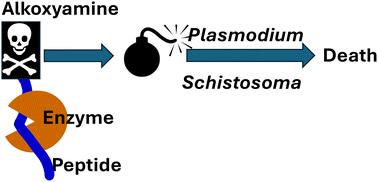
Dynamic covalent bonding (DCB) has been a rising concept for the past several years in materials sciences. This article describes how the bond lability involved in DCB is applied to develop drugs against tropical parasitic diseases such as malaria and bilharziasis. Recently, we showed that some alkoxyamines (typical molecules exhibiting DCB) exhibit in vitro activities against S. mansoni (for , 100% worm mortality in 48 hours at 10 μg ml−1) and P. falciparum (for , IC50 = 270 nM). Here, the combination of enzymatic-physical (solvent effect) activation or of enzymatic-chemical (acetal hydrolysis) activation is used to develop alkoxyamines that show activity against both parasites. The enzymatic step controls the specificity of the drug.
期刊介绍:
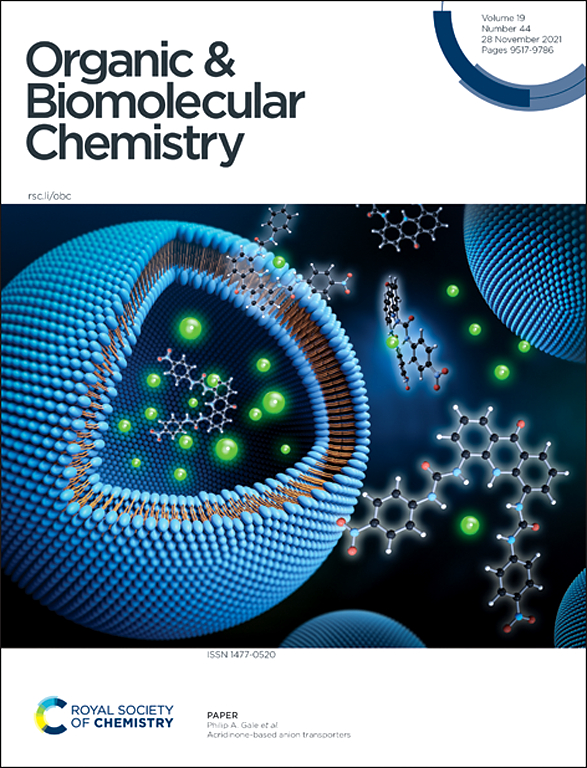
Organic & Biomolecular Chemistry is an international journal using integrated research in chemistry-organic chemistry. Founded in 2003 by the Royal Society of Chemistry, the journal is published in Semimonthly issues and has been indexed by SCIE, a leading international database. The journal focuses on the key research and cutting-edge progress in the field of chemistry-organic chemistry, publishes and reports the research results in this field in a timely manner, and is committed to becoming a window and platform for rapid academic exchanges among peers in this field. The journal's impact factor in 2023 is 2.9, and its CiteScore is 5.5.




 京公网安备 11010802042870号
京ICP备2023020795号-1
京公网安备 11010802042870号
京ICP备2023020795号-1

 分享
分享
 求助内容:
求助内容: 应助结果提醒方式:
 扫码关注我们
