{"title":"脑脊液漏联合血液生物标志物预测后路腰椎融合后伤口愈合不良:机器学习分析","authors":"Zixiang Pang, Yangqin Ou, Jiawei Liang, Shengbin Huang, Jiayi Chen, Shengsheng Huang, Qian Wei, Yuzhen Liu, Hongyuan Qin, Yuanming Chen","doi":"10.2147/IJGM.S487967","DOIUrl":null,"url":null,"abstract":"<p><strong>Objective: </strong>The objective of this study aimed to investigate the risk factors for poor wound healing (PWH) after posterior lumbar spinal fusion. Currently, there is limited research on the application of machine learning in analyzing PWH after spinal surgery. Thus, our primary aim is to using machine learning identify these risk factors and construct a clinical risk prediction model.</p><p><strong>Methods: </strong>We retrospectively reviewed 2516 patients who underwent posterior lumbar spinal fusion at Guangxi Medical University's Second Affiliated Hospital between August 2021 and August 2023. The data was divided into test and validation groups in a 7:3 ratio. In the test group, logistic regression analysis, support vector machine (SVM), random forest (RF), decision tree (DT), XGboost, Naïve Bayes (NB), k-Nearest Neighbor (KNN), and Multi-Layer Perceptron (MLP) were used to identify specific variables. The top six models from the eight machine learning models with the highest area under curve (AUC) values were selected and used to construct a dynamic nomograms model. Model performance was evaluated using receiver operating characteristic (ROC) and calibration curves. The model's internal performance was then verified in the validation group using ROC and calibration curves.</p><p><strong>Results: </strong>Data from 2516 patients were collected, with 411 eligible cases selected. By combining logistic regression analysis with six machine learning algorithms, this study identified six predictors associated with PWH: subcutaneous lumbar spine index(SLSI), albumin, postoperative glucose, cerebrospinal fluid leakage(CSFL), neutrophil (NEU), and C-reactive protein(CRP). These predictors were used to develop a prediction model, visually represented through a nomogram. The AUC value in the test group was 0.981, and the C-index of the model was 0.986 (95% CI 0.966-0.995), indicating excellent predictive capability. Calibration curve analysis showed good consistency between nomogram-predicted values and actual measurements.</p><p><strong>Conclusion: </strong>SLSI, albumin, postoperative glucose, CSFL, NEU and CRP were identified as significant risk factors for PWH after posterior lumbar spinal fusion. The developed prediction model exhibited excellent predictive accuracy and usefulness.</p>","PeriodicalId":14131,"journal":{"name":"International Journal of General Medicine","volume":"17 ","pages":"5479-5491"},"PeriodicalIF":2.0000,"publicationDate":"2024-11-25","publicationTypes":"Journal Article","fieldsOfStudy":null,"isOpenAccess":false,"openAccessPdf":"https://www.ncbi.nlm.nih.gov/pmc/articles/PMC11606187/pdf/","citationCount":"0","resultStr":"{\"title\":\"Cerebrospinal Fluid Leakage Combined with Blood Biomarkers Predicts Poor Wound Healing After Posterior Lumbar Spinal Fusion: A Machine Learning Analysis.\",\"authors\":\"Zixiang Pang, Yangqin Ou, Jiawei Liang, Shengbin Huang, Jiayi Chen, Shengsheng Huang, Qian Wei, Yuzhen Liu, Hongyuan Qin, Yuanming Chen\",\"doi\":\"10.2147/IJGM.S487967\",\"DOIUrl\":null,\"url\":null,\"abstract\":\"<p><strong>Objective: </strong>The objective of this study aimed to investigate the risk factors for poor wound healing (PWH) after posterior lumbar spinal fusion. Currently, there is limited research on the application of machine learning in analyzing PWH after spinal surgery. Thus, our primary aim is to using machine learning identify these risk factors and construct a clinical risk prediction model.</p><p><strong>Methods: </strong>We retrospectively reviewed 2516 patients who underwent posterior lumbar spinal fusion at Guangxi Medical University's Second Affiliated Hospital between August 2021 and August 2023. The data was divided into test and validation groups in a 7:3 ratio. In the test group, logistic regression analysis, support vector machine (SVM), random forest (RF), decision tree (DT), XGboost, Naïve Bayes (NB), k-Nearest Neighbor (KNN), and Multi-Layer Perceptron (MLP) were used to identify specific variables. The top six models from the eight machine learning models with the highest area under curve (AUC) values were selected and used to construct a dynamic nomograms model. Model performance was evaluated using receiver operating characteristic (ROC) and calibration curves. The model's internal performance was then verified in the validation group using ROC and calibration curves.</p><p><strong>Results: </strong>Data from 2516 patients were collected, with 411 eligible cases selected. By combining logistic regression analysis with six machine learning algorithms, this study identified six predictors associated with PWH: subcutaneous lumbar spine index(SLSI), albumin, postoperative glucose, cerebrospinal fluid leakage(CSFL), neutrophil (NEU), and C-reactive protein(CRP). These predictors were used to develop a prediction model, visually represented through a nomogram. The AUC value in the test group was 0.981, and the C-index of the model was 0.986 (95% CI 0.966-0.995), indicating excellent predictive capability. Calibration curve analysis showed good consistency between nomogram-predicted values and actual measurements.</p><p><strong>Conclusion: </strong>SLSI, albumin, postoperative glucose, CSFL, NEU and CRP were identified as significant risk factors for PWH after posterior lumbar spinal fusion. The developed prediction model exhibited excellent predictive accuracy and usefulness.</p>\",\"PeriodicalId\":14131,\"journal\":{\"name\":\"International Journal of General Medicine\",\"volume\":\"17 \",\"pages\":\"5479-5491\"},\"PeriodicalIF\":2.0000,\"publicationDate\":\"2024-11-25\",\"publicationTypes\":\"Journal Article\",\"fieldsOfStudy\":null,\"isOpenAccess\":false,\"openAccessPdf\":\"https://www.ncbi.nlm.nih.gov/pmc/articles/PMC11606187/pdf/\",\"citationCount\":\"0\",\"resultStr\":null,\"platform\":\"Semanticscholar\",\"paperid\":null,\"PeriodicalName\":\"International Journal of General Medicine\",\"FirstCategoryId\":\"3\",\"ListUrlMain\":\"https://doi.org/10.2147/IJGM.S487967\",\"RegionNum\":4,\"RegionCategory\":\"医学\",\"ArticlePicture\":[],\"TitleCN\":null,\"AbstractTextCN\":null,\"PMCID\":null,\"EPubDate\":\"2024/1/1 0:00:00\",\"PubModel\":\"eCollection\",\"JCR\":\"Q2\",\"JCRName\":\"MEDICINE, GENERAL & INTERNAL\",\"Score\":null,\"Total\":0}","platform":"Semanticscholar","paperid":null,"PeriodicalName":"International Journal of General Medicine","FirstCategoryId":"3","ListUrlMain":"https://doi.org/10.2147/IJGM.S487967","RegionNum":4,"RegionCategory":"医学","ArticlePicture":[],"TitleCN":null,"AbstractTextCN":null,"PMCID":null,"EPubDate":"2024/1/1 0:00:00","PubModel":"eCollection","JCR":"Q2","JCRName":"MEDICINE, GENERAL & INTERNAL","Score":null,"Total":0}
引用次数: 0
摘要
目的:本研究旨在探讨后路腰椎融合术后创面愈合不良的危险因素。目前,机器学习在脊柱术后PWH分析中的应用研究有限。因此,我们的主要目标是使用机器学习识别这些风险因素并构建临床风险预测模型。方法:我们回顾性分析了2021年8月至2023年8月在广西医科大学第二附属医院行后路腰椎融合术的2516例患者。数据按7:3的比例分为测试组和验证组。在测试组中,使用逻辑回归分析、支持向量机(SVM)、随机森林(RF)、决策树(DT)、XGboost、Naïve贝叶斯(NB)、k-近邻(KNN)和多层感知器(MLP)来识别特定变量。从8个机器学习模型中选择曲线下面积(AUC)值最高的前6个模型,用于构建动态模态图模型。采用受试者工作特征(ROC)和校准曲线评价模型的性能。然后在验证组中使用ROC曲线和校准曲线验证模型的内部性能。结果:共收集2516例患者资料,筛选出411例符合条件的病例。通过将逻辑回归分析与6种机器学习算法相结合,本研究确定了与PWH相关的6个预测因子:皮下腰椎指数(SLSI)、白蛋白、术后血糖、脑脊液漏(CSFL)、中性粒细胞(NEU)和c反应蛋白(CRP)。这些预测因子被用来建立一个预测模型,通过一个表形图直观地表示。试验组的AUC值为0.981,模型的c指数为0.986 (95% CI 0.966 ~ 0.995),具有较好的预测能力。标定曲线分析表明,模态图预测值与实际测量值具有较好的一致性。结论:SLSI、白蛋白、术后血糖、CSFL、NEU、CRP是后路腰椎融合术后PWH的重要危险因素。所建立的预测模型具有良好的预测精度和实用性。
Cerebrospinal Fluid Leakage Combined with Blood Biomarkers Predicts Poor Wound Healing After Posterior Lumbar Spinal Fusion: A Machine Learning Analysis.
Objective: The objective of this study aimed to investigate the risk factors for poor wound healing (PWH) after posterior lumbar spinal fusion. Currently, there is limited research on the application of machine learning in analyzing PWH after spinal surgery. Thus, our primary aim is to using machine learning identify these risk factors and construct a clinical risk prediction model.
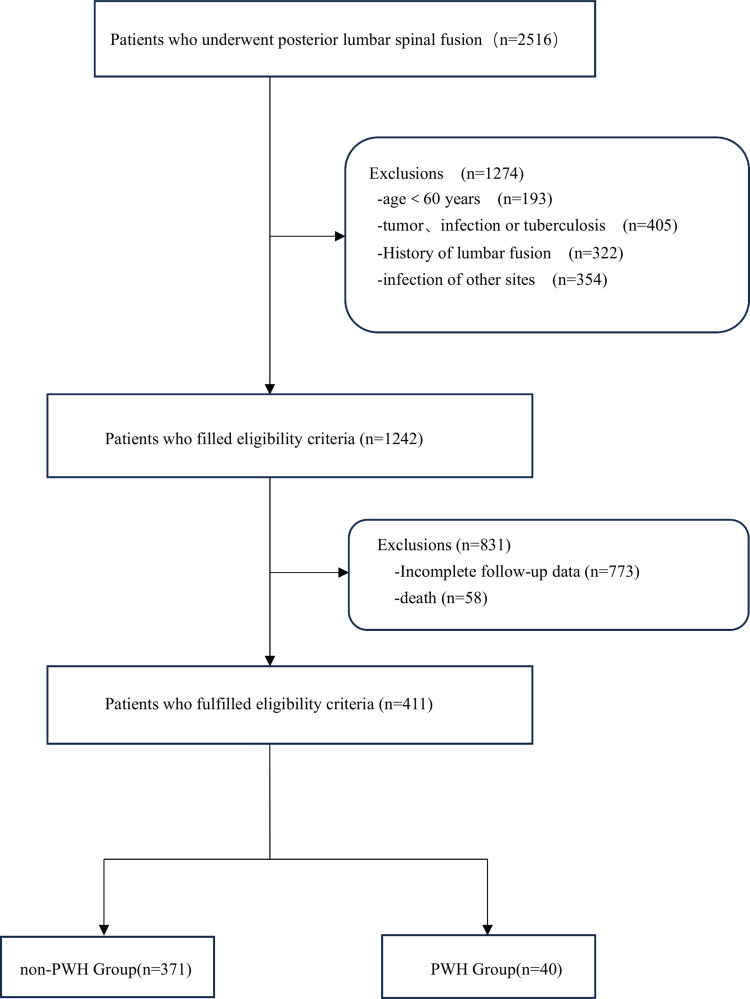
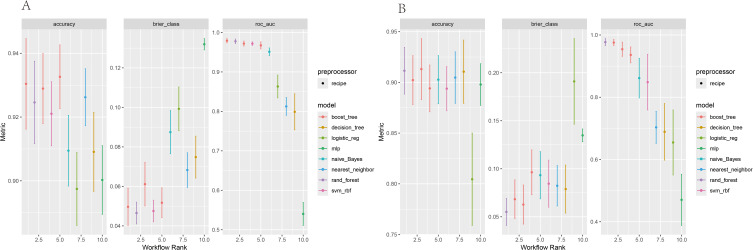
Methods: We retrospectively reviewed 2516 patients who underwent posterior lumbar spinal fusion at Guangxi Medical University's Second Affiliated Hospital between August 2021 and August 2023. The data was divided into test and validation groups in a 7:3 ratio. In the test group, logistic regression analysis, support vector machine (SVM), random forest (RF), decision tree (DT), XGboost, Naïve Bayes (NB), k-Nearest Neighbor (KNN), and Multi-Layer Perceptron (MLP) were used to identify specific variables. The top six models from the eight machine learning models with the highest area under curve (AUC) values were selected and used to construct a dynamic nomograms model. Model performance was evaluated using receiver operating characteristic (ROC) and calibration curves. The model's internal performance was then verified in the validation group using ROC and calibration curves.
Results: Data from 2516 patients were collected, with 411 eligible cases selected. By combining logistic regression analysis with six machine learning algorithms, this study identified six predictors associated with PWH: subcutaneous lumbar spine index(SLSI), albumin, postoperative glucose, cerebrospinal fluid leakage(CSFL), neutrophil (NEU), and C-reactive protein(CRP). These predictors were used to develop a prediction model, visually represented through a nomogram. The AUC value in the test group was 0.981, and the C-index of the model was 0.986 (95% CI 0.966-0.995), indicating excellent predictive capability. Calibration curve analysis showed good consistency between nomogram-predicted values and actual measurements.
Conclusion: SLSI, albumin, postoperative glucose, CSFL, NEU and CRP were identified as significant risk factors for PWH after posterior lumbar spinal fusion. The developed prediction model exhibited excellent predictive accuracy and usefulness.
期刊介绍:
The International Journal of General Medicine is an international, peer-reviewed, open access journal that focuses on general and internal medicine, pathogenesis, epidemiology, diagnosis, monitoring and treatment protocols. The journal is characterized by the rapid reporting of reviews, original research and clinical studies across all disease areas.
A key focus of the journal is the elucidation of disease processes and management protocols resulting in improved outcomes for the patient. Patient perspectives such as satisfaction, quality of life, health literacy and communication and their role in developing new healthcare programs and optimizing clinical outcomes are major areas of interest for the journal.
As of 1st April 2019, the International Journal of General Medicine will no longer consider meta-analyses for publication.





 京公网安备 11010802042870号
京ICP备2023020795号-1
京公网安备 11010802042870号
京ICP备2023020795号-1

 分享
分享
 求助内容:
求助内容: 应助结果提醒方式:
 扫码关注我们
