{"title":"外伤性脊髓损伤后30天和90天再入院率:系统回顾和荟萃分析。","authors":"Marjan Hesari, Seyed Danial Alizadeh, Hamid Malekzadeh, Reza Tabrizi, Mohammad-Rasoul Jalalifar, Alireza Shahmohammadi, Zahra Eskandari, Zahra Ghodsi, James Harrop, Vafa Rahimi-Movaghar","doi":"10.1177/21925682241306358","DOIUrl":null,"url":null,"abstract":"<p><p>Study DesignSystematic Review and Meta-Analyses.ObjectiveTo assess the 30- and 90-day readmission rates after a traumatic spinal cord injury (SCI).MethodsA systematic search of MEDLINE and Embase was performed. The period was from inception to June 2022, with no language restrictions. All studies investigating the 30- and/or 90-day readmission rate following traumatic SCI were included. A random-effects model to combine effect sizes in our meta-analysis was applied.ResultsSeven out of 2959 reports met eligibility. The mean age of the patients was 50.2 ± 19.9, with a male-to-female ratio of 2.4:1. The most common traumatic SCI was cervical injury (55.3%). The meta-analysis model revealed a 30-day readmission rate of 14.2% after traumatic SCI, with heterogeneity in the studies. The 90-day readmission rate was 35.7%, with homogeneity in the studies. The meta-regression analysis found significant positive associations between cervical and thoracolumbar injuries and patient age and the 30-day readmission rate, while male sex demonstrated a negative association with the 30-day readmission rate. The 30-day readmission rate following index admission was 13.1% and the 30-day readmission rate after rehabilitation facilities was 15.8%. The study found that the 30-day readmission rate in the USA was 14.0%.ConclusionsThere is no doubt that readmission is an adverse health outcome. The outcome is also complex and multifaceted, which makes it difficult to predict. Injury level is 1 of the predictors that affect readmission, making it essential to consider factors during discharge planning for high-risk people to reduce 30-day readmission rates.</p>","PeriodicalId":12680,"journal":{"name":"Global Spine Journal","volume":" ","pages":"2480-2489"},"PeriodicalIF":3.0000,"publicationDate":"2025-05-01","publicationTypes":"Journal Article","fieldsOfStudy":null,"isOpenAccess":false,"openAccessPdf":"https://www.ncbi.nlm.nih.gov/pmc/articles/PMC11618844/pdf/","citationCount":"0","resultStr":"{\"title\":\"30- and 90-Day Readmission Rates Following Traumatic Spinal Cord Injury: A Systematic Review and Meta-Analyses.\",\"authors\":\"Marjan Hesari, Seyed Danial Alizadeh, Hamid Malekzadeh, Reza Tabrizi, Mohammad-Rasoul Jalalifar, Alireza Shahmohammadi, Zahra Eskandari, Zahra Ghodsi, James Harrop, Vafa Rahimi-Movaghar\",\"doi\":\"10.1177/21925682241306358\",\"DOIUrl\":null,\"url\":null,\"abstract\":\"<p><p>Study DesignSystematic Review and Meta-Analyses.ObjectiveTo assess the 30- and 90-day readmission rates after a traumatic spinal cord injury (SCI).MethodsA systematic search of MEDLINE and Embase was performed. The period was from inception to June 2022, with no language restrictions. All studies investigating the 30- and/or 90-day readmission rate following traumatic SCI were included. A random-effects model to combine effect sizes in our meta-analysis was applied.ResultsSeven out of 2959 reports met eligibility. The mean age of the patients was 50.2 ± 19.9, with a male-to-female ratio of 2.4:1. The most common traumatic SCI was cervical injury (55.3%). The meta-analysis model revealed a 30-day readmission rate of 14.2% after traumatic SCI, with heterogeneity in the studies. The 90-day readmission rate was 35.7%, with homogeneity in the studies. The meta-regression analysis found significant positive associations between cervical and thoracolumbar injuries and patient age and the 30-day readmission rate, while male sex demonstrated a negative association with the 30-day readmission rate. The 30-day readmission rate following index admission was 13.1% and the 30-day readmission rate after rehabilitation facilities was 15.8%. The study found that the 30-day readmission rate in the USA was 14.0%.ConclusionsThere is no doubt that readmission is an adverse health outcome. The outcome is also complex and multifaceted, which makes it difficult to predict. Injury level is 1 of the predictors that affect readmission, making it essential to consider factors during discharge planning for high-risk people to reduce 30-day readmission rates.</p>\",\"PeriodicalId\":12680,\"journal\":{\"name\":\"Global Spine Journal\",\"volume\":\" \",\"pages\":\"2480-2489\"},\"PeriodicalIF\":3.0000,\"publicationDate\":\"2025-05-01\",\"publicationTypes\":\"Journal Article\",\"fieldsOfStudy\":null,\"isOpenAccess\":false,\"openAccessPdf\":\"https://www.ncbi.nlm.nih.gov/pmc/articles/PMC11618844/pdf/\",\"citationCount\":\"0\",\"resultStr\":null,\"platform\":\"Semanticscholar\",\"paperid\":null,\"PeriodicalName\":\"Global Spine Journal\",\"FirstCategoryId\":\"3\",\"ListUrlMain\":\"https://doi.org/10.1177/21925682241306358\",\"RegionNum\":3,\"RegionCategory\":\"医学\",\"ArticlePicture\":[],\"TitleCN\":null,\"AbstractTextCN\":null,\"PMCID\":null,\"EPubDate\":\"2024/12/4 0:00:00\",\"PubModel\":\"Epub\",\"JCR\":\"Q2\",\"JCRName\":\"CLINICAL NEUROLOGY\",\"Score\":null,\"Total\":0}","platform":"Semanticscholar","paperid":null,"PeriodicalName":"Global Spine Journal","FirstCategoryId":"3","ListUrlMain":"https://doi.org/10.1177/21925682241306358","RegionNum":3,"RegionCategory":"医学","ArticlePicture":[],"TitleCN":null,"AbstractTextCN":null,"PMCID":null,"EPubDate":"2024/12/4 0:00:00","PubModel":"Epub","JCR":"Q2","JCRName":"CLINICAL NEUROLOGY","Score":null,"Total":0}
30- and 90-Day Readmission Rates Following Traumatic Spinal Cord Injury: A Systematic Review and Meta-Analyses.
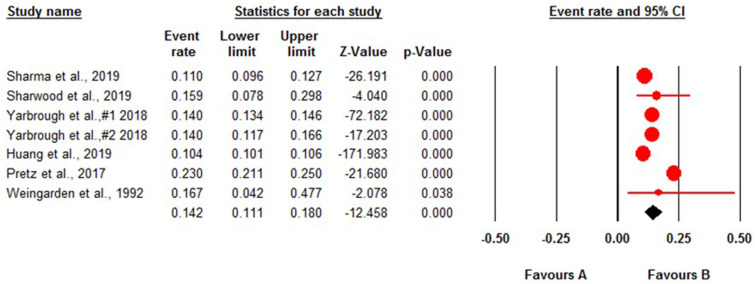
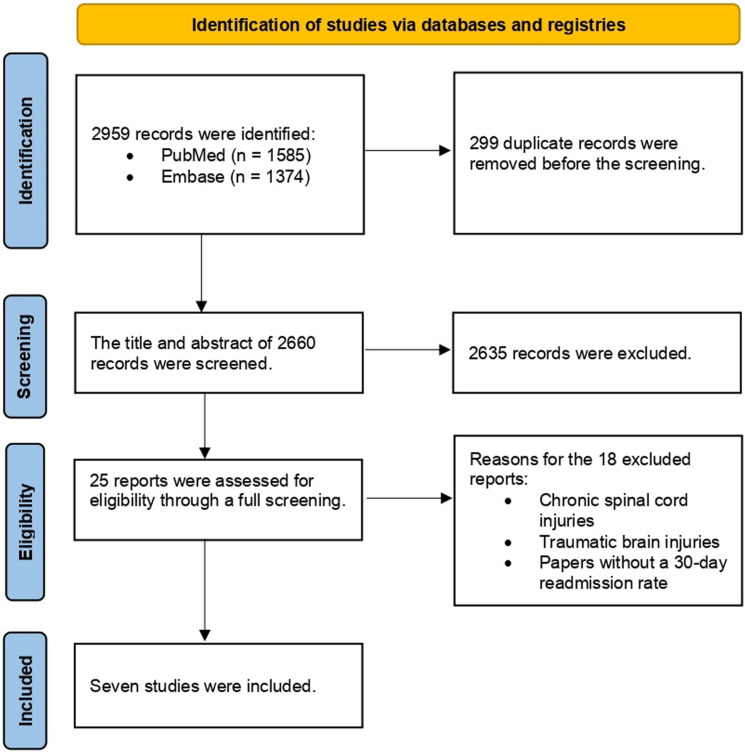
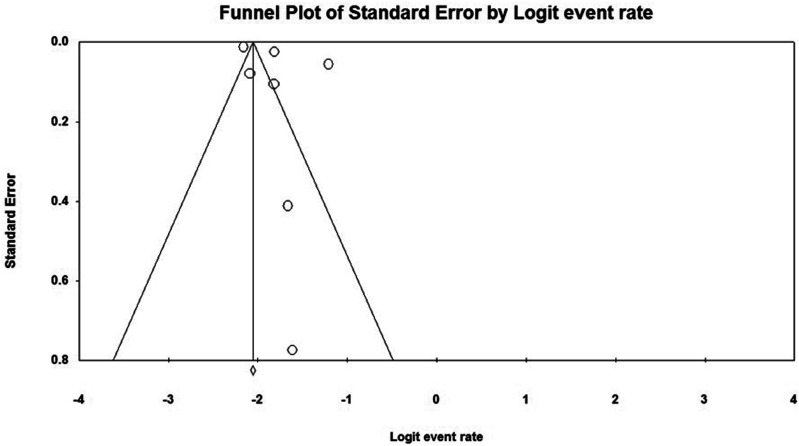
Study DesignSystematic Review and Meta-Analyses.ObjectiveTo assess the 30- and 90-day readmission rates after a traumatic spinal cord injury (SCI).MethodsA systematic search of MEDLINE and Embase was performed. The period was from inception to June 2022, with no language restrictions. All studies investigating the 30- and/or 90-day readmission rate following traumatic SCI were included. A random-effects model to combine effect sizes in our meta-analysis was applied.ResultsSeven out of 2959 reports met eligibility. The mean age of the patients was 50.2 ± 19.9, with a male-to-female ratio of 2.4:1. The most common traumatic SCI was cervical injury (55.3%). The meta-analysis model revealed a 30-day readmission rate of 14.2% after traumatic SCI, with heterogeneity in the studies. The 90-day readmission rate was 35.7%, with homogeneity in the studies. The meta-regression analysis found significant positive associations between cervical and thoracolumbar injuries and patient age and the 30-day readmission rate, while male sex demonstrated a negative association with the 30-day readmission rate. The 30-day readmission rate following index admission was 13.1% and the 30-day readmission rate after rehabilitation facilities was 15.8%. The study found that the 30-day readmission rate in the USA was 14.0%.ConclusionsThere is no doubt that readmission is an adverse health outcome. The outcome is also complex and multifaceted, which makes it difficult to predict. Injury level is 1 of the predictors that affect readmission, making it essential to consider factors during discharge planning for high-risk people to reduce 30-day readmission rates.
期刊介绍:
Global Spine Journal (GSJ) is the official scientific publication of AOSpine. A peer-reviewed, open access journal, devoted to the study and treatment of spinal disorders, including diagnosis, operative and non-operative treatment options, surgical techniques, and emerging research and clinical developments.GSJ is indexed in PubMedCentral, SCOPUS, and Emerging Sources Citation Index (ESCI).




 京公网安备 11010802042870号
京ICP备2023020795号-1
京公网安备 11010802042870号
京ICP备2023020795号-1

 分享
分享
 求助内容:
求助内容: 应助结果提醒方式:
 扫码关注我们
